


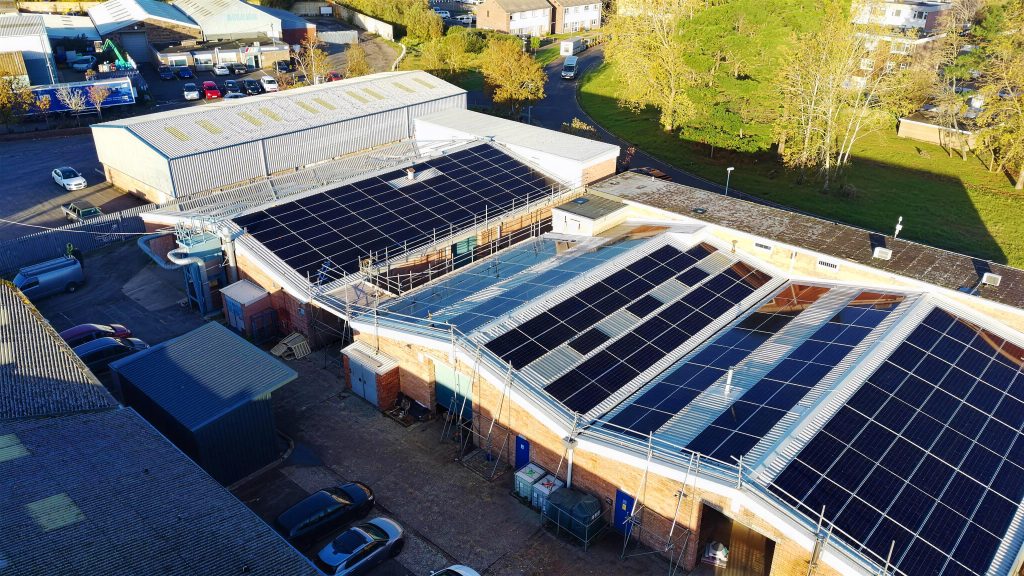
Transmission Developments Co (GB) Ltd, better known as TransDev, has manufactured timing pulleys and power transmission components on Dawkins Road in Hamworthy, Poole, since 1965. It is the UK’s largest timing pulley manufacturer, and its machine shop runs three shifts a day, which means a large, steady daytime electricity demand that solar is well suited to serve. In 2026 TransDev chose DES Renewable Energy, a Dorset installer based twenty minutes up the road near Wimborne, to design and install solar PV across all three of its factory roofs.
The project at a glance
- Client: Transmission Developments Co (GB) Ltd (TransDev), Poole, Dorset
- Site: Three adjoining factory units (T1, T2 and T3) on Dawkins Road, Hamworthy, BH15 4HF
- System: 344 x Aiko 660W panels, around 227 kWp in total, one system per unit
- Inverters: Solis 80 kW (T1), Solis 80 kW (T2) and Solis 40 kW (T3)
- Grid connection: G99 application and approval through SSEN, handled by DES
- Estimated generation: around 215,650 kWh a year, saving an estimated 44.6 tonnes of CO2 annually (design estimates, to be updated with monitored figures)
- Timeline: Site survey June 2026, installation 5 to 23 October 2026
About TransDev
TransDev designs and manufactures timing pulleys, timing belts and related power transmission products for customers across the UK and overseas. The Poole site combines a large CNC machine shop with assembly and distribution, all under three roofs that face a mix of orientations. Like most manufacturers, TransDev’s electricity use is highest during the working day, exactly when solar generates, so a well-sized rooftop system displaces expensive imported power rather than exporting it cheaply.
Why three systems rather than one
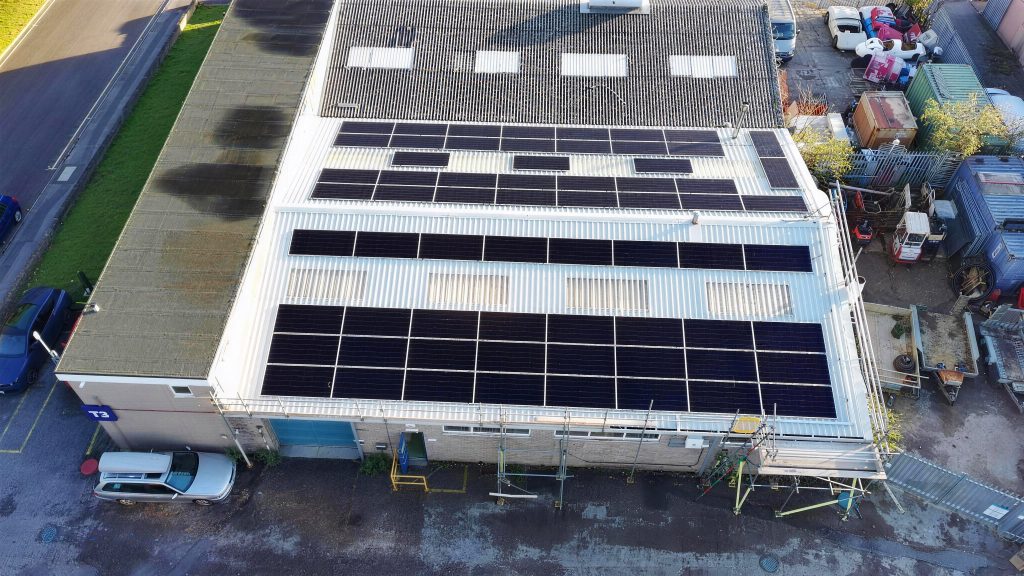
Each of the three units has its own electrical supply and distribution board, so we designed three separate systems rather than one large array. T1 carries 136 panels on a Solis 80 kW inverter, T2 carries 139 panels on a second Solis 80 kW inverter, and T3 carries 69 panels on a Solis 40 kW inverter. Sizing each array to the demand and roof area of its own unit keeps every system working hard for the building beneath it, simplifies the network operator application and makes future maintenance straightforward, because any one system can be isolated without affecting the others.
What we did
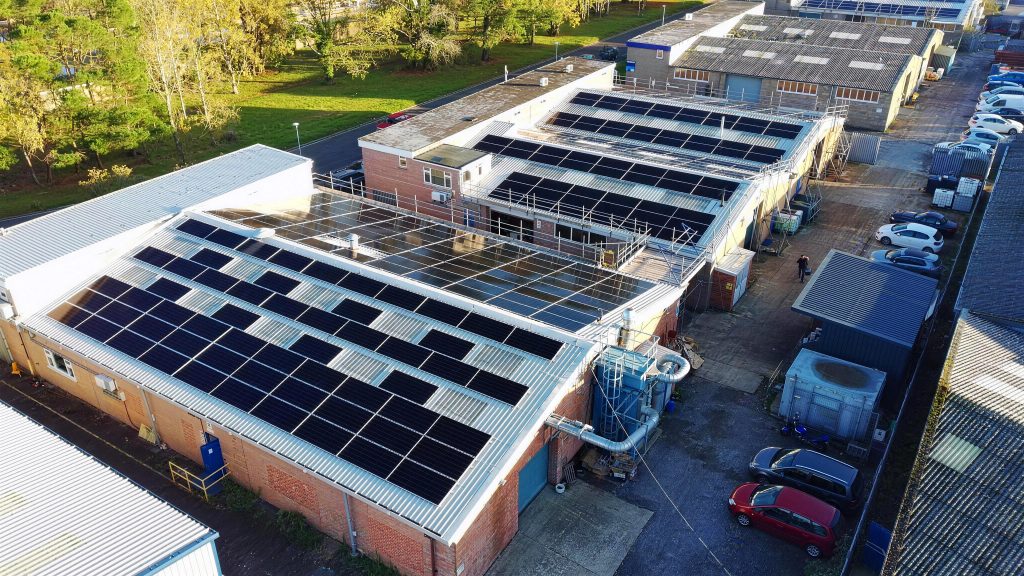
The project began with a site survey in June 2026 covering the roof structures, existing electrical intake and switchgear for each unit, and the site’s consumption profile. From that we produced a design for each roof, specified the Aiko 660W panels and Solis inverters, and submitted the G99 connection application to SSEN, the local network operator, which is required for commercial systems of this size. Once approval was in place, the installation ran from 5 to 23 October 2026 with the factory operating throughout. Access was by scaffold to each roof in turn, the panels were mounted on the existing roof structure, DC strings were run to the inverters in each unit and the three systems were connected into the existing distribution boards. Each system was then tested, commissioned and set up on monitoring before handover, with the MCS and electrical certification that goes with it.
What this means for TransDev
With three shifts a day, TransDev uses electricity across most of the hours the panels are generating, so a high share of the output will be consumed on site. The design estimate is around 215,650 kWh of generation a year, which displaces grid electricity at the site’s full import rate and takes an estimated 44.6 tonnes of CO2 a year off the company’s footprint. Those are design figures; we will update this page with monitored generation once the systems have run through a full year. Beyond the bills, the installation gives TransDev a visible, measurable sustainability story for its customers and staff.
At a glance
- 344 x Aiko 660W panels, around 227 kWp
- Three systems: 136, 139 and 69 panels on Solis 80 kW, 80 kW and 40 kW inverters
- G99 grid connection through SSEN
- Surveyed June 2026, installed 5 to 23 October 2026, factory running throughout
- Design, grid application, installation, commissioning and monitoring all by DES’s own team
See the completion photos and announcement from the day the scaffold came down.
Our accreditations
We are MCS Certified, which guarantees that our installations have been designed, installed and commissioned to the highest standard using only MCS certified products. We are also NAPIT Certified, which confirms that we are certified to install and self-certify all of our electrical installations, and we comply with the Renewable Energy Consumer Code (RECC).
Run a factory or warehouse? See what solar could save you
If your roof is sitting idle, it could be cutting your energy bills instead. See solar panels for factories and warehouses, send us a recent energy bill for a free bill check, or book a free site survey on 01202 985 888.
More commercial installations in Poole and Dorset
- Tekne Shopfitting: 265.2 kWp rooftop solar, Poole
- Scott Closures and Plastics: 436.65 kWp solar, Poole
- Dumpton School: 113.75 kWp rooftop solar, Wimborne
Looking at solar for your own Dorset site? See our page on commercial solar panels in Dorset, with more local projects and how we work, or browse all our commercial case studies.