


If you are running a business in 2026, you already know the score. Energy prices aren’t just a line item on your balance sheet anymore, they are a volatile force that can dictate your quarterly success. With global energy markets still feeling the ripples of international conflicts and shifting supply chains, the average commercial energy bill has seen significant fluctuations over the last few years.
But what if you could step off that rollercoaster?
Business solar power is no longer a "green luxury" for huge corporations with massive ESG budgets. It’s a tactical financial move for SMEs across Dorset, Hampshire, and beyond. In this guide, we’re going to look past the marketing fluff and dive into the cold, hard numbers of Commercial ROI, the honest disadvantages of solar, and exactly how you can make this work for your bottom line.
Why Business Solar Power is the New Financial Standard
Why are so many businesses in Poole and Bournemouth suddenly sporting blue-black panels on their warehouses? It isn’t just about the environment (though that’s a great perk). It’s about energy independence.
When you generate your own power, you are effectively buying your electricity in bulk for the next 25 years at a fixed, remarkably low rate. While your competitors are worrying about the next Ofgem price cap announcement or a sudden £332 increase in projected monthly costs, you are locked in.
But how does it actually impact your cash flow? That brings us to the big question: ROI.
The Numbers: Understanding Commercial Solar ROI
Let’s get specific. Based on current 2026 data, the average Return on Investment (ROI) for commercial solar sits at approximately 15.87%.
To put that into perspective, that is significantly higher than most traditional low-risk investments or even the average return of the S&P 500. For most UK businesses, the "break-even" point, where the system has paid for itself through savings and incentives, now falls between 5 and 8 years.
How We Calculate Your ROI
When we sit down with you to look at a potential installation, we don't just guess. We use a specific formula: (Total Financial Gain – Total Investment Cost) / Total Investment Cost x 100.
However, a true calculation for a business is more complex than a residential one. We have to factor in:
- Annual Electricity Savings: This is usually the largest chunk.
- Full Expensing & Tax Benefits: In the UK, businesses can often claim 100% capital-allowance tax relief on solar installations. This can reduce your tax bill by 25p for every £1 you spend.
- Smart Export Guarantee (SEG): Getting paid for the excess energy you send back to the grid.
- Maintenance Costs: Which, as we’ll discuss later, are surprisingly low.
If you’re feeling a bit overwhelmed by those figures, don’t worry, that’s okay. It’s a lot to take in, and that’s why we help you crunch these numbers using your actual half-hourly meter data.
The Honest Disadvantages of Solar Power
We promised to be transparent, and that means talking about the downsides. Solar is fantastic, but it isn't a "magic button." Here are the honest advantages and disadvantages of solar power you need to consider before signing a contract.
1. The Upfront Cost
Even with falling hardware prices in 2026, a commercial-grade system is a significant capital outlay. We’re talking anywhere from £15,000 for a small office to £100,000+ for a large manufacturing plant. While the ROI is high, the initial "hit" to your cash flow is real.
2. Roof Suitability and Leases
If you don't own your building, you’ll need landlord permission, which can be a hurdle. Furthermore, if your roof is older than 15 years, we often recommend replacing or reinforcing it before the panels go on. Adding panels to a failing roof is a recipe for a headache ten years down the line.
3. Intermittency
The sun doesn't shine at night (shocker, we know). If your business operates 24/7, solar alone won't zero out your bills unless you invest in commercial battery storage. Systems like the Tesla Powerwall or GivEnergy options are great for SMEs, but they do add to the initial cost.
4. Grid Connection Delays
In some areas of Dorset and Hampshire, the National Grid is "constrained." This means it can take time to get permission to export your excess energy. It won't stop you from using the power yourself, but it can slightly delay your full ROI potential.
Maximising Your Commercial ROI: 3 Key Strategies
If you’re going to do this, you want to do it right. Here is how we ensure our clients get the fastest possible payback period.
1. Match Generation to Demand
Solar is most profitable when you consume the energy as it's being produced. If your machinery runs from 9 am to 5 pm, your ROI will be stellar. If you’re a nightclub that only opens at 10 pm, your ROI will rely heavily on battery storage. We look at your "load profile" to ensure the system is sized perfectly.
2. Don't Skimp on Certification
This is a big one. Your warranties and your ability to sell energy back to the grid depend on specific certifications. MCS and NAPIT matter more than you might think. Using a "cowboy" installer might save you 10% upfront, but it could cost you 100% of your ROI if the system fails and the warranty is void.
3. Utilise Smart Monitoring
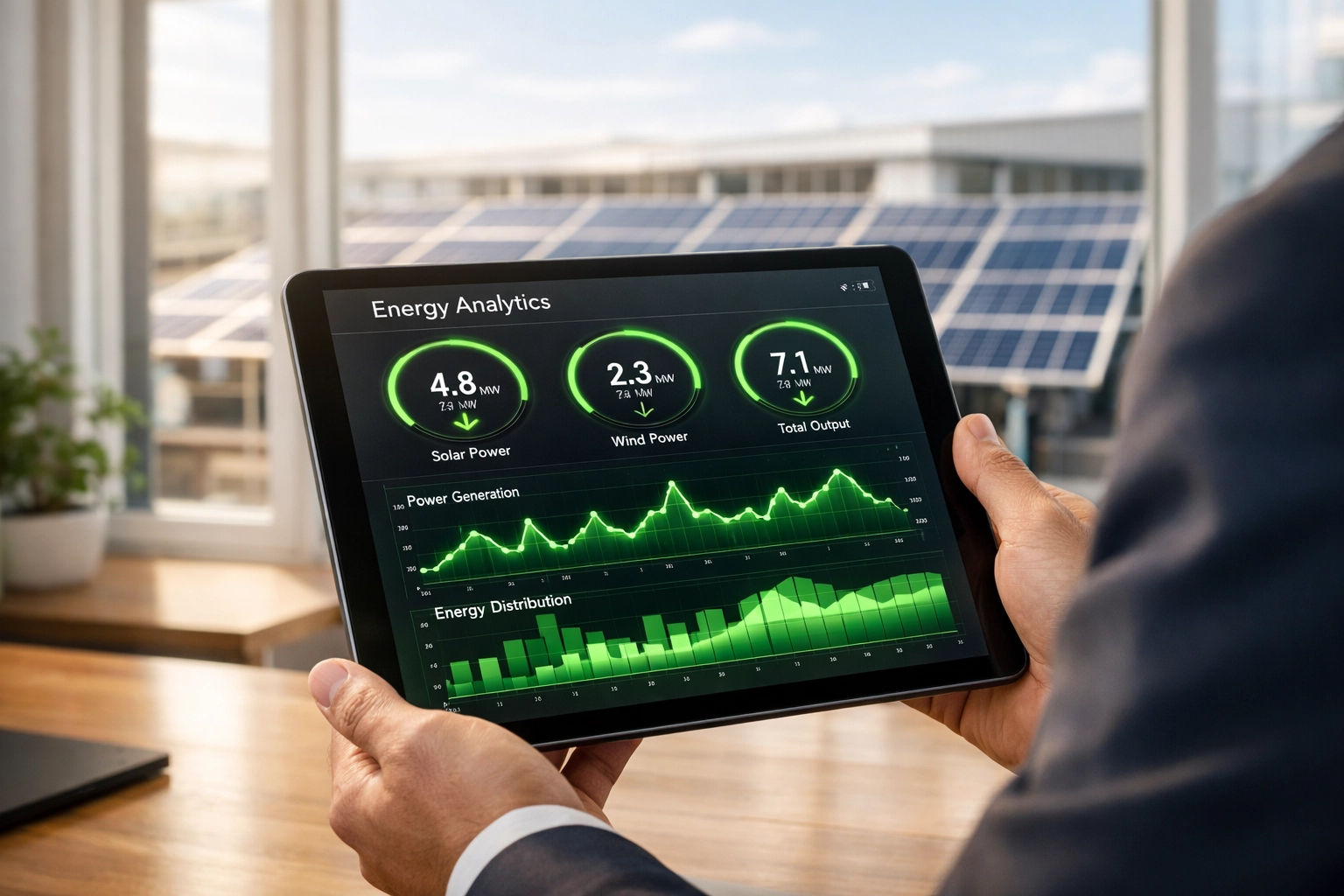
You can't manage what you can't measure. Modern commercial inverters come with AI-driven monitoring. This allows you to see exactly when you’re wasting power, helping you shift your business habits to save even more money.
Maintenance: How to Keep the ROI Flowing
One of the best things about business solar power is that there are no moving parts. However, that doesn't mean you should "set it and forget it" for 25 years.
To maintain that 15% ROI, you need to keep the system at peak performance. This involves:
- Annual Visual Inspections: Checking for bird nesting or cable damage.
- Professional Cleaning: In industrial areas, dust and grime can reduce efficiency by up to 10-15%.
- Inverter Servicing: The panels might last 25 years, but the inverter (the "brain" of the system) may need a service or replacement around year 12-15.
For a deeper dive into this, check out our ultimate guide to solar aftercare.
Choosing the Right Partner in the South
Whether you are looking for solar panels in Hampshire or a large-scale array in Poole, the company you choose is the single biggest factor in your success.
A commercial installation is a long-term relationship. You need a partner who understands the local grid, the specific planning requirements of the South Coast, and the nuances of commercial finance. We’ve seen too many businesses fall for "too good to be true" quotes from national companies that disappear when a sensor fails three years later.
Questions to Ask a Potential Commercial Installer:
- Can you provide a detailed ROI projection based on my half-hourly data?
- Are you MCS and NAPIT certified?
- What is your local track record in Dorset or Hampshire?
- Do you offer a comprehensive aftercare package?
Is 2026 the Year Your Business Goes Solar?
The transition to renewable energy is no longer just a "nice to have", it is a competitive advantage. When your energy costs are fixed and your competitors' are rising, you have more capital to reinvest in your staff, your equipment, and your growth.
Yes, the technical details can be complex. And yes, the initial investment is significant. But that's okay: we're here to walk you through it.
Ready to see the actual numbers for your building?
Contact us today to discuss your needs and let's work together to build a custom ROI report for your business. Between you and our team, we can find the perfect balance of independence, sustainability, and profit.