


As a business owner in Poole or Bournemouth, you’ve likely watched your energy bills with a growing sense of unease over the last few years. Whether you’re running a warehouse in Mannings Heath or a boutique hotel near the seafront, the cost of keeping the lights on has become a major line item on your balance sheet. You’ve heard the buzz about business solar power, but is it actually worth the investment for a commercial property?
We understand that for most local businesses, the decision to go green isn't just about the environment: it’s a financial one. You need to know exactly how much you’ll spend, how much you’ll save, and when that system will start paying for itself. In this guide, we’re stripping away the jargon to give you a transparent look at the Return on Investment (ROI) for solar energy on the South Coast.
Why Business Solar Power is Surging in Dorset
It’s no secret that the South Coast is one of the sunniest places in the UK. While our "British sunshine" might be the butt of a few jokes, for a solar panel, Poole and Bournemouth are goldmines. Your business has a geographical advantage that a firm in Glasgow simply doesn't.
But beyond the sunshine, the current energy market has changed the math. Traditionally, solar was seen as a "long-term play" with a decade-long payback. Today, with commercial energy rates remaining volatile, that timeline has shrunk significantly.

Breaking Down the Numbers: The Real ROI
When we talk about ROI, we’re looking at two things: the immediate reduction in your monthly overheads and the long-term "payback period" where the system has effectively paid for itself through savings.
Typically, commercial solar installations in our area deliver a payback period of 3 to 7 years. When you consider that a high-quality solar PV installation is designed to last 25 years or more, you’re looking at nearly two decades of essentially "free" electricity.
The Savings Calculation
Let’s look at a hypothetical (but very common) example for a Dorset-based business:
| Factor | Standard Energy Grid | With Business Solar Power |
|---|---|---|
| Annual Usage | 60,000 kWh | 60,000 kWh |
| Average Rate | 28.6p per kWh | ~15p per kWh (levelized cost) |
| Annual Cost | £17,160 | £9,000 |
| Annual Savings | – | £8,160 |
By generating your own power, you aren't just saving money; you’re hedging against future price hikes. If the grid price goes up to 35p, your ROI actually accelerates. And that’s okay: it’s one of the few times market volatility actually works in your favour.
The Honest Advantages and Disadvantages of Solar Power
We believe in transparency. If we told you solar was perfect for every single building without exception, we wouldn't be doing our job as expert advisors. To make an informed decision, you need to weigh the advantages and disadvantages of solar power specifically for a commercial environment.
The Advantages
- Immediate Cash Flow Improvement: From day one, your monthly electricity bill drops.
- Tax Benefits: Schemes like the Annual Investment Allowance (AIA) and Full Expensing allow many businesses to deduct 100% of the cost of solar from their taxable profits in the first year.
- ESG and Brand Reputation: Your customers in Bournemouth and Poole care about sustainability. Showing you've invested in a 7.6-tonne CO2 reduction (like Porsche Bournemouth did with their 36kW system) is powerful marketing.
- Energy Security: You’re less reliant on a fragile national grid.
The Disadvantages (The Honest Truth)
- High Upfront Capital: Even with falling prices, a commercial system is a significant investment. If cash flow is tight right now, the initial hit can be daunting.
- Roof Suitability: Not every roof is ready for solar. If your building is very old or has structural issues, you might need to reinforce the roof first, which adds to the cost.
- Intermittency: If you run a 24/7 operation, solar won't help you at 2:00 AM unless you invest in storage solutions like the Tesla Powerwall 3.
- Visual Impact: While most businesses don't mind, if you're in a highly regulated conservation area in Poole, getting planning permission can sometimes be a hurdle.
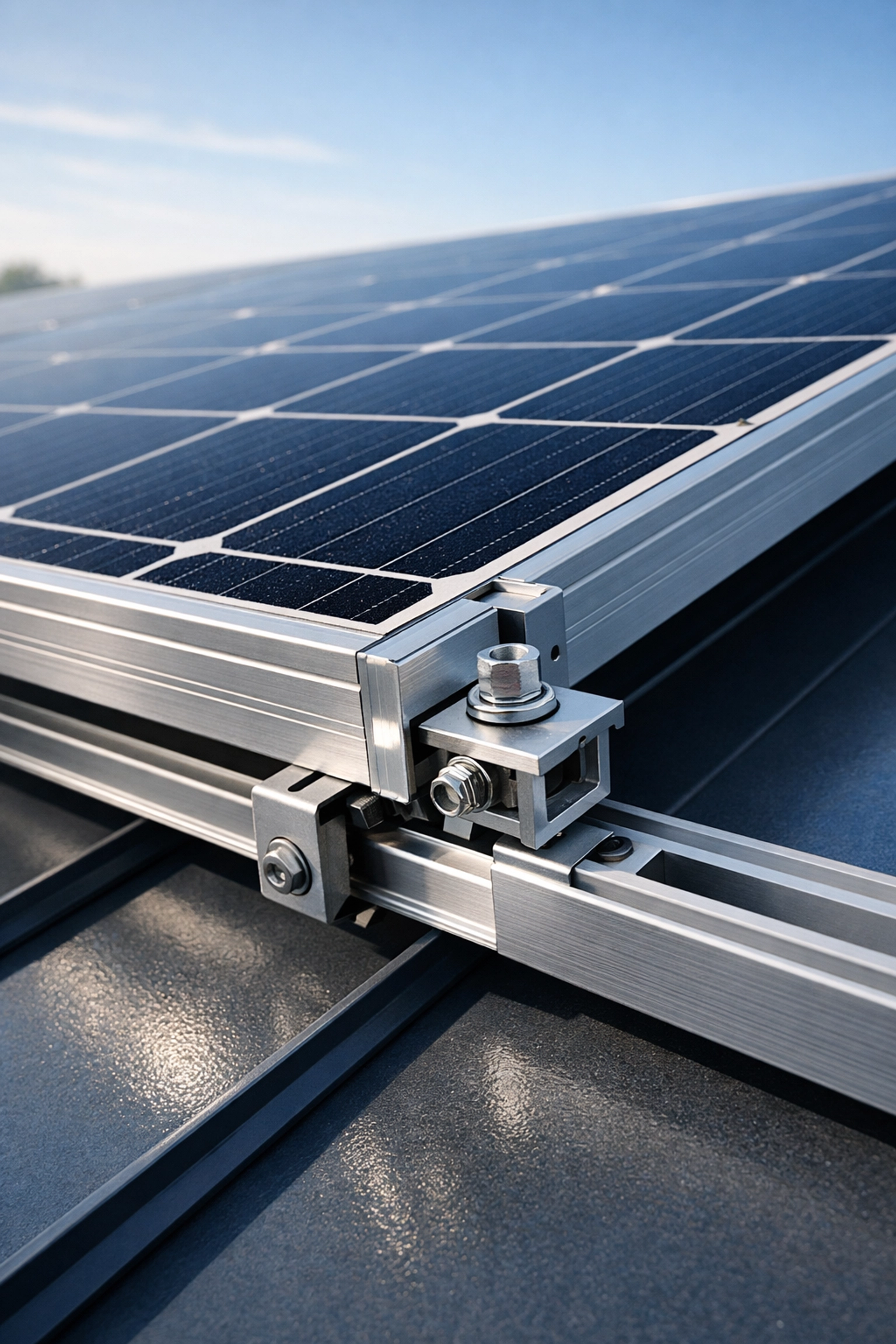
Maximising ROI with Government Incentives
One of the biggest drivers of ROI for business solar power right now is the UK tax system. If you’re a UK taxpayer, the government essentially wants to help you buy these panels.
Through Full Expensing, companies can claim 100% capital allowances on qualifying plant and machinery investments. Solar panels usually fall under the "special rate" pool, but under current rules, you can often still claim a 50% first-year allowance, or use the Annual Investment Allowance (AIA) to claim the full cost up to £1 million.
We always recommend speaking with your accountant about this, but for many of our clients in Dorset, these tax breaks effectively "discount" the system by up to 25% on day one. If you're scratching your head over the tax codes, don't worry: most business owners do. We can provide the technical specs your financial team needs to make the claim.
Real-World Local Performance
It's easy to talk about theoretical numbers, but what does this look like on the ground in Poole?
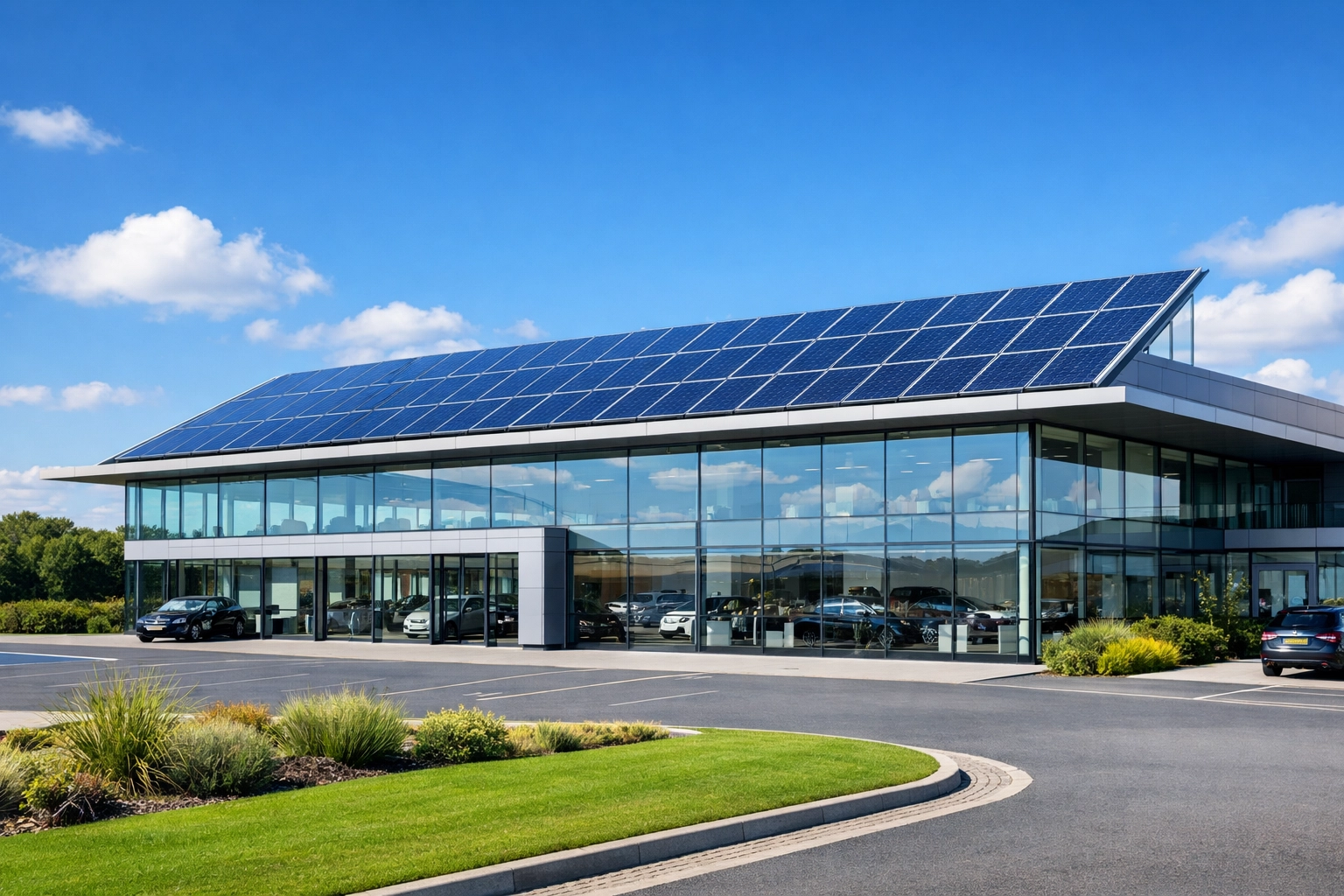
Take a look at Porsche Bournemouth. They installed a 36kW system that generates roughly 30,600 kWh annually. That’s not just a "green" statement; that’s a massive chunk of their operational overhead gone. Or consider local food wholesalers who have installed massive 300kWp+ systems. For them, solar isn't just an "add-on": it’s a core part of their financial strategy.
In Bournemouth, a modest 13.35 kWp system (about 30 panels) can generate around 15,660 kWh a year. If you’re a small office or a retail unit, that could potentially cover almost all your daytime energy needs.
Maintenance: Protecting Your Investment
A common question we get is: "Once they're on the roof, do I need to worry about them?"
The short answer is: not much, but don't ignore them entirely. To keep your ROI high, you need the panels to perform at peak efficiency. Dust, salt spray from the Poole Harbour area, and bird droppings can create "hot spots" or simply block light, reducing output by 5-10%.
- Annual Checks: We recommend a quick professional check-up once a year to ensure the inverter is healthy and the connections are tight.
- Cleaning: Depending on your location (especially if you're near a busy road or the coast), a professional clean every 1-2 years is a smart move.
- Monitoring: Modern systems come with apps that let you see exactly what you're generating in real-time. If you see a sudden dip, you'll know it's time to give us a call.
For more details on keeping your system in top shape, check out our guide on solar installation and maintenance.
Is Solar Right for Your Business?
We understand that every business is unique. A high-energy manufacturer has different needs than a professional services firm in Lansdowne. The best way to determine your specific ROI is to look at your actual half-hourly energy data and your roof space.

If you're wondering where to start, here are three simple steps:
- Gather your bills: Look for your total annual kWh usage.
- Check your roof: Use Google Maps to see if you have a clear, south, east, or west-facing roof without too many obstructions.
- Talk to an expert: We can run a simulation based on your specific location in Poole or Bournemouth to show you exactly what your payback period would look like.
Solar is no longer a "maybe" for businesses on the South Coast: it’s becoming a "must-have" for staying competitive in a high-cost environment. And if you're still not sure if the numbers stack up for you, that's okay. We’re here to help you do the math.
Ready to see how much your business could save? Contact us to discuss your needs and let's build a bespoke ROI forecast for your commercial property.