


Are you tired of watching the news and seeing energy prices climb again? You aren’t alone. With the current global volatility and the recent Ofgem price cap updates, the average UK household energy bill has hovered around £1,973. Experts suggest we could see further increases of over £300 if market instability continues. It is no wonder you are looking at solar battery storage to take control of your own power.
Choosing the right battery is the biggest decision you’ll make for your home energy system. Two names likely sit at the top of your list: the brand-new Tesla Powerwall 3 and the versatile Fox ESS.
But which one actually deserves a spot on your wall? At DES Renewable Energy Ltd, we are Tesla Powerwall Certified and an Octopus Trusted Partner. We’ve installed hundreds of these systems across Dorset and Hampshire, and we’ve seen how they perform in the real world.
Let’s dive deep into the specs, the pros, and the cons to find your perfect match.
The Heavyweight Champ: Tesla Powerwall 3
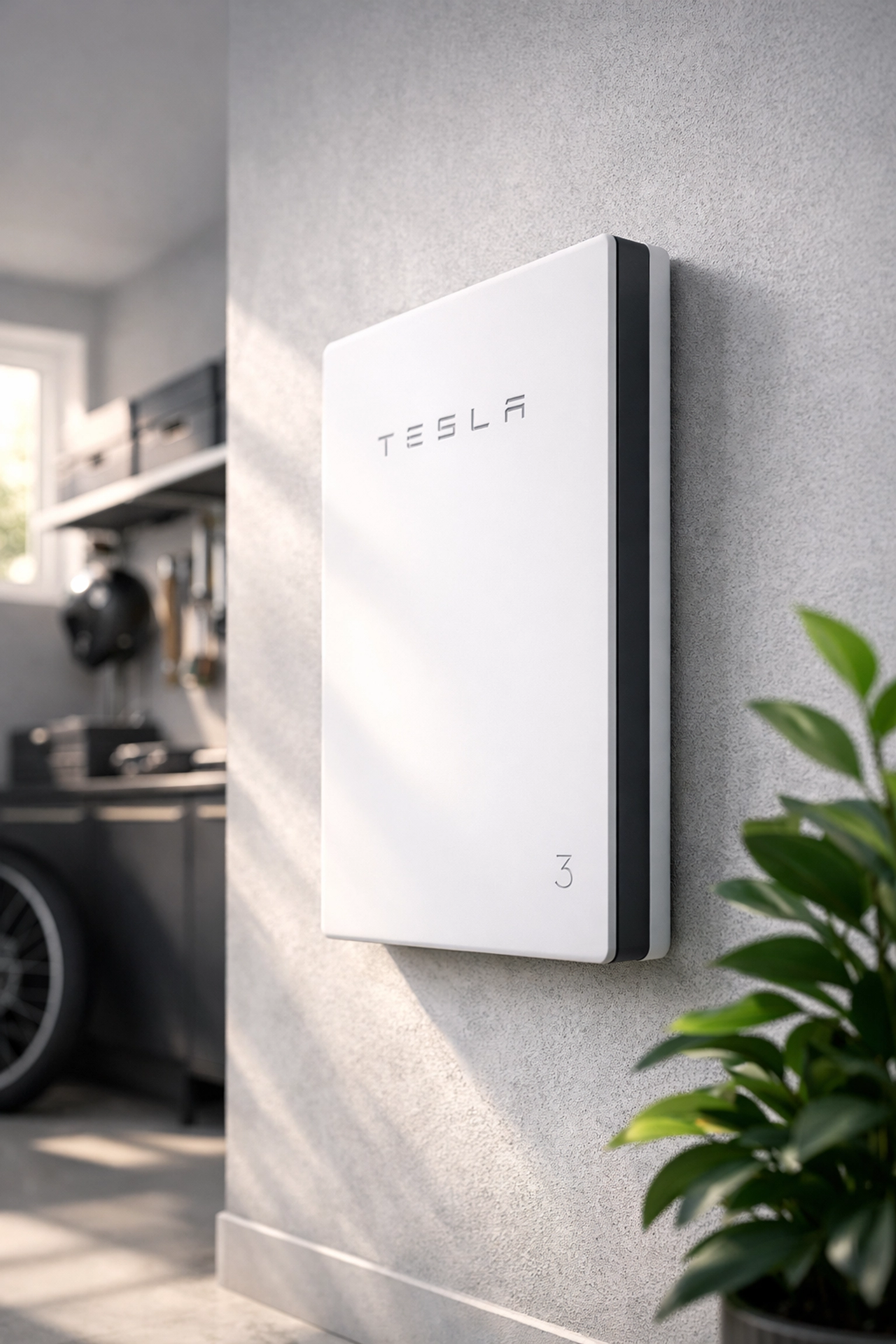
The Tesla Powerwall 3 is more than just a battery; it is a complete energy overhaul. Unlike its predecessor, the Powerwall 2, this new version is a "fully integrated" system.
What does that mean? It means the solar inverter, the "brain" that converts the raw DC electricity from your panels into the AC electricity your kettle uses, is built right into the box.
Why the Powerwall 3 is a Game Changer
The standout feature of the Powerwall 3 isn't just the sleek looks. It is the raw power. It offers a massive 11.5 kW of continuous power output.
Think about your morning routine. You have the kettle on, the toaster popping, and perhaps the car charging. Most batteries would struggle to cover all that at once, forcing you to pull expensive power from the grid. The Powerwall 3 handles it without breaking a sweat. It can even handle "Locked Rotor Amperes" (LRA) of up to 185A, which is technical speak for saying it can start up heavy-duty appliances like heat pumps or air conditioning units that require a huge initial surge of energy.
And if you’re worried about space, you’ll love the efficiency. Because the inverter is inside, you don’t need a separate box on your wall. It’s one clean, albeit heavy (132kg!), unit.
The Modular Contender: Fox ESS
If Tesla is the "iPhone" of the battery world, sleek and all-in-one, then Fox ESS is the "PC." It is highly flexible and modular. Fox ESS has made a huge name for itself in the UK market by offering high-performance systems that don’t always carry the "Tesla premium" price tag.
Flexibility is Key
The beauty of the Fox ESS system, particularly their All-In-One (AIO) or their H3 series, is modularity. You don’t have to buy a massive capacity on day one.
Fox systems usually use stackable battery modules. You might start with a 5.7 kWh stack and, as your family grows or you buy an EV, you simply stack another module on top. This "pay as you grow" approach is perfect if you are investing in solar panels on a budget but want to leave the door open for more storage later.
But don't think "budget" means "basic." Fox ESS systems are incredibly robust and offer fantastic "depth of discharge." This means you can use almost 100% of the energy stored in the battery without damaging its long-term health.
Side-by-Side: The Specs That Matter
Let’s look at the numbers. When you’re choosing between these two, the data tells a clear story.
| Feature | Tesla Powerwall 3 | Fox ESS (All-In-One 10.4kWh) |
|---|---|---|
| Usable Capacity | 13.5 kWh | 10.4 kWh (Expandable) |
| Max Power Output | 11.5 kW | 6.0 kW (approx. depending on model) |
| Integrated Inverter | Yes (6 MPPTs) | Yes |
| Warranty | 10 Years | 10 Years |
| Installation | Wall or Floor Mount | Floor Mount (Stackable) |
| Backup Capability | Full Home Backup (Standard) | Full Home Backup (Optional) |
Power Output: Why kW Matters More Than kWh
We often see homeowners get confused between kWh (kilowatt-hours) and kW (kilowatts).
Think of it like a water tank.
- kWh is how much water the tank holds (the capacity).
- kW is how wide the tap is (the flow rate).
The Tesla Powerwall 3 has a very wide "tap." At 11.5 kW, it can power your whole life simultaneously. Most Fox ESS systems have a narrower tap, usually around 5 kW or 6 kW. If you try to use 8 kW of power in your home, a Fox system will provide 6 kW from the battery and pull the remaining 2 kW from the grid. With a Powerwall 3, that 2 kW still comes from your free solar energy.
If you are looking for solar panels in Hampshire and plan to go fully electric with a heat pump, the Powerwall 3’s high output is a significant advantage.
Smart Energy: The Octopus Connection
In 2026, a battery is only as good as the software behind it. This is where the gap widens.
As an Octopus Trusted Partner, we see first-hand how these batteries interact with smart tariffs like Intelligent Octopus Go or Octopus Flux. These tariffs allow your battery to "buy" electricity from the grid when it is dirt cheap (sometimes even free!) and sell it back when the grid is struggling.
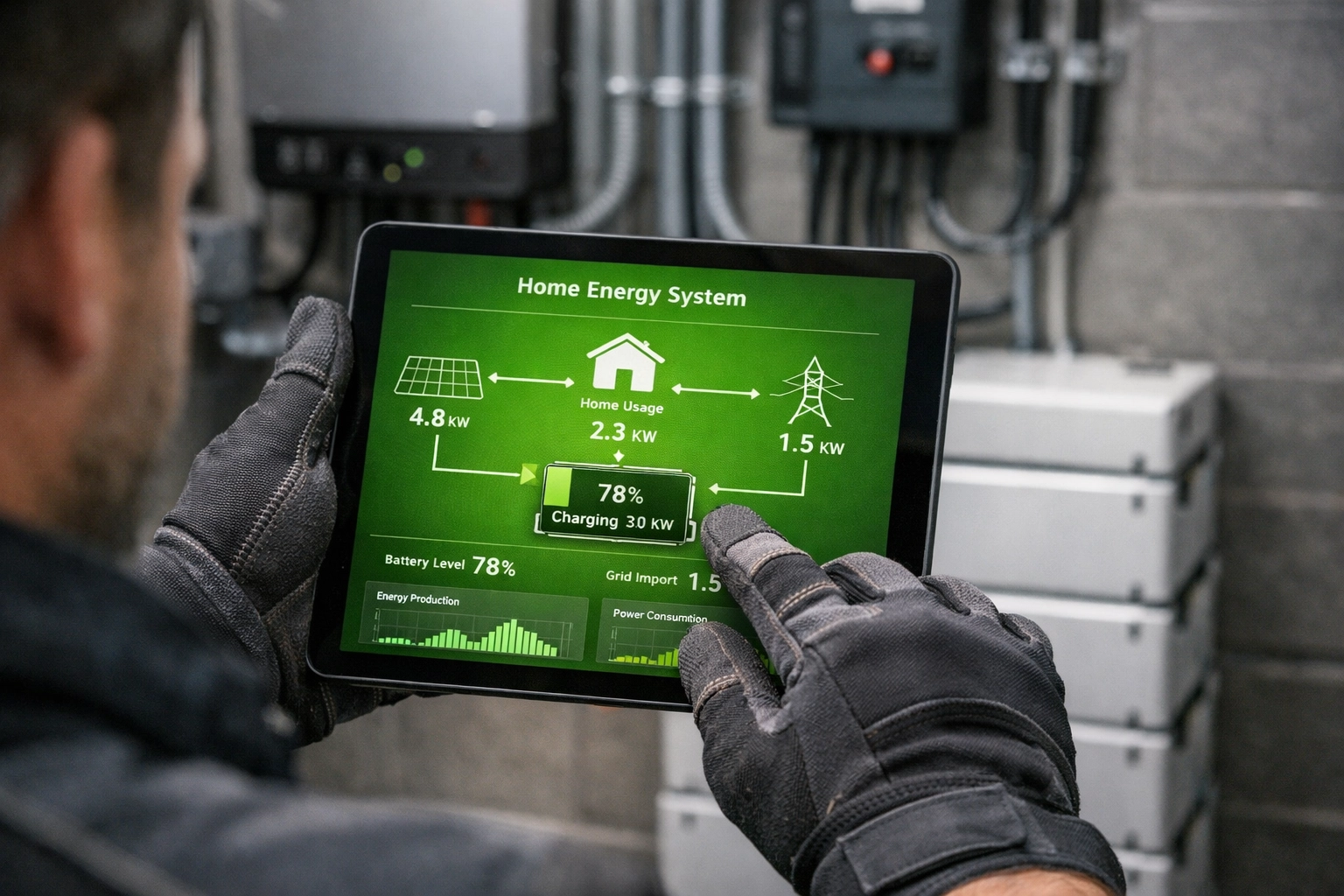
The Tesla app is widely considered the gold standard. It is intuitive, fast, and the automation is seamless. It knows when a storm is coming (Storm Watch) and will automatically charge your battery to 100% in case of a power cut.
Fox ESS uses the "FoxCloud" app. It is very detailed and gives you heaps of data: which "techies" often prefer: but it isn't quite as polished as the Tesla experience. However, both systems work brilliantly with smart tariffs to help you wipe out your energy bills.
Installation and Maintenance
The Powerwall 3 is an "AC-coupled" or "DC-coupled" hybrid, but primarily it is designed to be the heart of a new system. Because it has the solar inverter built-in, the installation is often faster and neater. We simply run the cables from your solar panels directly into the Powerwall.
Fox ESS systems are often modular stacks. This makes them easier to handle for installers (no 132kg lifting!), but they can take up a bit more floor space.
Regardless of which you choose, you must ensure your installer is MCS and NAPIT certified. Without these certifications, you won't be able to access the best export tariffs, and your warranty might be at risk. At DES, we handle all the paperwork for you, ensuring your solar aftercare is handled for the next 25 years.
Which is Better for Your Home?
There is no "one size fits all" in renewable energy. But we can give you a nudge in the right direction.
Choose the Tesla Powerwall 3 if:
- You have high power needs: You have an EV, a heat pump, or a large family.
- You want a "set and forget" experience: The Tesla app is incredibly smart and handles everything for you.
- Space is premium: You want one sleek unit on the wall rather than multiple boxes.
- You want the best backup: The Powerwall 3 is arguably the best in the business at keeping your lights on during a blackout.
Choose Fox ESS if:
- You want to start small: You want to install a smaller battery now and add more capacity later.
- You are on a tighter budget: Fox ESS typically offers a lower "price per kWh" than Tesla.
- You love data: You want to see every tiny detail of your system's performance via the FoxCloud.
- You have a specific space: Modular stacks can sometimes fit into awkward corners where a wide Powerwall 3 won't go.

Final Thoughts from DES Renewable Energy
Whether you lean towards the high-tech powerhouse of the Tesla Powerwall 3 or the flexible, reliable Fox ESS, you are making a brilliant move for your financial future and the planet.
Reducing your carbon footprint isn't just about "being green" anymore; it is about energy independence. With the average bill rising, every kWh you store in your battery is money in your pocket.
Between you and our team, we can design a system that fits your roof, your budget, and your lifestyle. We are local experts who understand the specific needs of homeowners in Bournemouth, Dorset, and across the South.
Ready to see which system fits your home?
Contact us today for a friendly, no-pressure chat about your solar and battery options. Let’s get your home powered by the sun.