


If you are running a business in 2026, you already know that energy prices aren’t just a line item, they are a volatile beast. You’ve likely looked at your commercial roof and wondered if those empty square meters could be working harder for you.
But here is the catch: as a business owner, you don’t make decisions based on "vibes" or general eco-friendliness alone. You need to see the numbers. You need to know the Return on Investment (ROI).
Calculating the ROI for business solar power can feel like trying to solve a multivariable calculus problem while blindfolded. And that’s okay. Most people feel that way. Between tax incentives, fluctuating export rates, and initial capital expenditure, it’s a lot to juggle.
In this guide, we are going to strip away the jargon and give you a clear, five-step framework to calculate exactly what solar can do for your bottom line.
The Honest Advantages and Disadvantages of Solar Power
Before we dive into the math, we need to be transparent. We believe in solar, but we also believe in being realistic. To make an informed decision, you need to understand both sides of the coin regarding the advantages and disadvantages of solar power.
The Advantages
- Drastic Bill Reduction: Most commercial installations see a 50% to 70% reduction in grid reliance.
- Protection Against Volatility: You are essentially "pre-purchasing" your electricity for the next 25 years at a fixed, much lower rate.
- Tax Benefits: Through mechanisms like Capital Allowances, businesses can often offset the cost against their profits.
- Brand Value: Your customers care about your carbon footprint. It’s no longer a "nice to have"; it’s a competitive necessity.
The Disadvantages
- The Upfront Cost: High-quality commercial systems require significant initial capital.
- Roof Suitability: If your roof is old or heavily shaded, the ROI will take a hit.
- Intermittency: Unless you invest in battery storage, you still rely on the grid when the sun goes down (or during those particularly grey British winters).
- Maintenance: While low, systems aren't "set and forget." They require monitoring and occasional cleaning to stay at peak performance.
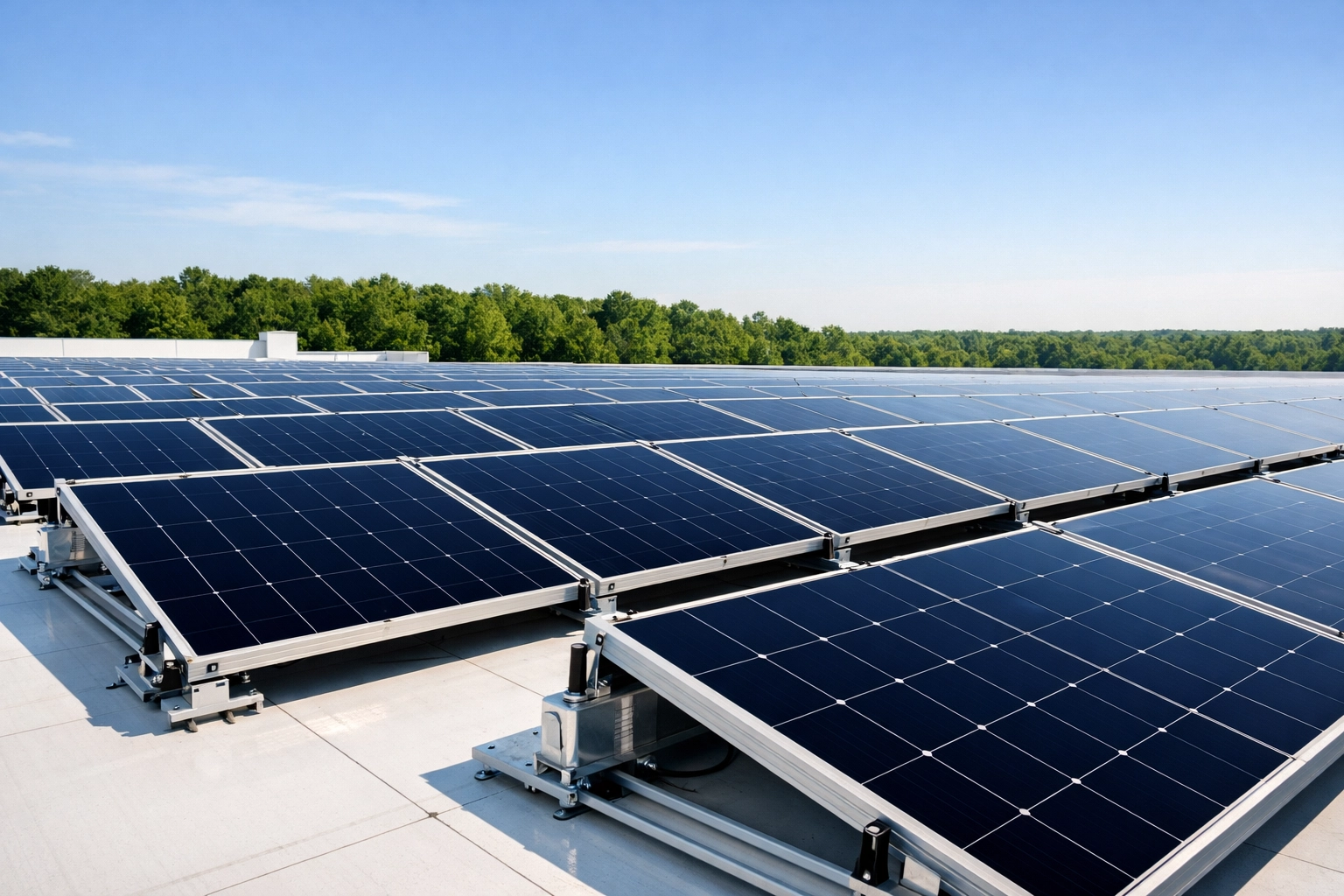
Step 1: Determine Your Total Initial Investment
The first step is knowing exactly what is leaving your bank account. To get an accurate ROI, you can't just look at the price of the panels. You need the "all-in" figure.
When you work with a specialist, your quote should include:
- Hardware: Panels, inverters, and mounting structures.
- Labour: The actual physical installation.
- Design & Engineering: Ensuring the system is optimized for your specific roof and load profile.
- Permits & Grid Connection: Fees for G99 applications and local authority checks.
- Electrical Upgrades: Sometimes your existing consumer unit or distribution board needs a refresh to handle the new power flow.
For a mid-sized commercial system (say, 50kWp), you might be looking at an investment in the region of £40,000 to £60,000. It’s a big number, but as we’ll see, it’s an investment that starts paying back from day one. If you're wondering how this compares to residential scales, you can check out our beginner’s guide to mastering commercial energy independence.
Step 2: Account for Financial Incentives and Tax Breaks
This is where the math gets a lot more fun. In the UK and specifically for businesses in areas like Dorset and Hampshire, there are several ways to "discount" that initial cost.
Capital Allowances: Most businesses can claim the Annual Investment Allowance (AIA), which allows you to deduct the full cost of the solar installation from your pre-tax profits. If you are paying 25% corporation tax, a £50,000 system effectively "costs" you £37,500 after tax relief.
Smart Export Guarantee (SEG): While you’ll want to use as much energy on-site as possible, any excess you send back to the grid will earn you money. It’s not a huge amount per kWh, but over 25 years, it adds up.
Grants: Depending on your sector and location, there may be local "Green Business" grants available. We always recommend checking with the Dorset or Hampshire local authorities to see what’s currently active.
| Incentive Type | Estimated Impact |
|---|---|
| Annual Investment Allowance (AIA) | Up to 25% of project cost back in tax relief |
| Smart Export Guarantee (SEG) | 5p – 15p per kWh exported |
| Local Grants | Variable (£1,000 – £10,000+) |
Step 3: Forecast Your Annual Energy Savings
To calculate how much you’ll save, you need to look at your current consumption. Dig out your last 12 months of energy bills.
You need to answer two questions:
- How much do you pay per kWh? (e.g., 30p per unit).
- When do you use your power?
This second question is vital. Business solar power is most effective when your "load profile" matches the sun. If you run a factory from 8 AM to 5 PM, you are a perfect candidate. If you run a nightclub, your ROI will be lower unless you add battery storage like a Tesla Powerwall or GivEnergy system.
The Formula for Annual Savings:
(Annual Solar Generation in kWh × % Consumed On-site × Current Grid Rate) + (Excess kWh × Export Rate)
For example, a 50kWp system might generate 45,000 kWh per year. If you use 80% of that on-site and pay 30p per unit:
- On-site savings: 36,000 kWh × £0.30 = £10,800
- Export income: 9,000 kWh × £0.05 = £450
- Total Annual Benefit: £11,250
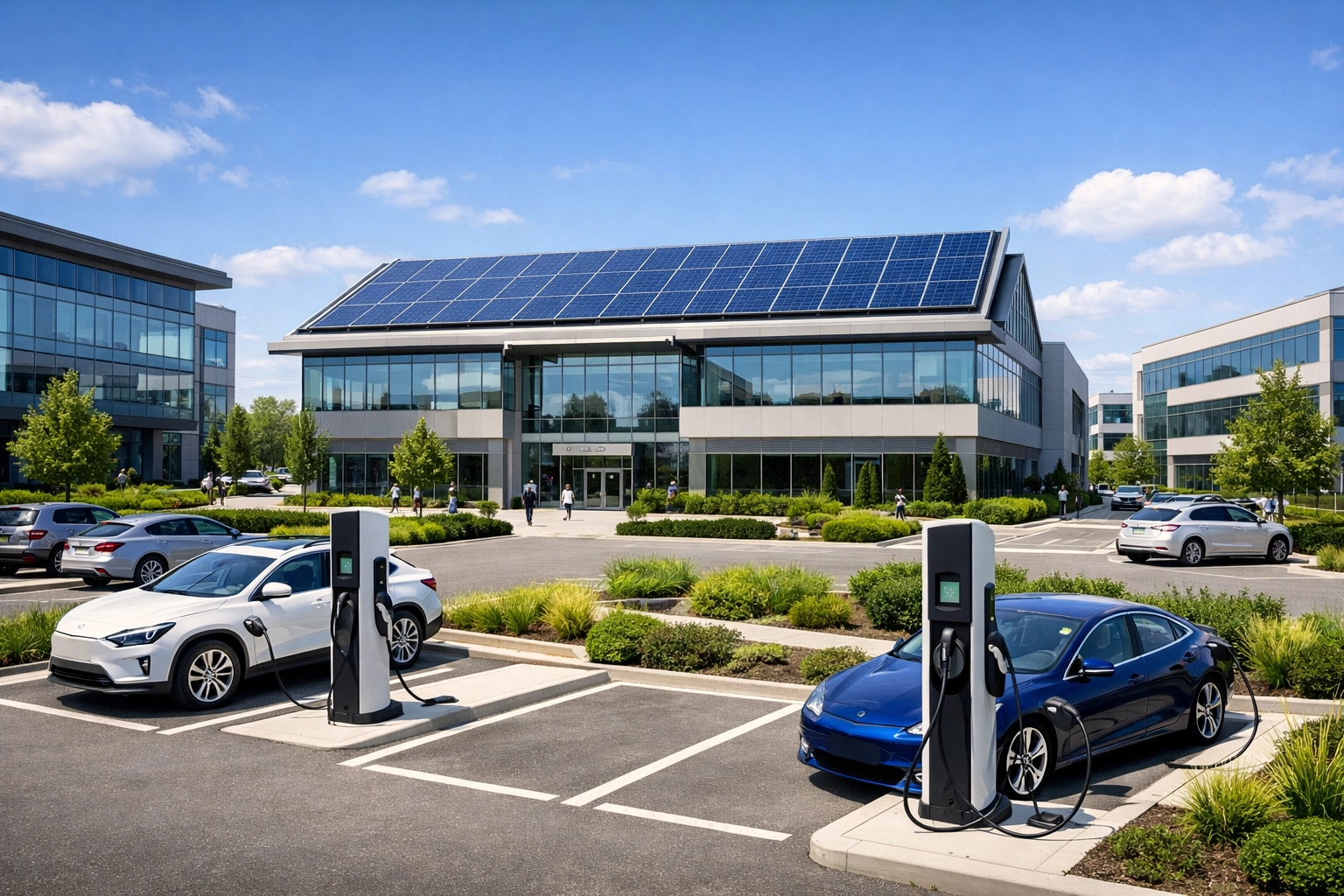
Step 4: Calculate the Payback Period
The "Payback Period" is the most common metric business owners use. It tells you exactly when the system has paid for itself and starts generating pure profit.
The Formula:
Net Investment (Step 1 – Step 2) ÷ Annual Savings (Step 3) = Payback Period in Years
Let’s use our previous numbers:
- Net Investment (after tax relief): £37,500
- Annual Savings: £11,250
- Payback Period: 3.3 Years
Think about that. After just over three years, your business is essentially getting its daytime electricity for free. Given that solar panels are warrantied for 25 years, you are looking at over two decades of "free" energy. If you're feeling a bit overwhelmed by these numbers, don't worry: the business owner's guide to solar ROI in Poole and Bournemouth covers this in even more localized detail.
Step 5: Determine the Total ROI Percentage
While payback period is great for cash flow planning, ROI percentage shows the true power of the investment compared to leaving that money in a high-interest savings account or the stock market.
The average commercial solar ROI currently sits around 15% to 20%. Compare that to a standard business savings account offering 4% or 5%, and the choice becomes clear.
To calculate the lifetime ROI:
- Estimate total savings over 25 years (remembering to account for energy price inflation: usually 3-5% per year).
- Subtract the initial net investment.
- Subtract estimated maintenance costs (usually 1% of system cost per year).
- Divide by the net investment and multiply by 100.
Even with conservative estimates, it is common to see a total ROI of over 500% over the system's life.

Why Maintenance Matters for Your ROI
We often see business owners forget one crucial thing: solar panels only deliver these ROI numbers if they are working correctly. A layer of grime from a nearby construction site or a faulty inverter can quietly eat away at your profits.
And that's okay, because maintenance is relatively simple. We recommend:
- Annual Professional Checks: Ensure all electrical connections are tight and the mounting is secure.
- Cleaning: Depending on your location, a bi-annual clean can boost output by 5-10%.
- Monitoring: Use an app-based monitoring system so you can see daily performance. If production drops, you'll know instantly.
For a deeper dive into protecting your investment, read our ultimate guide to solar aftercare.
Choosing the Right Partner for the Long Haul
The final factor in your ROI isn't a number: it’s a name. The "Solar Cowboy" who offers a rock-bottom price might disappear before your first service is due. If your system fails in year five and your installer is out of business, your ROI evaporates.
Always ensure your installer holds MCS and NAPIT certifications. These aren't just badges; they are your guarantee that the work meets safety standards and that you are eligible for export payments. You can learn more about why these certifications matter for your warranty here.
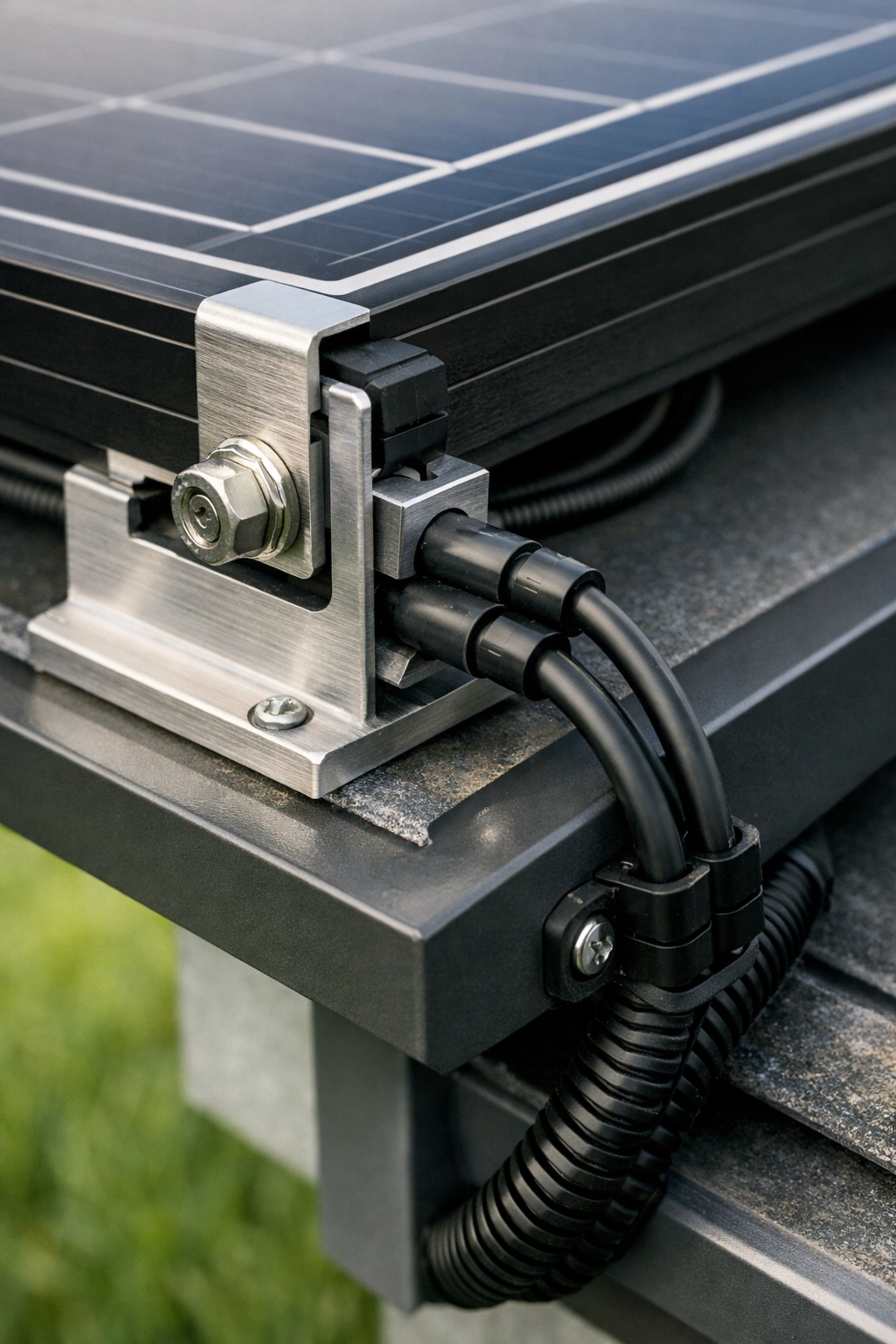
Ready to see the numbers for your own building?
Every business is unique. Your roof orientation, your machinery's power draw, and your current energy contract all play a role in the final calculation.
At DES Renewable Energy Ltd, we don't do "ballpark" guesses. We provide detailed, data-driven ROI reports tailored to your specific commercial premises in Dorset, Hampshire, or beyond.
Contact us to discuss your needs. We will walk through your bills, look at your roof via satellite imagery, and give you an honest, transparent breakdown of what business solar power can do for you. No pressure, just the facts.