


As a business owner in Dorset, you’re likely used to keeping a close eye on your overheads. But lately, those overheads: specifically your energy bills: have probably been behaving a bit like a rollercoaster you never asked to ride. With global volatility stemming from conflicts in the Middle East and energy market fluctuations, the Ofgem price cap has seen dramatic shifts. Recent forecasts from analysts like Cornwall Insight suggest that many businesses could face significant increases in their annual energy spend, with some estimates pointing toward a £332 rise on what was already a high £1,973 average bill.
It’s enough to make anyone feel a bit uneasy. And that’s okay. Navigating the world of business solar power can feel like learning a second language while someone is shouting numbers at you.
At DES Renewable Energy Ltd, we’ve helped countless businesses across Bournemouth, Poole, and Dorchester take back control. In this guide, we’re going to strip away the jargon and look at the cold, hard numbers of solar ROI. We’ll be honest about the downsides too, because a smart investment requires the full picture.
The ROI Timeline: How Fast Does It Pay Back?
When you’re looking at commercial solar, the first question is always: "When do I see my money back?" For most Dorset businesses, the answer is sooner than you might think.
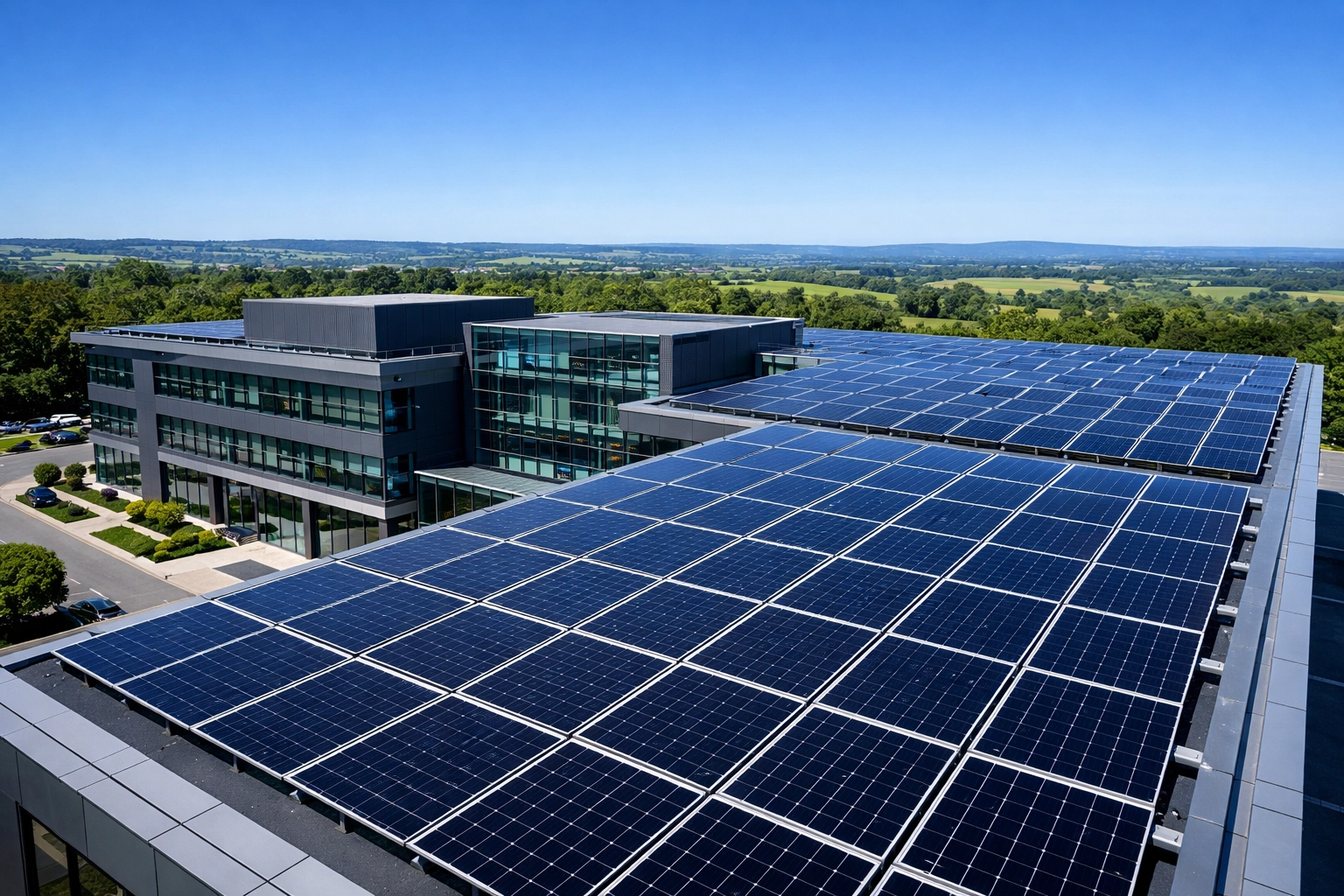
Typically, commercial solar installations deliver a payback period of 3 to 5 years. When you consider that these systems are designed to last 25 to 30 years, you’re looking at over two decades of essentially free electricity.
The Direct Savings Impact
Most businesses operate during the day. This is your "secret weapon" for ROI. Because your peak energy usage aligns perfectly with when your panels are producing the most power, you can directly consume what you generate.
Instead of buying electricity from the grid at 25p–35p per kWh, you’re using your own "free" sunshine. Most of our commercial clients see a reduction in their energy bills of between 30% and 70%.
Advantages and Disadvantages of Solar Power: The Honest Truth
We promised to be transparent, and that means looking at both sides of the coin. You’ve likely heard a lot about the advantages and disadvantages of solar power, but how do they apply to a commercial setting?
The Advantages
- Protection Against Volatility: By generating your own power, you insulate your business from the next global energy crisis or price cap hike.
- Tax Benefits: Unlike residential systems, commercial installations often qualify for capital allowances. You may be able to deduct the full cost of the solar system from your pre-tax profits in the first year.
- Carbon Footprint: It’s not just about the money. Reducing your carbon footprint is becoming a requirement for many B2B contracts and ESG (Environmental, Social, and Governance) goals.
The Disadvantages (And Why They’re Okay)
- The Upfront Cost: There’s no avoiding it: solar requires a significant initial investment. But when you view it as "pre-buying" 25 years of energy at a fixed, low rate, the math starts to make sense.
- Roof Suitability: Not every roof is perfect. If your roof is north-facing or heavily shaded, your ROI will be slower. We’ll always tell you if a site isn't viable before you spend a penny.
- Intermittency: It doesn't produce at night. However, for most businesses that close at 5 PM, this isn't the dealbreaker it is for homeowners.
Understanding the Tax and VAT Landscape
This is where many business owners get a bit confused, and that’s perfectly fine: tax law isn't exactly light reading.
Commercial solar installations attract the full 20% VAT on materials and labor. This is different from the 0% VAT currently enjoyed by residential installations. However, if your business is VAT-registered, you can typically claim this back. This significantly lowers the net cost and speeds up your ROI.
If you aren't VAT-registered, you’ll need to factor that 20% into your initial budget. We recommend checking out our solar panel financial advice section for a deeper dive into the fiscal side of things.
| Factor | Commercial Solar Impact | ROI Effect |
|---|---|---|
| VAT | 20% (Usually reclaimable) | Neutral/Positive |
| Capital Allowances | 100% first-year allowance possible | Major Positive |
| Payback Period | 3 – 5 Years | High |
| System Lifespan | 25 – 30 Years | Long-term Gain |
Maximizing Revenue: The Smart Export Guarantee (SEG)
What happens on a Sunday when your office or warehouse is closed but the sun is shining? Your panels are still working hard, producing energy you aren't using.
Instead of letting that energy go to waste, you can sell it back to the grid through the Smart Export Guarantee (SEG). While the export rates (typically 5p–15p per kWh) are lower than what you pay to buy energy, it still creates a secondary income stream. It’s essentially your building "working" for you while you’re at home enjoying your weekend.

Performance and Maintenance: Protecting Your Investment
A solar system is a 25-year asset. To keep that ROI high, you need to ensure the system stays at peak performance. If your panels are covered in seagull droppings (a common Dorset "perk") or industrial dust, your efficiency can drop by 10-15%.
The good news? Maintenance is generally very low. Aside from an occasional professional clean and an annual electrical health check, there aren't many moving parts to break.
We’ve put together a ultimate guide to solar aftercare to help you understand exactly how to protect your investment for the long haul.
Is Battery Storage Worth It for Business?
For some Dorset businesses, adding a battery: like the Tesla Powerwall 3: can further improve ROI by allowing you to store excess energy from the weekend to use on Monday morning. However, for businesses with high daytime base loads, the panels alone often provide the best "bang for your buck."
Choosing the Right Partner in Dorset
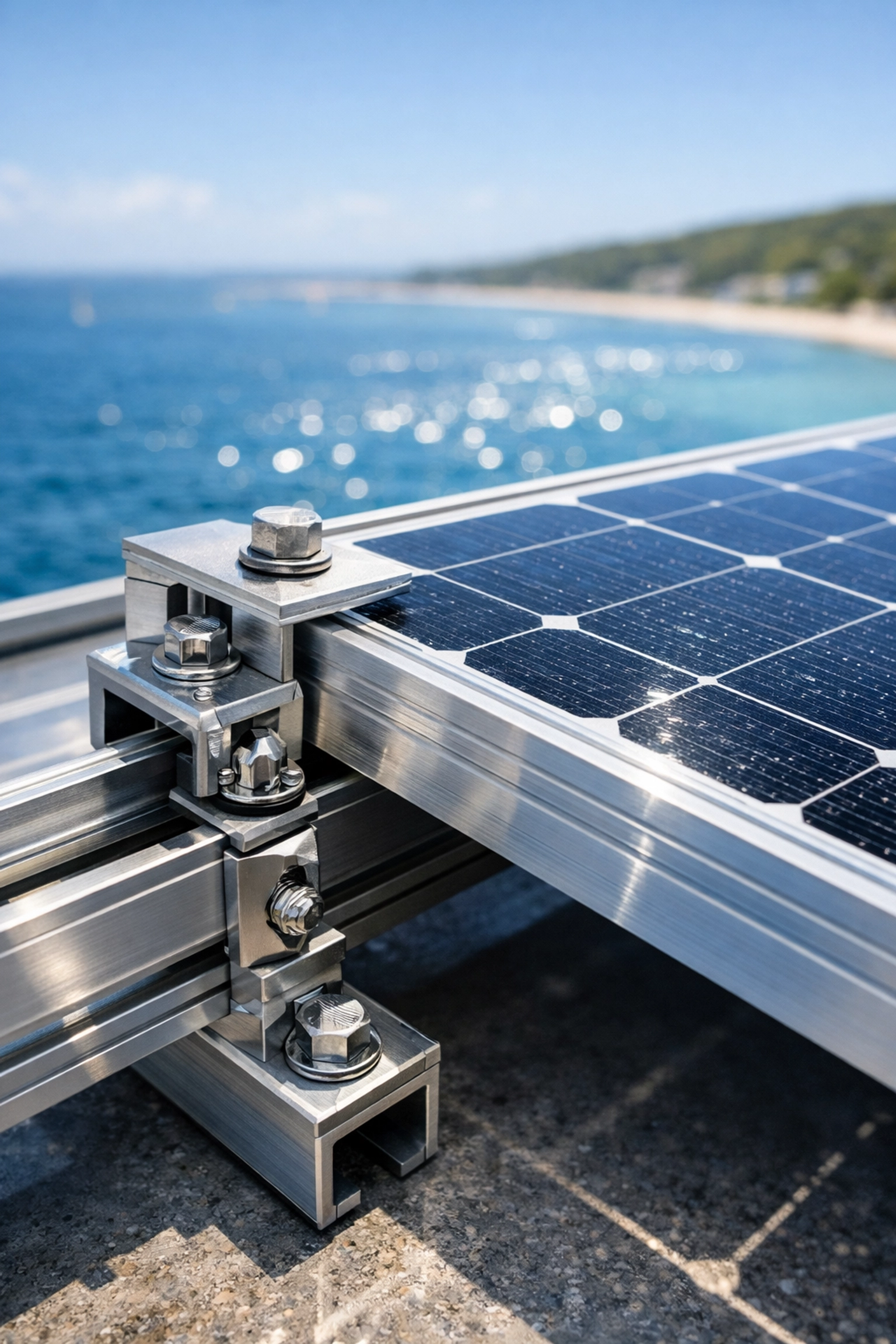
Dorset has a unique coastal environment. Salt air can be corrosive, and high winds are a factor. Using a local expert who understands these conditions is vital. We don’t just "slap panels on a roof"; we design systems using high-quality components from manufacturers like Trina Solar or JA Solar that are built to withstand the British seaside.
If you’re just starting your journey, you might find our Business Solar Power 101 guide helpful to get the basics down before diving into a specific quote.
Taking the Next Step Toward Energy Independence
Mastering your solar ROI isn't about luck; it's about data and design. By understanding your VAT position, maximizing your daytime self-consumption, and choosing the right equipment, you can transform your roof from a liability into a high-yielding asset.
But we know every business is different. A logistics hub in Poole will have very different energy needs than a boutique hotel in Weymouth.
If you're wondering how the numbers would look for your specific building, we’re here to help. We can provide a detailed ROI forecast based on your actual energy half-hourly data.
Why not contact us to discuss your needs? We’ll give you a transparent, no-pressure look at what solar can actually do for your bottom line. You can reach out to our team at DES Renewable Energy Ltd through our expert help and advice page, and let’s see if we can make the sun work for your business.