


Choosing the right home battery can feel like a high-stakes puzzle. With energy prices fluctuating and the average annual bill sitting around £1,973: and projected increases of over £332 on the horizon due to global market volatility: the urge to take control of your power has never been stronger.
You want to stop renting your energy from the grid and start owning it. But when you look at the market, two names constantly go head-to-head: Tesla and GivEnergy.
At DES Renewable Energy Ltd, we see this "battle of the batteries" every day. As Tesla Powerwall Certified installers and an Octopus Trusted Partner, we’ve installed hundreds of these systems across Dorset and Hampshire. We know that the "best" battery isn't a one-size-fits-all answer. It depends entirely on how you live, how you use power, and what you want your energy future to look like.
In this deep-dive guide, we’re going to strip away the jargon and look at the hard facts. By the end, you'll know exactly which system deserves a spot on your wall.
The Modern Energy Crisis: Why Storage is No Longer Optional
Before we compare the hardware, let’s talk about why you’re here. The UK energy market is currently a rollercoaster. Middle East conflicts and global supply chain shifts have made traditional energy sources unpredictable. For homeowners in Poole or Bournemouth, this means one thing: your bills are likely going up.
Solar panels are a fantastic first step, but without a battery, you’re basically a "daytime-only" energy producer. You generate power while you’re at work, and then you buy it back from the grid at a premium when you get home to cook dinner.
A battery storage system captures that excess sun and holds it for when you actually need it. Whether you choose the sleek Tesla Powerwall 3 or the robust GivEnergy All-in-One, you’re essentially building your own private power station.

Meet the Heavyweights: Tesla Powerwall 3 vs. GivEnergy All-in-One
Tesla is the household name, often called the "Apple of the battery world." Their latest offering, the Powerwall 3, is a powerhouse of integrated technology. On the other side, we have GivEnergy, a British-owned company that has rapidly become a favorite for its flexibility and customer-focused features.
Both systems use Lithium Ferro Phosphate (LFP) chemistry. This is important for you to know because LFP is widely considered the gold standard for home safety. It’s more stable than older lithium-ion tech and has a much longer lifespan.
But that’s where the similarities start to diverge.
1. Power and Capacity: Who Wins the Heavy Lifting?
When we talk about batteries, we look at two main numbers: Capacity (how much energy it can hold, measured in kilowatt-hours or kWh) and Peak Power Output (how much energy it can push out at once, measured in kilowatts or kW).
The Tesla Powerwall 3 comes with a 13.5 kWh capacity. It features a massive 11.04 kW integrated inverter. Think of the inverter as the "brain" that converts the DC power from your panels into the AC power your toaster needs. With over 11 kW of output, the Powerwall 3 can comfortably run high-drain appliances like heat pumps and EV chargers simultaneously without breaking a sweat.
The GivEnergy All-in-One also offers a 13.5 kWh capacity, but it edges out Tesla on peak power. It delivers a staggering 12 kW of peak power and can charge at a rate of 6 kW. Why does charging speed matter? If you have a large solar array or you want to "top up" quickly during a cheap overnight tariff window, that extra speed is a game-changer.
2. Efficiency and Solar Integration
Tesla has designed the Powerwall 3 to be the heart of a new solar installation. It includes three MPPTs (Maximum Power Point Trackers). In plain English, these are like traffic controllers for your solar energy; they ensure you’re getting the most possible power from your roof, even if different parts of your roof face different directions.
However, if you already have solar panels and just want to add a battery (what we call a "retrofit"), the GivEnergy All-in-One is often the smoother path. It’s designed to sit alongside your existing setup without needing a complete overhaul of your current inverter.
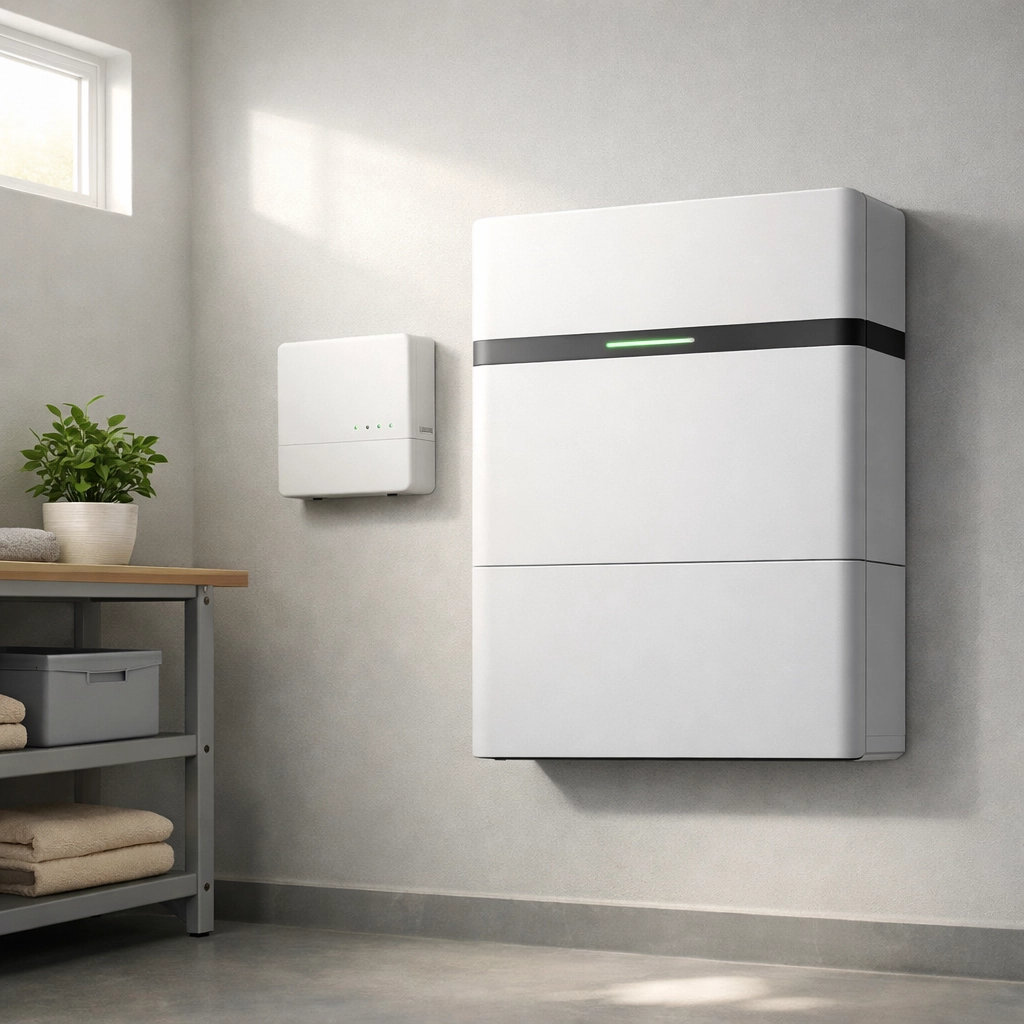
Side-by-Side Comparison: The Data
To make your decision easier, we’ve put the core specs of these two giants next to each other.
| Feature | Tesla Powerwall 3 | GivEnergy All-in-One |
|---|---|---|
| Usable Capacity | 13.5 kWh | 13.5 kWh |
| Peak Power Output | 11.04 kW | 12 kW |
| Charging Rate | 5 kW | 6 kW |
| Warranty | 10 Years (80% capacity) | 12 Years (with servicing) |
| Battery Chemistry | LFP (Lithium Ferro Phosphate) | LFP (Lithium Ferro Phosphate) |
| Installation | Indoor or Outdoor (IP67) | Indoor or Outdoor (IP65) |
| Solar Integration | 3 Integrated MPPTs | External Inverter Support |
Smart Software: The App Experience
You’re going to be checking your battery app: a lot. It’s surprisingly addictive to watch your house run for "free."
Tesla’s app is widely regarded as the best in the business. It’s sleek, intuitive, and provides real-time data from anywhere in the world. It also has a "Storm Watch" feature. If a major weather event is predicted in Bournemouth or Poole, the Powerwall will automatically top itself up to 100% to ensure you have backup power if the grid goes down.
GivEnergy’s software is built for the "data geeks." It offers incredibly granular control. You can schedule exactly when you want to charge from the grid and when you want to discharge. If you’re using a smart tariff like Octopus Flux or Agile, GivEnergy’s ecosystem is designed to play very nicely with these fluctuating rates.
If you're interested in how these systems compare specifically for Dorset homes, check out our guide on Tesla Powerwall vs GivEnergy for your Bournemouth home.
Longevity: Warranty and Servicing
Investing in a battery is a 10-to-15-year commitment. You want to know that the company will stand by their product.
Tesla offers a 10-year warranty with a guarantee that the battery will maintain at least 80% of its capacity. It’s a "fit and forget" system: Tesla doesn't require you to service it to keep the warranty valid.
GivEnergy offers a longer 12-year warranty. However, there is a catch: you are required to have the system serviced at years 5, 8, and 10 to keep that warranty active. Some homeowners like the peace of mind that comes with a regular check-up; others find it a bit of a chore.
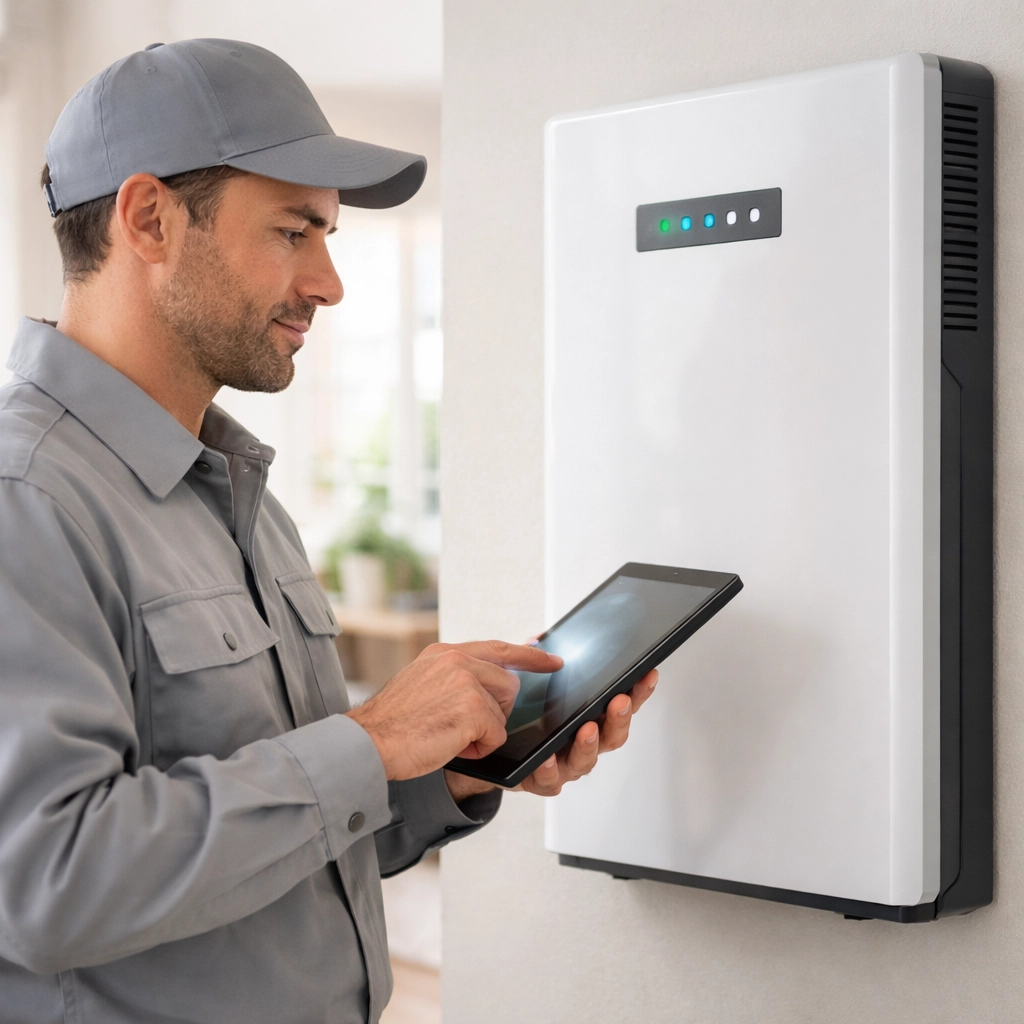
Which One is Right for You?
Still scratching your head? And that’s okay. These are big decisions. Let's break it down into common scenarios we see at DES.
Choose the Tesla Powerwall 3 if:
- You’re installing a brand new solar system. The integrated inverter and MPPTs make it the most efficient choice for a "from scratch" build.
- You have high power demands. If you’re running an EV charger, a heat pump, and an electric oven all at once, the Powerwall's robust output will handle it.
- You want the best app experience. If you value simplicity and a "premium" feel, Tesla wins.
- Weather is a concern. With an IP67 rating, it’s even flood-resistant (though we hope you never have to test that in Poole!).
Check out our more detailed comparison here: Tesla Powerwall 3 vs GivEnergy – Which is better?
Choose the GivEnergy All-in-One if:
- You’re retrofitting to an existing solar setup. It’s often easier and more cost-effective to integrate.
- You want more warranty years. That extra 2 years can provide significant peace of mind.
- You like to tinker. If you want deep control over your energy management and love looking at detailed data charts, GivEnergy is for you.
- You’re on a slightly tighter budget. Generally, GivEnergy systems can be installed at a lower price point than the premium Tesla brand.
Avoiding the "Solar Cowboys"
Whether you choose Tesla or GivEnergy, the hardware is only half the battle. The installation is where things can go wrong. We've seen too many homeowners in Hampshire and Dorset fall victim to "solar cowboys" who provide poor advice or disappear when a warranty issue arises.
Your solar warranty: and your safety: depends on choosing an installer with the right certifications. Look for MCS and NAPIT accreditation. As an MCS certified installer, we ensure your system is eligible for export tariffs, meaning you actually get paid for the extra energy you send back to the grid.
Final Thoughts: Taking the Next Step
The "Tesla vs GivEnergy" debate isn't about finding a winner; it's about finding your match.
If you want the sleekest, most integrated system on the market and you’re starting your solar journey today, the Tesla Powerwall 3 is hard to beat. If you want a flexible, British-backed system with a longer warranty and great smart-tariff integration, the GivEnergy All-in-One is a fantastic choice.
The most important thing? Don't wait until the next energy price hike hits.
Between you and our team, we can design a system that wipes out your energy bills and gives you true independence. We work across Bournemouth, Poole, and the wider Hampshire area, helping homeowners navigate these choices every day.
Ready to see which system fits your roof?
Contact us today to chat with one of our experts. We’ll look at your energy usage, your home’s orientation, and your budget to help you make the right call. Let's get your home powered by the sun.