


If you’ve been keeping an eye on your company’s overheads lately, you don’t need us to tell you that energy prices are a moving target. As of March 2026, the landscape of the UK energy market remains volatile. Between global supply chain shifts and the ongoing impact of international conflicts on gas prices, the "predictable" utility bill has become a thing of the past.
But here in Dorset, something interesting is happening. From the industrial estates of Poole to the independent retailers in Dorchester and the tech hubs of Bournemouth, business owners are no longer just "considering" solar: they are accelerating their installations.
Why? Because the Return on Investment (ROI) for business solar power has hit a sweet spot that we haven’t seen in decades. In this guide, we’ll break down exactly why 2026 is the year Dorset businesses are seeing faster paybacks and how you can determine if it’s the right move for your bottom line.
The 2026 ROI Reality: Breaking Down the Numbers
Let's get straight to the numbers, because we know that’s what matters most to your board of directors or your accounting team. In 2026, the average UK commercial solar system is achieving a payback period of just 4 to 6 years.
If you are a high-consumption business: think manufacturing plants, cold storage, or intensive data processing: that payback can actually drop to between 3 and 5 years. When you compare this to the 10–12 year payback periods of a decade ago, the shift is staggering.
Typical ROI Expectations in 2026
| System Size | Average Payback Period | Estimated ROI |
|---|---|---|
| Small Commercial (10-30 kWp) | 5-7 Years | 12-15% |
| Medium Commercial (30-100 kWp) | 4-6 Years | 17-22% |
| Large Industrial (100+ kWp) | 3.5-5 Years | 20-25% |
As expert installers, we’ve seen that the strongest returns occur when your electricity usage aligns perfectly with daylight hours. If your machinery is humming or your office lights are on between 9 AM and 5 PM, you aren't just saving money; you’re effectively "locking in" an energy rate of roughly 5p to 8p per kWh for the next 25 years. When grid prices hover well above 20p per kWh, the math starts to look very attractive.
Why Dorset Businesses are Leading the Charge
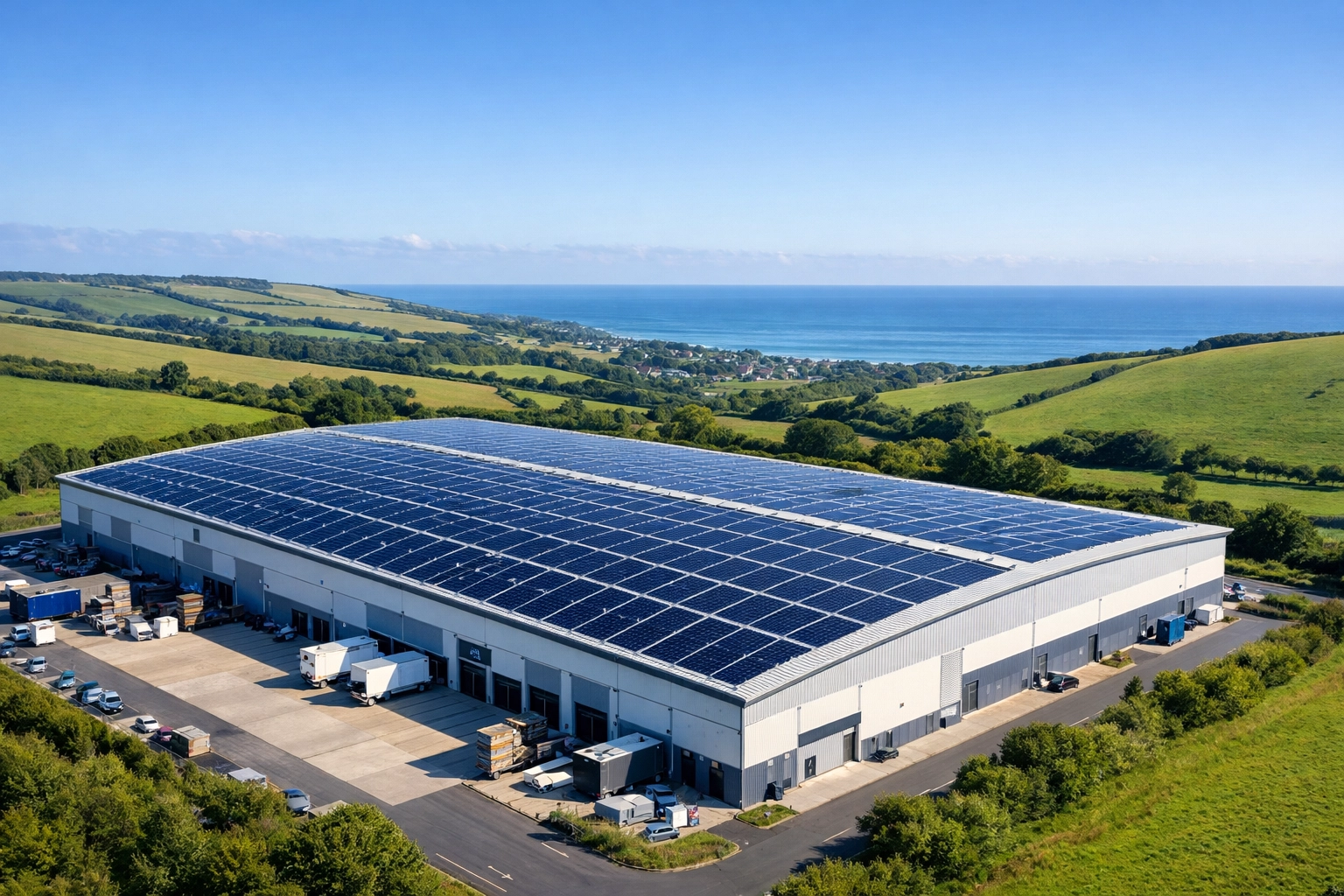
You might wonder if Dorset’s geographical location plays a role. It absolutely does. The South Coast of England remains one of the most viable regions for solar generation in the UK.
Beyond the sunshine, there is a regional momentum. The Dorset Council has been actively exploring large-scale projects, such as the solar farm at Higher South Buckland Farm in Chickerell. This local focus on renewable infrastructure has helped foster a robust network of renewable energy installers in Dorset, making it easier for businesses to access high-quality components and expert maintenance.
The Honest Disadvantages of Solar: Is There a Catch?
We believe in being completely transparent. While the advantages and disadvantages of solar power are often weighted toward the positives, commercial solar isn't a "magic button" for every single business. It’s important to acknowledge the hurdles so you can make an informed decision.
1. The Upfront Capital Expenditure
Even with falling hardware costs, a commercial-grade solar array requires a significant initial investment. While there are financing options and tax incentives like "Full Expensing" (which allows companies to deduct the full cost of certain plant and machinery from their profits), seeing a five-figure or six-figure sum leave the bank account can be daunting. And that’s okay. It’s a major capital decision that requires careful planning.
2. Roof Suitability and Structural Integrity
Not every roof is ready for a solar makeover. If your warehouse roof is nearing the end of its life or lacks the structural strength to hold several hundred panels, you’ll need to factor in repair or reinforcement costs.
3. Intermittency and Storage Needs
Solar only generates power when the sun is up. If your business operates a heavy night shift, you won't see the same immediate ROI unless you invest in battery storage solutions. Adding batteries increases the upfront cost, though it significantly boosts your energy independence. If you're curious about the latest battery tech, you might want to compare options like the Tesla Powerwall 3 vs GivEnergy to see which fits your scale.
Maximizing Your ROI: The Role of Maintenance
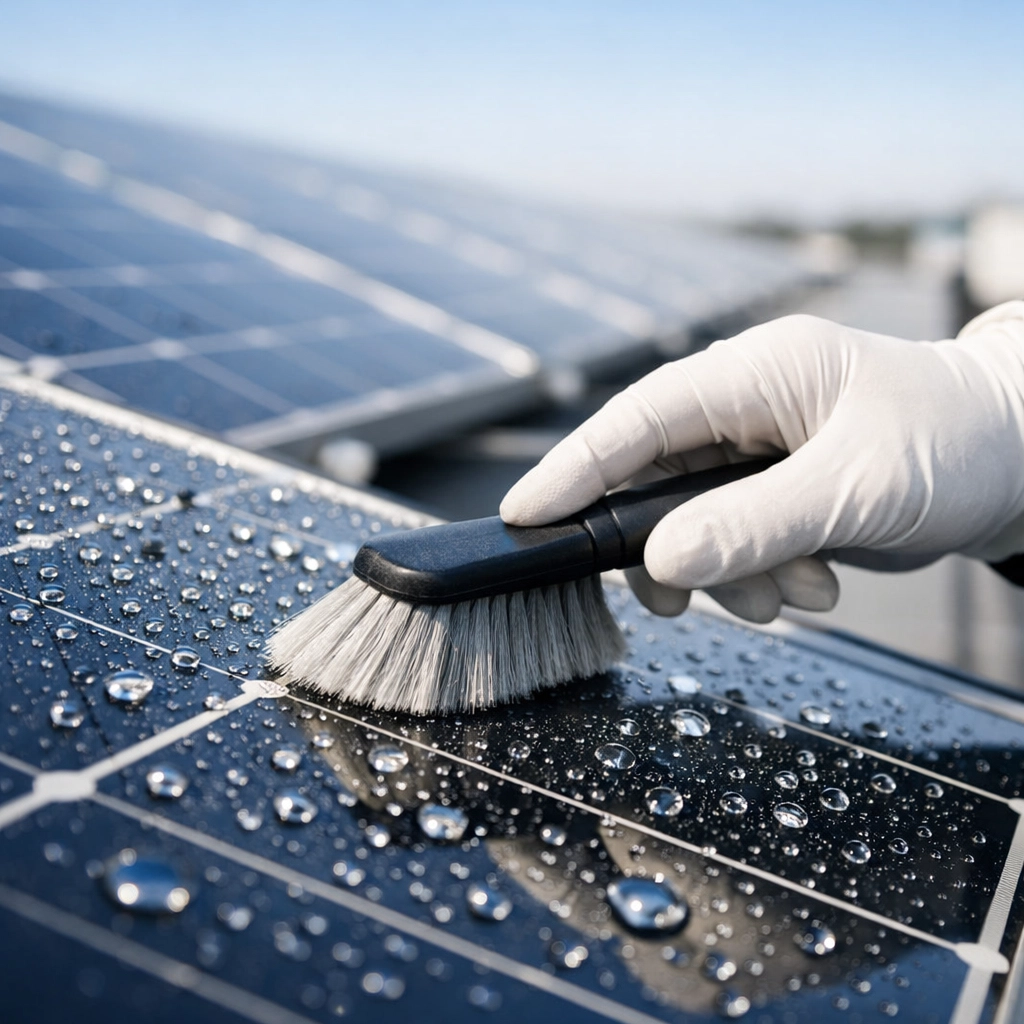
A common mistake we see is the "fit and forget" mentality. To maintain a 20%+ ROI, your system needs to perform at its peak. In Dorset, factors like salt spray (if you’re near the coast in Poole or Bournemouth) or agricultural dust in rural areas can slightly degrade panel efficiency over time.
We recommend a proactive approach to solar aftercare. This includes:
- Annual Professional Cleaning: Removing bird droppings, grime, and lichen can boost output by 5-10%.
- Inverter Monitoring: Using smart software to ensure your inverters are converting DC to AC power efficiently.
- Electrical Safety Checks: Ensuring all connections remain tight and weather-proofed against the British elements.
How 2026 Energy Volatility Shortens Payback
The urgency for solar in 2026 is driven by more than just environmental "green-washing." It's about risk management. With Middle East tensions and global supply constraints impacting the energy price cap and industrial tariffs, the cost of doing nothing is rising.
If your business is currently paying 25p per kWh, a 100kW system could save you upwards of £20,000 a year. If grid prices spike to 30p: which is entirely possible given current market volatility: those savings jump to £24,000. This "hedge" against inflation is why Dorset companies are seeing such fast ROI; they aren't just saving money, they are avoiding future price hikes.
Is Your Business a Good Candidate?
You might be wondering if your specific building is right for this. We usually tell our clients that if you can answer "Yes" to the following three questions, your ROI will likely be on the faster end of the spectrum:
- Do you own your premises or have a long-term lease? Most ROI cycles need at least 5 years to break even.
- Is your daytime energy usage high? If you're running machinery, HVAC systems, or large-scale lighting during the day, you're the perfect candidate.
- Do you have at least 100-200 square meters of unshaded roof space? Space is the currency of solar.
If you’re still scratching your head about the technicalities, don’t worry. We’ve put together a Business Solar Power 101 guide that simplifies the jargon into plain English.
Next Steps for Your Dorset Business
Taking the leap into commercial solar power is a big step, but in 2026, the data shows it’s one of the safest investments a company can make. By reducing your reliance on a volatile grid, you’re not just helping the planet: you’re protecting your profit margins.
At DES Renewable Energy Ltd, we specialize in helping local companies navigate the complexities of solar panel investment. We don’t believe in high-pressure sales; instead, we focus on providing the data and transparency you need to make the right choice for your specific site.
Ready to see what the numbers look like for your roof?
We’d love to help. Whether you’re looking for a detailed ROI projection or just have a few questions about how maintenance works, our team is here to guide you. Feel free to contact us to discuss your needs, and let’s see if we can get your energy bills headed in the right direction.