


You’re probably looking at your business electricity bills right now and wondering where it ends. With global market volatility: fuelled by ongoing conflicts in the Middle East: and the latest Cornwall Insight forecasts suggesting energy prices aren't dropping to "pre-crisis" levels anytime soon, the pressure on your margins is real. In fact, with the average UK business bill seeing significant fluctuations and the residential price cap hovering around £1,973, the commercial sector is feeling an even tighter squeeze.
But here is the good news: transitioning to business solar power isn't just a "green" PR move anymore. It is a calculated financial strategy to claw back control over your overheads. At DES Renewable Energy Ltd, we believe in transparency. You need the hard numbers to take to your board or your accountant, not just vague promises of "saving the planet."
In this guide, we’ll break down exactly how to forecast your Return on Investment (ROI) using real data and how to navigate the advantages and disadvantages of solar power with your eyes wide open.
Understanding the Financial Engine: How to Forecast Your ROI
Forecasting the ROI for a commercial solar installation is a bit like predicting the weather: except the data is much more reliable. We aren’t just guessing; we are looking at your roof space, your historical usage, and the efficiency of modern hardware.
To get a clear picture, you need to look at five specific data points.
1. The Total Installation Cost
This is your starting line. It includes the panels, inverters, mounting kits, and the labour for the install. For a business, this also covers scaffolding, G99 grid applications, and often, a structural survey of your roof.
2. Annual Energy Savings
How much of your "daytime load" can solar cover? If your business runs heavy machinery or servers from 9 am to 5 pm, your ROI will be significantly higher because you are using the energy exactly when the sun is producing it.
3. Financial Incentives and Tax Breaks
Don't forget the Annual Investment Allowance (AIA). Most businesses can write off the cost of the solar installation against their taxable profits in the first year. This can effectively "discount" the system by up to 25% depending on your tax bracket.
4. The Payback Period Formula
The simplest way to see if the math works for you is the Payback Period calculation:
Total System Cost (after tax breaks) ÷ Annual Energy Savings = Payback Period (Years)

Real-World Benchmarks: What Does the Data Say?
While every roof in Dorset or Hampshire is different, we can look at industry averages to give you a baseline. On average, commercial solar installations deliver an ROI of approximately 15.87%.
To put that in perspective, compare it to leaving that same cash in a high-interest business savings account. Even at 5%, the bank can’t touch the returns that a high-efficiency solar array offers.
| Installation Type | Average ROI (%) | Average Payback (Years) |
|---|---|---|
| Roof-Mounted (Commercial) | 15.77% | 9.01 Years |
| Ground-Mounted (Large Scale) | 16.45% | 9.29 Years |
| High-Efficiency (with Battery) | 18.20% | 7.5 – 8 Years |
Note: These figures are based on current UK energy price projections and average system performance.
The Honest Disadvantages of Solar Power
We promised to be transparent, and that means talking about the bits that aren't so shiny. Solar is incredible, but it isn’t a magic wand. If you're considering business solar power, you need to weigh these factors:
- The Upfront Cost: Even with financing, the initial capital outlay is significant. We understand if you’re hesitant about tying up cash: and that’s okay. There are Power Purchase Agreements (PPAs) and asset financing options available to help.
- Intermittency: If your business operates primarily at night, solar won't help you unless you invest in battery storage.
- Roof Suitability: Not every roof is ready. If your warehouse roof is 30 years old and needs replacing, you should do that before the panels go on. Adding panels to a failing roof is a recipe for a very expensive headache later.
- Planning and Permissions: While most commercial solar falls under "Permitted Development," listed buildings or those in conservation areas might face hurdles.
Cutting Running Costs with Real-Time Data
Once the panels are on the roof, the "set and forget" mentality is your biggest enemy. To truly maximise your ROI, you need to be proactive.
Monitor, Don't Guess
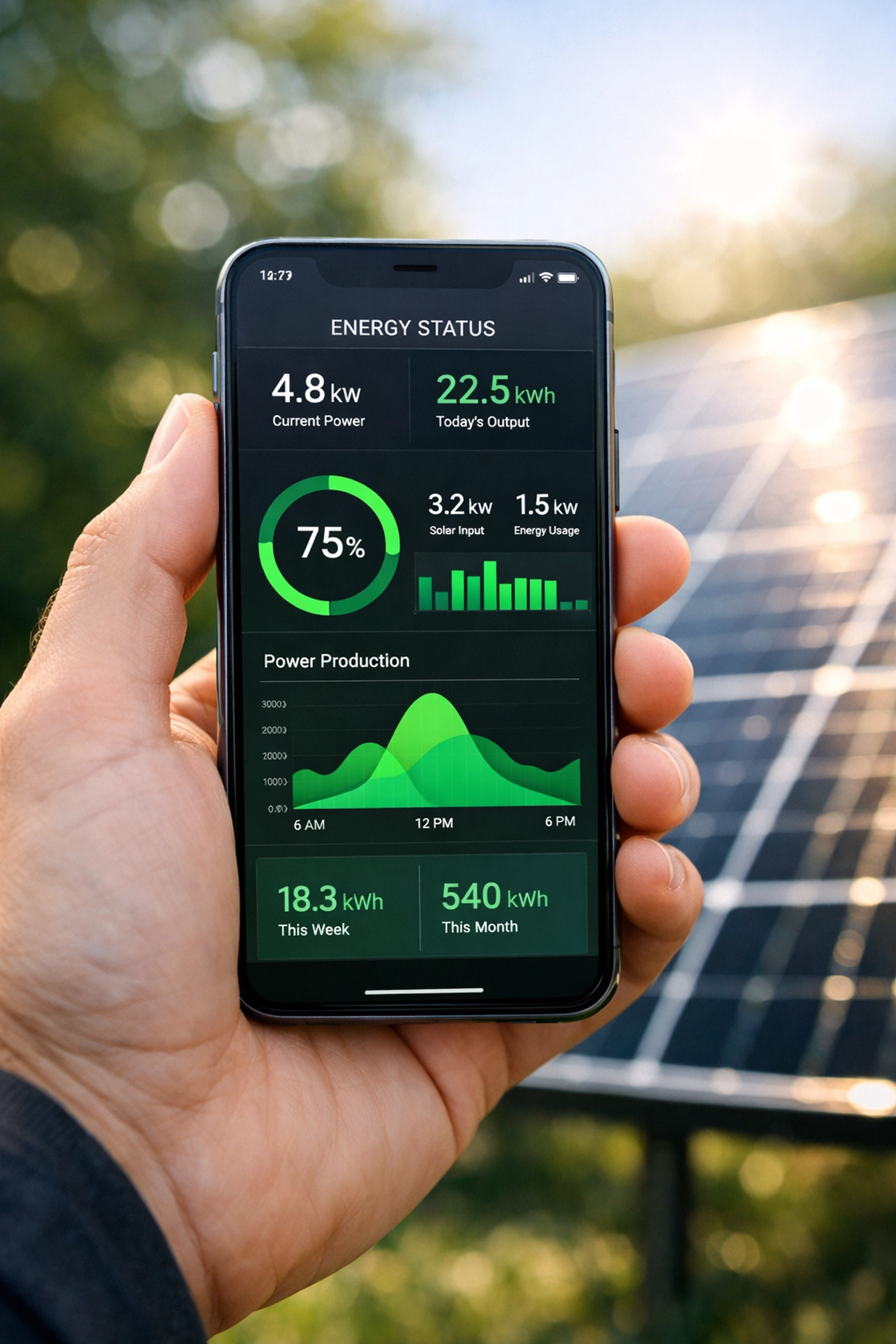
Modern systems come with sophisticated software that tells you exactly how much energy you are generating and consuming in real-time. If you see a dip in production on a sunny day, you know something is wrong. Perhaps a bird has decided your array is a five-star hotel, or a layer of industrial dust is blocking the light.
Match Your Load to Your Generation
The biggest "cost-cutter" is behavioural change. Can you schedule your high-energy tasks (like charging a fleet of EVs or running heavy laundry cycles) for 11 am instead of 7 am? By shifting your "load," you avoid buying expensive electricity from the grid.
Factor in Rising Rates
When we calculate your 25-year savings, we don't assume energy prices stay the same. Historically, electricity prices increase by 2–5% annually. When the grid gets more expensive, your "free" solar energy becomes even more valuable, effectively shortening your payback period over time.
Maintenance: Keeping the ROI High for 25 Years
Solar panels are incredibly durable, but they aren't maintenance-free. If you want to keep that 15% ROI, you need to look after the hardware.
- Annual Visual Inspections: Check for loose fixings or debris.
- Inverter Health: Most panels last 25+ years, but inverters typically need replacing around the 12-to-15-year mark. We recommend budgeting for this in your long-term forecast: and that's okay, it's a standard part of the system's lifecycle.
- Professional Cleaning: Depending on your location (especially if you're near a dusty farm or a coastal area with salt spray), a professional clean every two years can boost output by as much as 10%.
For a deeper dive into keeping your system healthy, check out our ultimate guide to solar aftercare.
Is Business Solar Right for You?
We understand that every business is unique. A retail shop in Bournemouth has different energy needs than a manufacturing plant in the heart of Dorset. The "best" system is the one that is sized correctly for your specific usage: not too small that it does nothing, and not so large that you're exporting all your profit back to the grid for a pittance.
Between you and our team, we can dig into your half-hourly data to build a model that shows exactly when you’ll break even. We’ve seen businesses wipe out 70% of their daytime energy bills, and with the current volatility in the market, that kind of independence is priceless.
Next Steps to Future-Proof Your Business
If you're ready to stop guessing and start forecasting with real data, we’re here to help. Whether you're curious about the advantages and disadvantages of solar power for your specific site or you need a detailed ROI breakdown for your financial director, let's talk.
Contact us to discuss your needs and we can provide a bespoke desktop survey to get the ball rolling. No high-pressure sales: just honest, educational advice to help your business thrive in a high-cost energy world.