


Deciding to take your business off the grid: or at least reducing your reliance on it: is a massive step. It’s a move that says you’re thinking about the next twenty years, not just the next quarter. But let’s be real: when you start looking at kilowatt-hours, bifacial vs. monocrystalline panels, and inverter efficiencies, it can feel like you’re learning a whole new language.
And that’s okay. Most business owners feel exactly the same way when they start this journey.
At DES Renewable Energy Ltd, we believe that choosing the right business solar power setup shouldn't feel like a gamble. It should be a calculated, data-driven decision that balances how much you spend today with how much you’ll save over the next three decades. In this guide, we’re going to break down the "advantages and disadvantages of solar power" for your business and help you find the sweet spot between high ROI and long-term durability.
The Honest Disadvantages of Business Solar Power
We’re starting here because most companies won’t. To make an educated decision, you need the full picture: not just the glossy brochure version. While we love solar, it isn’t a perfect "magic wand" for every single business.
First, the upfront cost is significant. Even with government incentives, a commercial system is a capital-heavy investment. Second, weather dependency is a reality; your energy production will fluctuate, and you’ll still need a connection to the grid (or a very large battery) to ensure 24/7 operations. Finally, space requirements can be a dealbreaker. If you have a small roof but high energy needs, you might find it difficult to achieve full energy independence.
But here is the reassuring part: for 90% of businesses with a dedicated roof or land space, the long-term financial gains far outweigh these initial hurdles. Understanding these limitations early just means you can plan for them.
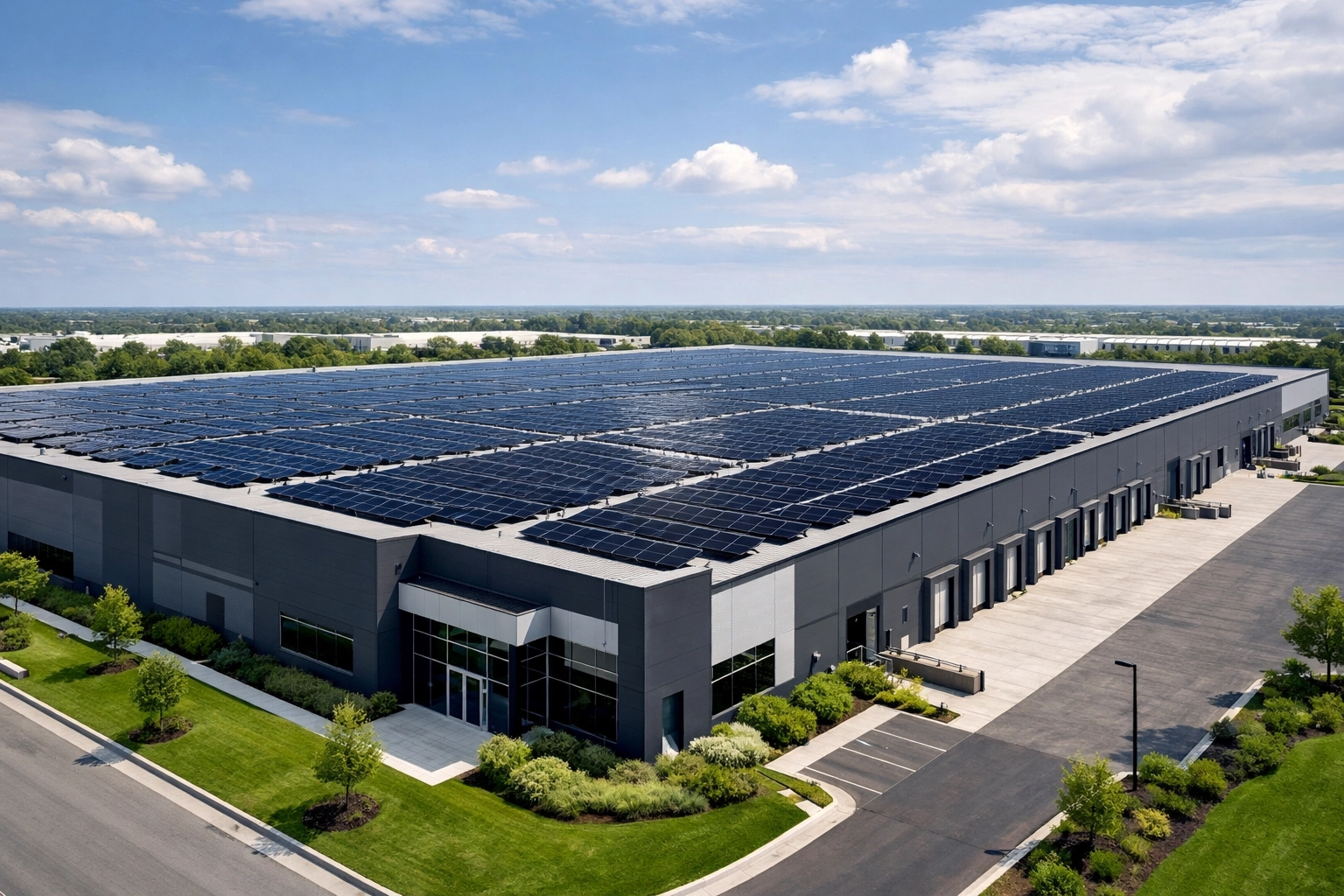
Understanding the Scale: What Does Your Business Actually Need?
Before you look at brands, you need to look at your bills. The scale of your system is the biggest driver of your Return on Investment (ROI). While a home might need a 4 kW or 5 kW system, businesses usually start at 10 kW and can easily scale into the megawatts.
- Small Businesses: Typically require systems between 10 kW and 50 kW.
- Medium to Large Enterprises: Often look at 50 kW to 250 kW+.
If you’re just starting to explore the basics, our Business Solar Power 101 guide is a great place to get your bearings. The key is to match your "peak load" (when your business uses the most power) with your system’s peak production.
Calculating Your ROI: The Data Behind the Decision
Let’s talk numbers. When we talk about business solar power, we aren't just talking about saving the planet; we’re talking about a financial asset.
The Upfront Investment vs. The Credit
Based on current market data, a 25 kWh commercial system might cost roughly $70,000 (approx. £55,000) before any tax incentives. However, programs like the Federal Solar Tax Credit (ITC) in the US or similar capital allowance schemes in the UK can slash that by 30%.
That brings your real-world investment down to about $49,000. If your business is currently spending $1,000 a month on electricity, your system could pay for itself in less than five years. After that? Your electricity is essentially free for the next 20 to 25 years.
Net Metering: Making the Grid Your Battery
One of the fastest ways to boost your ROI is through net metering. This allows your business to send excess power back to the grid during the day (when your panels are soaking up the sun) in exchange for credits. You can then use these credits at night or during cloudy spells. It turns your utility provider into a giant, free battery.
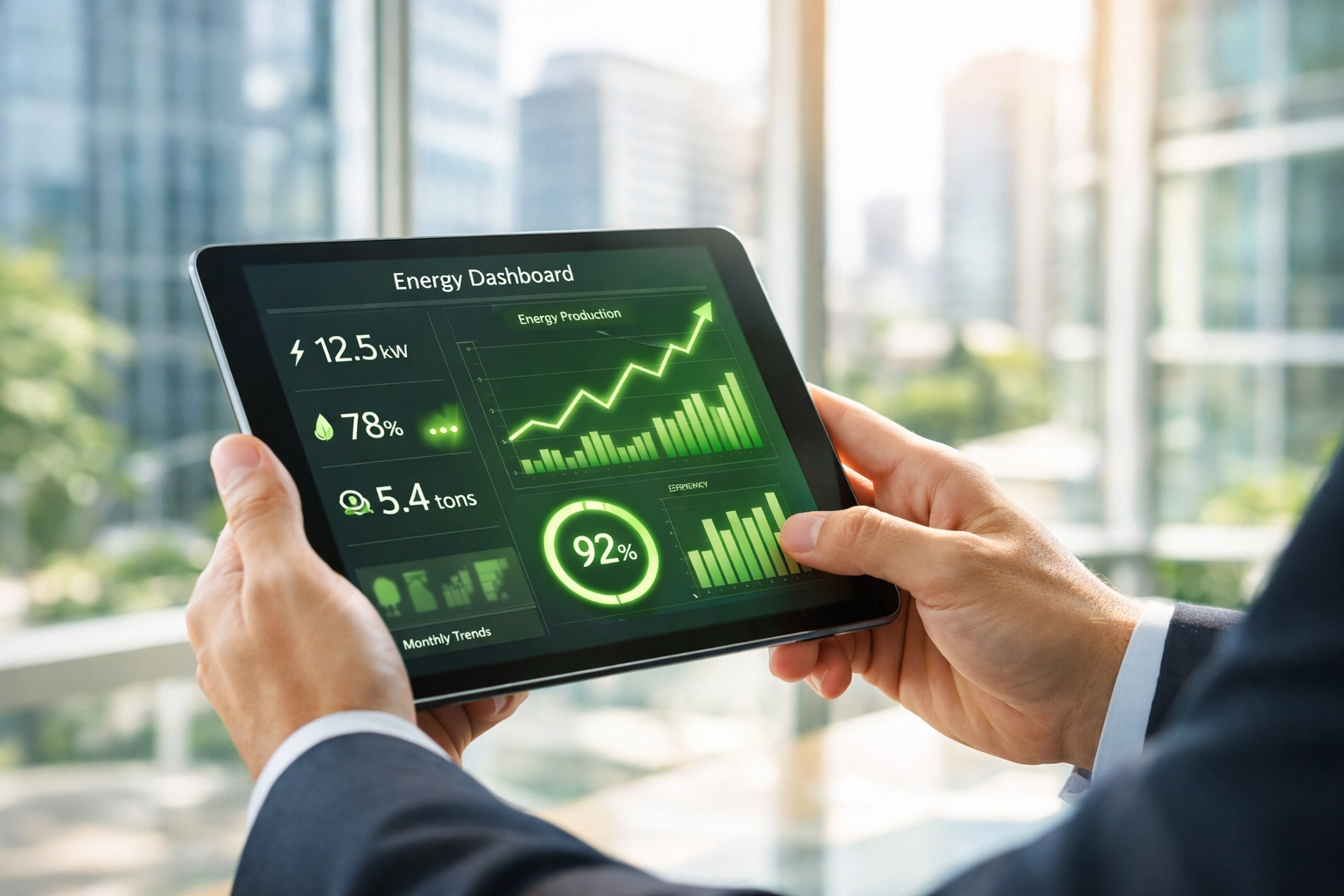
Longevity: Choosing Components That Last 30 Years
You don't want a system that provides a great ROI for five years and then falls apart. Longevity is about the quality of the "big three": panels, inverters, and racking.
High-Efficiency Panels
For commercial setups, we generally recommend panels with an efficiency rating of at least 22%. Higher efficiency means you get more power per square foot of roof space.
- Monocrystalline Panels: These are the gold standard for durability and efficiency.
- Bifacial Panels: These capture sunlight from both sides. They can be up to 11% more efficient than standard panels, making them excellent for ground-mount systems or flat roofs with reflective surfaces.
We often point clients toward manufacturers like SEG Solar, who offer a 15-year product warranty and a staggering 30-year performance warranty. This ensures your investment is still generating cash well into the 2050s.
Smart Inverters
The inverter is the "brain" of your system. It converts the DC power from your panels into AC power your machines can use. For businesses, we recommend "smart inverters" that offer cloud-based monitoring. This allows you (and us!) to see exactly how your system is performing in real-time. If one panel underperforms, you’ll know immediately, rather than finding out three months later when your bill arrives.
If you’re curious about how specific brands stack up, you might find our comparison of the Tesla Powerwall vs. GivEnergy helpful, as many of these technologies translate into the commercial sector.
Maintenance: The Secret to Sustained ROI
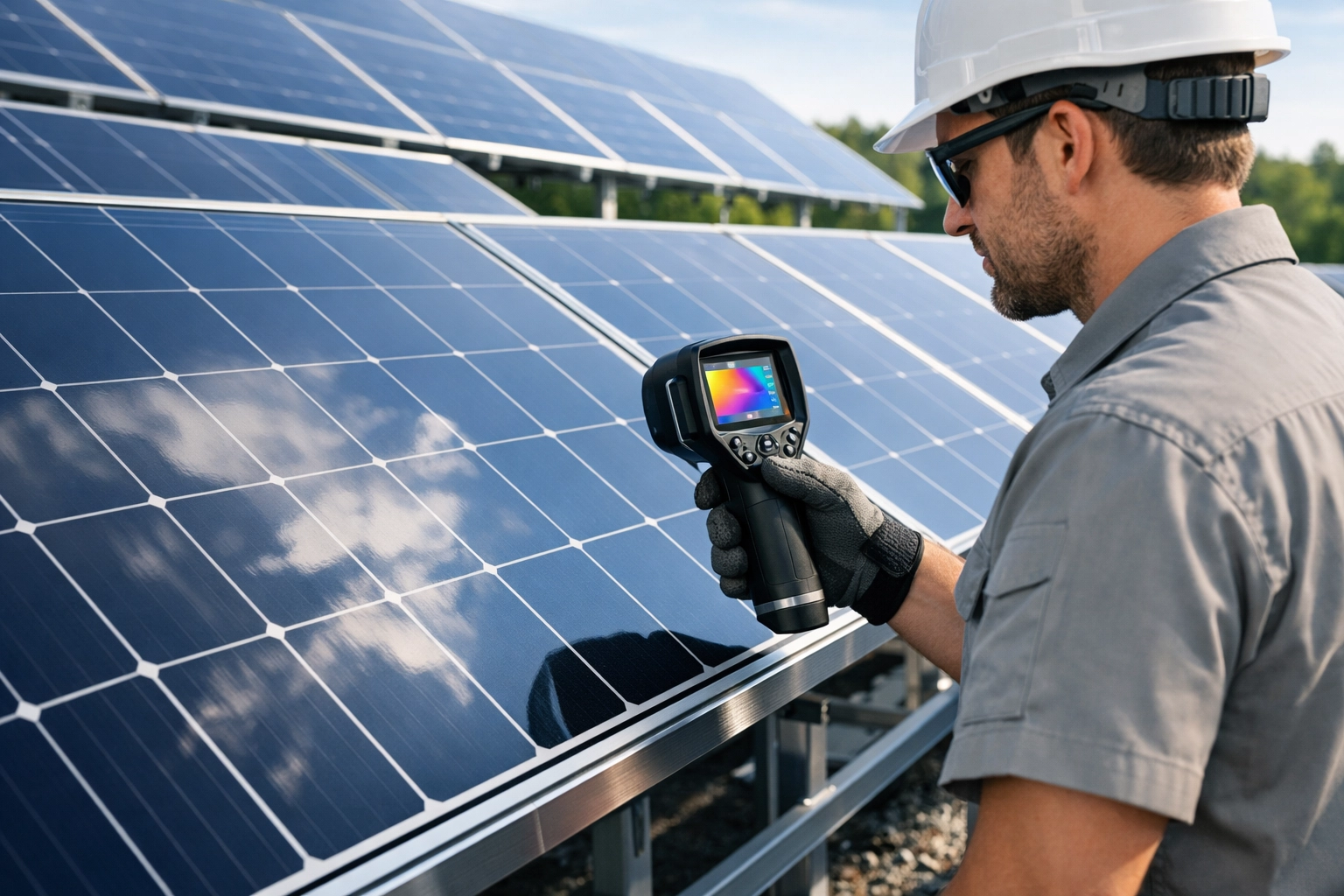
A common misconception is that solar panels are "set and forget." While they are low maintenance, they are not no maintenance. To keep your system at peak performance for 25 years, you need a plan.
Dust, bird droppings, and debris can reduce your system's output by as much as 15-25% if left unchecked. We recommend a professional cleaning and electrical health check at least once a year. Think of it like a service for a company vehicle; it's a small cost to prevent a massive loss in efficiency. For a deeper dive, check out our ultimate guide to solar aftercare.
Comparing Your Options: A Quick Reference
| Feature | Entry-Level Setup | Premium High-ROI Setup |
|---|---|---|
| Panel Type | Standard Monocrystalline | Bifacial High-Efficiency (22%+) |
| Inverter | String Inverter | Smart Micro-inverters or Optimisers |
| Warranty | 10-12 Years | 25-30 Years |
| Monitoring | Basic Metering | Real-time Cloud Analytics |
| Payback Period | 6-8 Years | 4-6 Years |
| Longevity | 20 Years | 30+ Years |
Why "Cheapest" is Often the Most Expensive Option
In the world of renewable energy, the lowest quote is often the most dangerous. Cheap racking can lead to roof leaks; cheap inverters often fail just outside their short warranty period; and low-tier panels degrade much faster, killing your ROI in years 10 through 25.
When you work with expert renewable energy installers, you’re paying for the peace of mind that your system won't become a liability. We focus on "Levelized Cost of Energy" (LCOE): which is the total cost of the system divided by the total energy it will produce over its life. Often, the more expensive system up front has the lowest LCOE, making it the smarter business move.

Making the Right Move for Your Business
Choosing the best solar power setup for your business is a balance of current cash flow and future energy security. It’s about understanding that while the "advantages and disadvantages of solar power" exist, the path to energy independence is clearer today than it has ever been.
Whether you're interested in the GoodWe ESA system to wipe out bills or you're looking for a massive industrial array, the first step is always the same: a site-specific audit.
Every roof is different, and every business has unique energy habits. We’re here to help you crunch the numbers and design a system that actually delivers on its promises.
Ready to see what solar can do for your bottom line?
Contact us to discuss your needs and let's build a bespoke energy strategy for your business together.