If you’re running a business in 2026, you’ve likely noticed that the energy landscape hasn’t exactly become "predictable." Between global supply chain shifts and the ongoing volatility in the Middle East, the cost of keeping your lights on is probably a significant line item on your balance sheet. In fact, with recent energy price caps hovering around an average of £1,973 for domestic users: and even more dramatic swings for commercial contracts: the question isn't whether you should look at business solar power, but rather how much it’s going to save you.
We know that making a massive capital investment can feel a bit daunting. You might be wondering if the returns are actually as good as the brochures claim, and that’s okay. At DES Renewable Energy Ltd, we believe in radical transparency. We want you to see the real data behind the ROI (Return on Investment) so you can decide if it’s the right move for your company's future.
The ROI Breakdown: What Does the Data Actually Say?
When we look at the global and UK data for 2026, the numbers for commercial solar are more compelling than ever. Recent studies show that the average ROI for a commercial solar installation currently sits at approximately 15.87%.
To put that into perspective, the S&P 500: which is often the benchmark for "good" investment returns: typically yields about 10% annually. By choosing solar, you aren't just "going green"; you're putting your capital into an asset that, in many cases, outpaces the stock market.
Average Payback Periods in 2026
How long does it take to see your money back? On average, businesses are seeing a full payback in about 9.05 years. However, this varies depending on how you install your system:
| Installation Type | Average ROI | Payback Period |
|---|---|---|
| Roof-Mounted | 15.77% | 9.01 years |
| Ground-Mounted | 16.45% | 9.29 years |
Why the difference? Ground mounts often involve slightly higher initial setup costs due to the framing required, but they can be angled perfectly for maximum sun exposure, leading to a slightly higher long-term ROI.
Advantages and Disadvantages of Solar Power for Business
Before you sign on the dotted line, it is vital to look at both sides of the coin. Every investment has pros and cons, and solar is no different.
The Advantages
- Fixed Energy Costs: You are essentially "pre-buying" your electricity for the next 25 years at a fixed rate. No more panicking when the news mentions energy price hikes.
- Tax Benefits: Many businesses can take advantage of capital allowances, allowing you to write off the cost of the installation against your taxable profits.
- Brand Reputation: In 2026, B2B clients are looking at your carbon footprint more than ever. Demonstrating energy independence is a massive PR win.
- Property Value: Commercial buildings with solar arrays are generally valued higher and are more attractive to future tenants or buyers.
The Honest Disadvantages
It wouldn’t be an educational guide if we skipped the downsides. We want you to be fully informed:
- Upfront Cost: Even with financing, the initial outlay for a 150kW system can be upwards of £300,000. It's a big commitment.
- Roof Suitability: If your roof is old or oriented poorly, you might need repairs or a ground-mount system instead, which can complicate things.
- Intermittency: Solar doesn't produce power at night. Without a battery storage system, you are still reliant on the grid after dark. (You might want to check out our guide on the Goodwe ESA to see how to solve this).
- Maintenance Needs: They aren't "fit and forget" systems. They require cleaning and monitoring to stay at peak performance.
How Financing Models Change Your Returns
Not every business wants to buy their panels outright, and that’s perfectly fine. The way you pay for your system changes your Internal Rate of Return (IRR).
Solar Leases vs. PPAs
In 2026, we are seeing a shift in how companies finance their energy.
- Solar Leases: These often provide a higher ROI: sometimes 15-20% higher: than Power Purchase Agreements (PPAs). This is because you capture the full "spread" between your fixed lease payment and the rising cost of grid electricity.
- PPAs (Power Purchase Agreements): These are great if you want zero upfront costs. You simply pay for the energy the panels produce at a lower rate than the grid. You don't "own" the system, but you get immediate cash flow benefits.
If you’re unsure which path is right for your Bournemouth or Dorset-based business, our team can help you crunch the numbers based on your specific tax situation.

Why Data and Monitoring Are Your Secret ROI Weapons
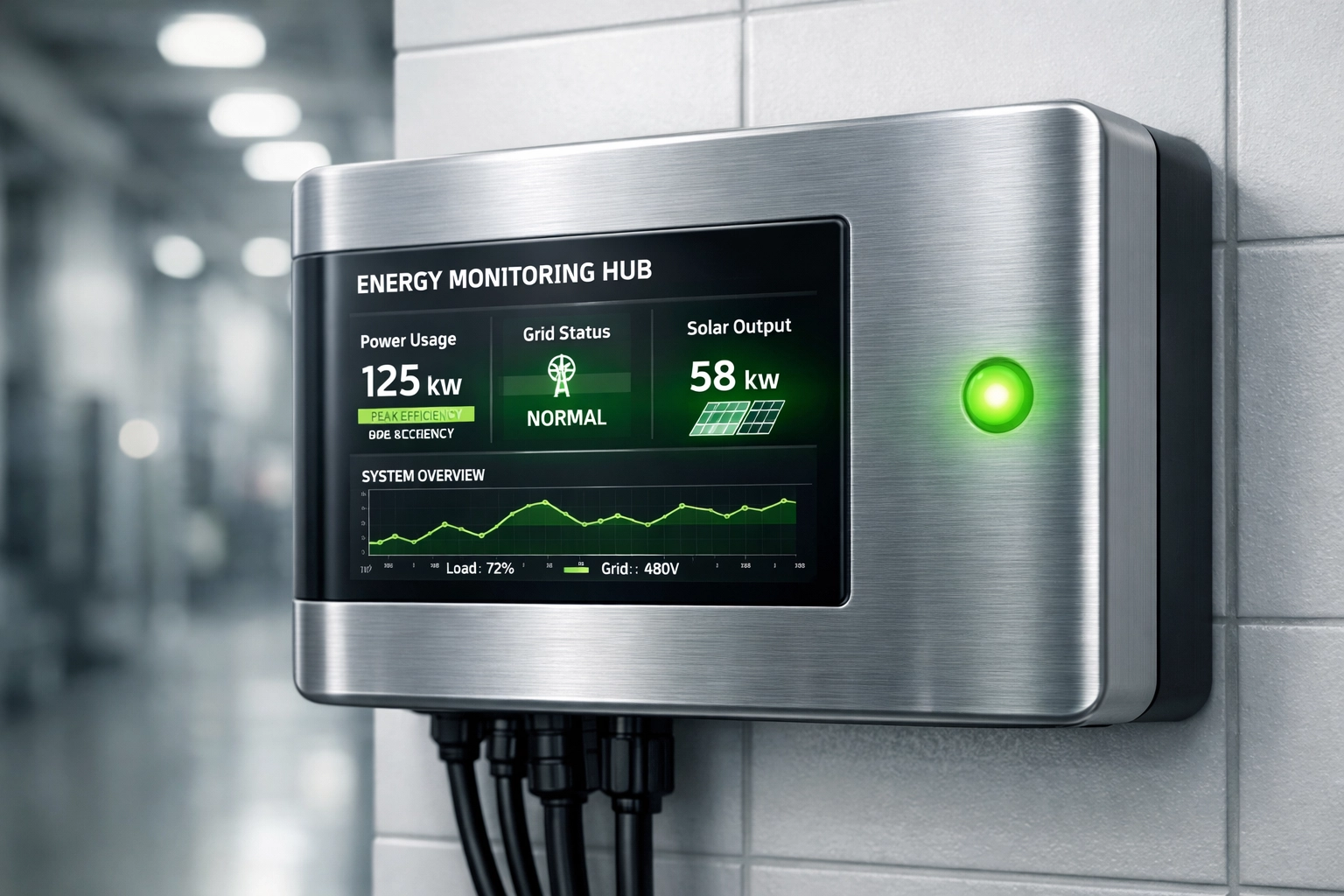
One of the most significant changes we've seen in the last few years is the role of real-time monitoring. In the past, a business might not notice a faulty inverter for weeks. Today, AI-driven monitoring can alert you the second a single panel underperforms.
Data from 2026 suggests that businesses using advanced monitoring systems see up to a 30% improvement in ROI. Why? Because predictive maintenance prevents downtime. If you can fix a small issue before it becomes a system failure, you keep those energy savings flowing.
This is why we place such a high emphasis on aftercare. Keeping your system at peak performance for 25 years requires a plan. We've actually put together a comprehensive guide to solar aftercare to help you understand what this looks like in practice.
The "2026 Urgency": Why Wait is a Risk
You might think, "Should I wait for panel technology to get even better?" It’s a common question, and we understand why you'd ask. However, the data suggests that the "cost of waiting" usually outweighs the benefit of future efficiency gains.
With energy bills for some businesses projected to increase by hundreds of pounds a year due to global instability, every month you wait is a month of missed savings. Furthermore, current government incentives and tax breaks are designed for the "now." We don't always know what the policy landscape will look like in 2028 or 2030.

Case Study: A Typical 146kW System
Let's look at the average economics of a mid-sized commercial installation:
- System Size: 146.82 kW
- Gross Cost: Approx. £335,018 (depending on site specifics)
- Annual Savings: Can reach over £40,000 depending on your local electricity rates and consumption.
- Lifetime Profit: Over 25 years, a system like this can generate a cumulative return of nearly 195% of the initial investment.
How to Get Started Without the Stress
We know that "Business Solar Power 101" can feel like a lot to take in. You have to think about engineering, finance, tax, and roof integrity all at once. And that’s okay: you don’t have to do it alone.
As expert installers in Dorset, we've helped countless businesses move toward energy independence. We don't just bolt panels to your roof; we act as your consultants to ensure the data actually backs up the investment for your specific building and energy usage profile.
Your Next Steps
- Audit Your Usage: Look at your last 12 months of energy bills. When are you using the most power?
- Check Your Roof: Is it at least 10-15 years away from needing a full replacement?
- Talk to a Professional: Every business is unique. A quick conversation can often clarify if solar is a "slam dunk" for you or if you need a more creative solution.
If you’re ready to see how these numbers apply to your own premises, contact us to discuss your needs. We can provide a bespoke ROI projection based on your actual energy data and help you navigate the advantages and disadvantages of solar power for your specific sector.
Business solar power isn't just a trend anymore; in 2026, it's a fundamental strategy for financial resilience. Let's make sure your company is on the right side of the data.