


If you’ve spent any time looking at your electricity bill lately, you’ve probably felt a bit of "bill shock." You aren't alone. With the energy price cap hovering around £1,973 for the average household and Cornwall Insight forecasting further volatility due to global events, the way we think about power is changing.
In the past, solar panels were the main event. You put them on your roof, they generated power, and you sent the excess back to the grid. But the game has shifted. Today, the conversation has moved from just "generating" energy to "storing" it.
Everyone is talking about smart solar batteries. But what actually makes them "smart"? And more importantly, why is now the time for you to pull the trigger on an installation? Let’s dive into the technology that is turning UK homes into personal power stations.
The Death of the "Export" Model
For years, the advice was simple: sell your extra solar energy back to the grid. But here’s the reality, the rates you get for exporting (the Smart Export Guarantee or SEG) are often a fraction of what you pay to buy that same electricity back at night.
It’s a bad deal. Why sell your clean energy for 5p or 15p per kWh just to buy it back four hours later for 30p?
This is why batteries have become the central pillar of a modern home energy strategy. Instead of feeding the grid, you feed your battery. Recent market data shows that 78% of solar installers are seeing a massive surge in customers pairing storage with their panels. We’ve moved past the "emergency backup" phase. Batteries are now a sophisticated financial investment.
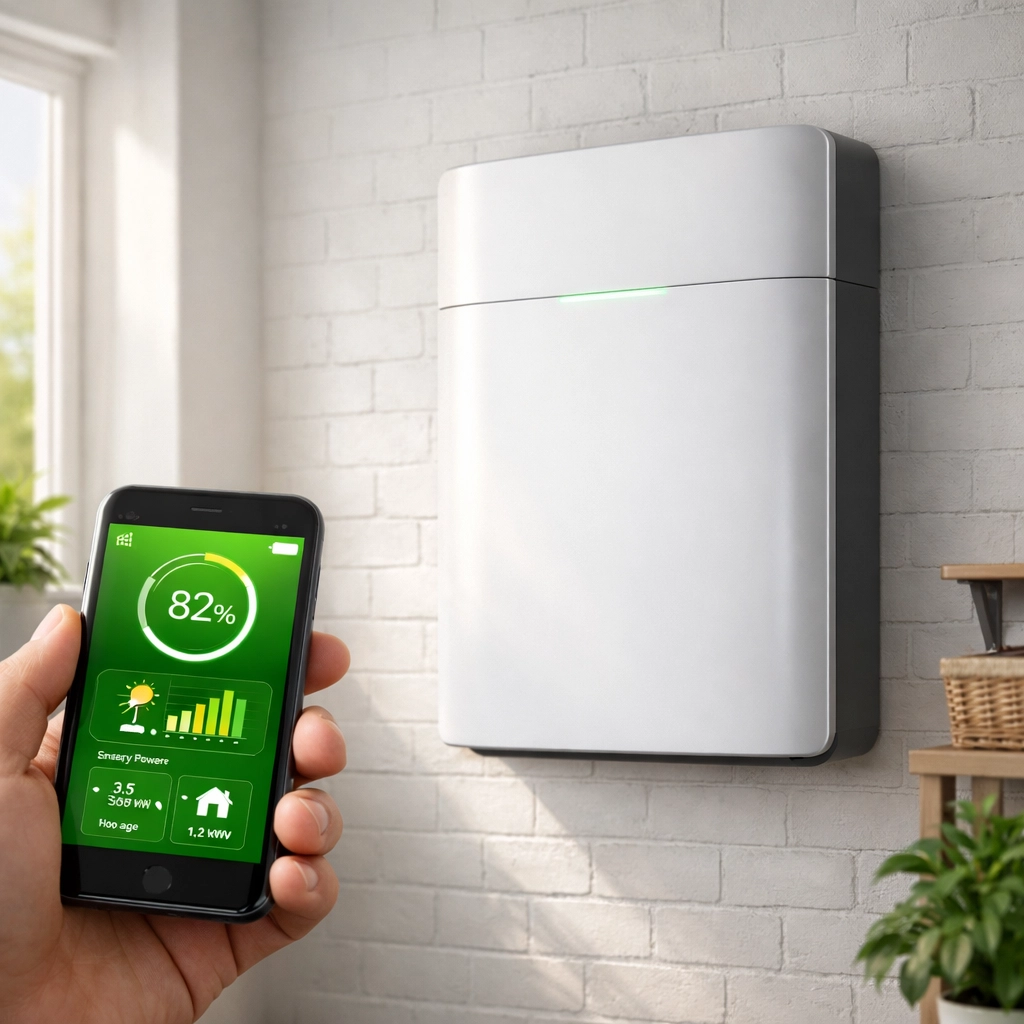
What Makes a Battery "Smart"?
You might be thinking, "Isn’t a battery just a big box of chemicals?" In the simplest sense, yes. But a smart solar battery, like the ones we install at DES Renewable Energy Ltd, is actually a powerful computer.
Modern systems use AI-powered energy management. They don't just sit there; they think. They look at the weather forecast, if it’s going to be cloudy tomorrow, your battery might decide to top itself up using cheap overnight grid electricity. They analyze your consumption patterns, learning exactly when you turn on the kettle or the power shower.
Key Features of Smart Storage:
- Weather Compensation: Forecasting solar yield to manage storage levels.
- Time-of-Use Optimisation: Automatically charging when prices are low and discharging when they peak.
- Real-Time Monitoring: Detailed dashboards on your phone that show exactly where every watt is going.
- Grid Services: The ability to support the national grid during peak times (and get paid for it).
Comparing the Giants: Tesla vs. GivEnergy vs. SolarEdge
Choosing a battery can feel overwhelming. You’ve likely heard names like Tesla Powerwall, GivEnergy, and SolarEdge. Each has its own "personality" and strengths. As a Tesla Powerwall Certified Installer and an Octopus Trusted Partner, we see these systems in action every day.
Here is a side-by-side look at how the leading systems stack up:
| Feature | Tesla Powerwall 3 | GivEnergy All-In-One | SolarEdge Home Battery |
|---|---|---|---|
| Usable Capacity | 13.5 kWh | 13.5 kWh | 9.7 kWh (Stackable) |
| Max Power Output | 11.5 kW (Peak) | 7.2 kW | 5.0 kW |
| Warranty | 10 Years | 12 Years | 10 Years |
| Best For | High-demand homes & tech lovers | Modularity & British design | Existing SolarEdge users |
| Smart Features | Industry-leading AI & App | Excellent UK-based support | Deep integration with SolarEdge inverters |
Tesla Powerwall: The "Gold Standard"
The Powerwall is the most famous for a reason. It is an all-in-one system with a built-in inverter. If you have a high-energy household or an electric vehicle (EV), the Powerwall's ability to discharge high amounts of power simultaneously is a game-changer. You can find more details on our Tesla Powerwall page.
GivEnergy: The Modular Powerhouse
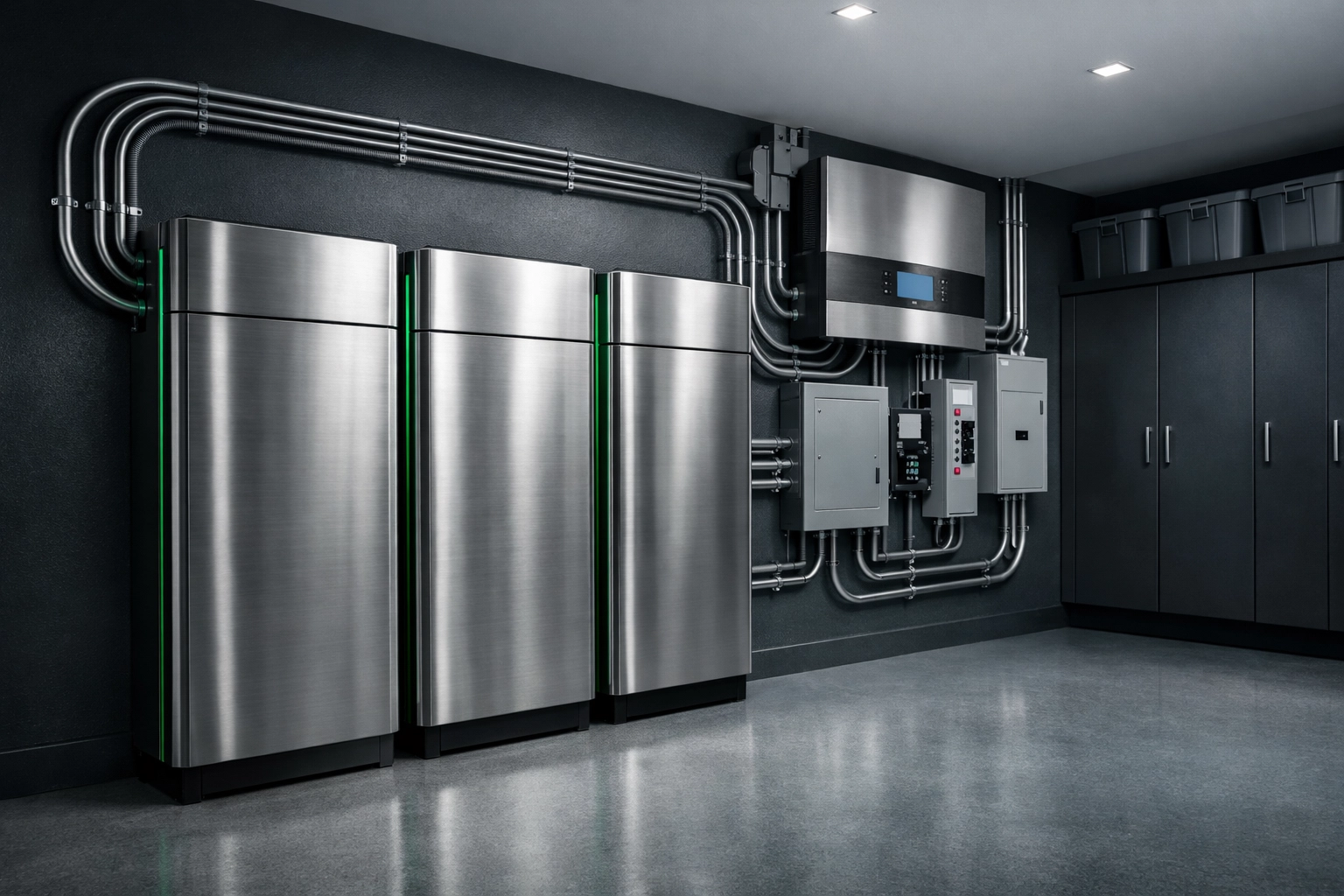
GivEnergy is a favorite for those who want flexibility. Their systems are modular, meaning you can start with a smaller capacity and add more "bricks" as your needs grow. Their "All-In-One" is a direct competitor to Tesla, offering incredible value and a very robust 12-year warranty.
The Secret Weapon: Smart Tariffs and Arbitrage
If you really want to see your ROI (Return on Investment) skyrocket, you need to talk about energy arbitrage.
This sounds like a complex financial term, and it is, but the concept is simple: Buy low, use high. By pairing a smart battery with a tariff like Octopus Agile or Octopus Flux, your battery becomes a money-making machine.
During the night, when the wind is blowing and the UK has too much energy, prices can drop significantly, sometimes they even go negative (yes, they pay you to use electricity!). Your smart battery detects this, fills itself up to 100%, and then holds that energy. When the "Peak" hits at 5:00 PM and everyone else is paying 35p per kWh, you are running your home on "free" or ultra-cheap energy you stored earlier.
We understand if you're scratching your head at the complexity of these tariffs. That’s why we work as a collaborative partner with our customers. We don't just bolt a box to your wall; we help you choose the right tariff to ensure your system pays for itself as quickly as possible. You can explore more about how this works in our how it works section.
Solar-Integrated EV Charging: The Perfect Marriage
If you own an EV or are planning to buy one, a smart battery is no longer optional: it’s essential.
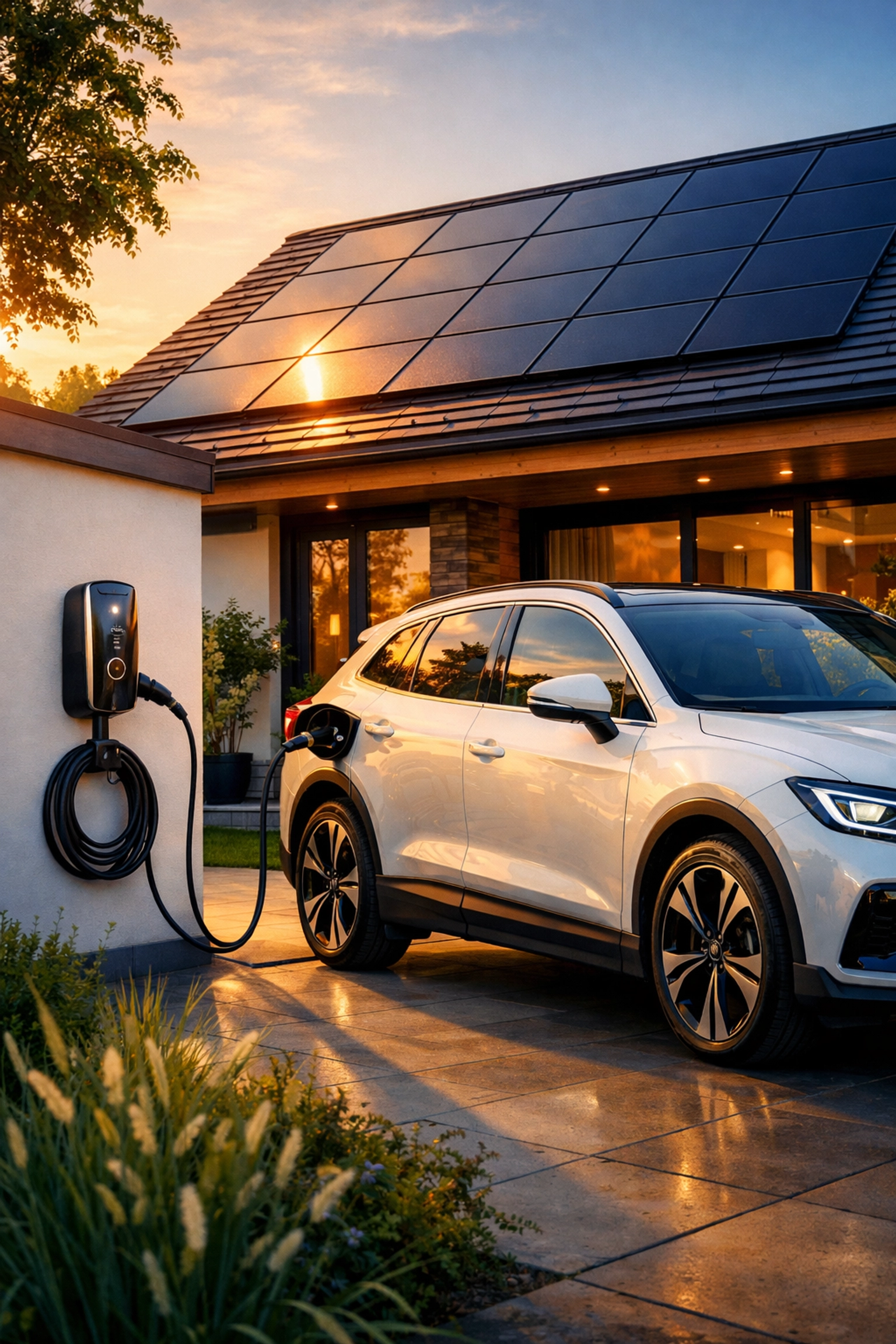
Standard EV chargers just pull power from wherever they can find it. But a solar-integrated setup (using smart chargers like the Zappi or the Tesla Wall Connector) coordinates with your battery.
Imagine this: your panels are generating 4kW of power. Your house only needs 1kW. Instead of that extra 3kW going to the grid for a measly credit, your smart system directs it straight into your car’s battery. You are quite literally driving on sunshine.
And if the sun isn't shining? Your smart battery can "dump" its stored cheap overnight energy into your car during the day. It’s all about creating a closed loop where you rely on the grid as little as possible.
Resilience in an Uncertain World
Beyond the finances, there is the "peace of mind" factor. We live in an era of grid instability. While total blackouts are rare in the UK, "brownouts" and local faults are becoming more common as the grid struggles to adapt to renewable energy.
Most standard solar installations without a battery will actually shut down during a power cut. This is a safety feature to prevent your panels from sending electricity back down a wire that a technician might be working on.
However, with a system like the Tesla Powerwall or the GivEnergy Gateway, you have Backup Protection. The system "islands" your home, disconnecting you from the grid and keeping your lights, fridge, and Wi-Fi running using your stored energy. It happens so fast you might not even realize the rest of the street is in the dark.
Is It Time for You to Make the Switch?
The technology has matured. High-quality lithium iron phosphate (LFP) batteries now have lifespans of 15 to 20 years. When you factor in the rising cost of energy and the VAT-free status of battery storage (when installed with solar or as a retrofit), the math has never looked better.
At DES Renewable Energy Ltd, we pride ourselves on being the helpful experts. We know that every home is different. A retired couple will have very different energy needs than a young family with two EVs.
We won't give you a one-size-fits-all prescription. Instead, we’ll look at your energy data and build a system that actually works for your life. Whether you need a deep dive into solar energy or specific financial advice, we are here to guide you.
Ready to take control of your energy?
Don't let your clean, solar energy go to waste. Join the thousands of UK homeowners who are taking power back from the big energy companies.
Get a tailored solar and battery quote today and let’s see how much you could be saving.