


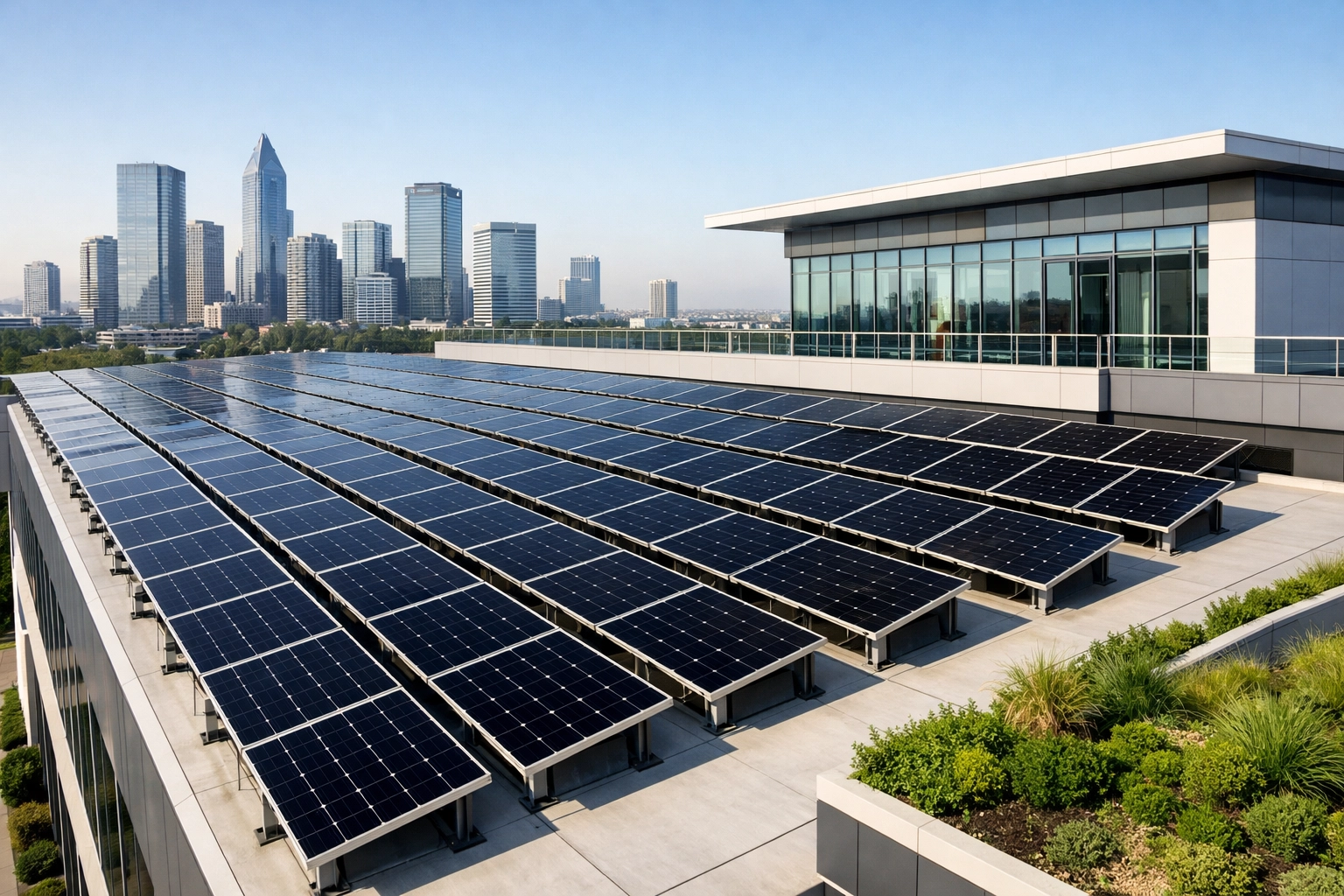
If you’ve driven through an industrial estate lately, you’ve probably noticed something different. The grey, sprawling roofs of warehouses and office blocks are turning blue and black. In 2026, business solar power isn't just a "nice-to-have" green badge; it has become a fundamental financial strategy for companies trying to outmanoeuvre rising operational costs.
But why now? And more importantly, does the math actually hold up when you look at the bottom line? We know that looking at a six-figure quote for a solar installation can feel overwhelming, and that’s okay. Most business owners feel the same way at first.
In this post, we’re going to pull back the curtain on the real numbers, the tax breaks you might not know about, and the honest disadvantages of making the switch.
The Perfect Storm: Why 2026 is the Year for Solar
We are currently seeing a rare convergence of three major factors that make solar incredibly attractive. First, the cost of solar hardware has hit a historical low point due to manufacturing efficiencies. Second, commercial electricity tariffs continue to be volatile, making it hard for you to forecast your long-term overheads.
Third, and perhaps most importantly, the financial incentives are stronger than ever. Many businesses are leveraging the 30% federal Investment Tax Credit (ITC). This is a dollar-for-dollar credit against your federal taxes, effectively cutting the project cost by nearly a third right out of the gate.
But wait, there's more to the "tax magic" than just the ITC.
The Power of Accelerated Depreciation
Beyond the initial credit, you can use something called accelerated depreciation (specifically MACRS in many regions). This allows your business to recover the costs of the system over a much shorter period: often just five years.
By depreciating approximately 80–85% of the total system cost in the first few years, you create a massive early cash-flow benefit. For a CFO, this turns a long-term infrastructure project into a short-term tax strategy.
Breaking Down the Real ROI Numbers
Let’s get into the specifics. You want to know when the system pays for itself. While every roof is different, we can look at global benchmarks to see what’s typical for a 100 kW commercial system.
| Financial Metric | Typical 100 kW System Estimate |
|---|---|
| Average Total Project Cost | £70,000 – £90,000 (Varies by region/tech) |
| Federal Tax Credit (30%) | – £21,000 to £27,000 |
| Net Investment | £49,000 – £63,000 |
| Annual Energy Savings | £12,000 – £18,000 |
| Estimated Payback Period | 3.5 to 5 years |
| System Lifespan | 25+ Years |
As you can see, once you hit that 4 or 5-year mark, your business is essentially generating its own "free" fuel. Over a 25-year period, the total savings can reach hundreds of thousands of pounds. If you are wondering are solar panels a good investment for your specific building, the answer almost always comes down to your current energy usage patterns.
The Advantages and Disadvantages of Solar Power
We promised to be honest, and that means talking about the hurdles. Solar isn't a magic wand, and it’s important to understand the full picture. When weighing up the advantages and disadvantages of solar power, you need to consider more than just the environment.
The Honest Disadvantages
- High Upfront Capital: Even with a high ROI, the initial check you have to write is significant. While financing options exist, it still represents a major capital expenditure.
- Roof Suitability: If your roof is old or structurally weak, you may need to invest in repairs before the panels can go up. You can read more about common problems with solar panels relating to installation here.
- Intermittency: Solar doesn't work at night. Unless you invest in expensive battery storage, you will still be tied to the grid for your evening operations.
- Weather Dependency: While modern panels are incredibly efficient even in overcast conditions, a string of particularly dark months will impact your immediate generation.
The Strategic Advantages
- Fixed Energy Costs: You are essentially "locking in" your energy price for the next two decades. No more worrying about what the energy markets will do next year.
- Increased Property Value: Studies consistently show that commercial buildings with renewable energy systems sell at a premium compared to those without.
- ESG Credentials: Your clients and investors care about your carbon footprint. Solar is a visible, measurable way to show you’re taking sustainability seriously.
- Low Maintenance: Unlike a fleet of vehicles or manufacturing machinery, solar panels have no moving parts. They just sit there and work.
Keeping Your Investment Healthy: Maintenance Tips
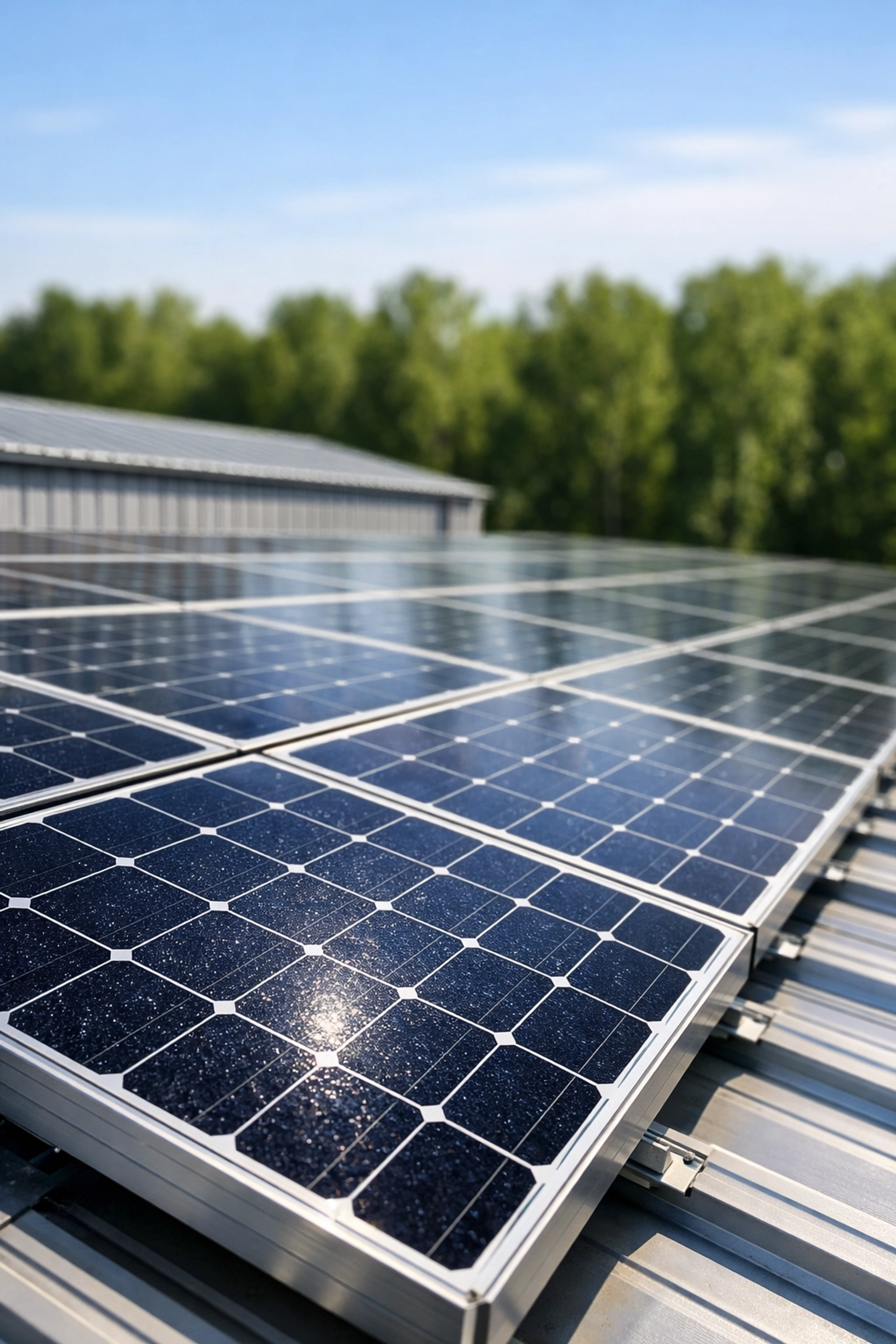
You might be worried that adding a power plant to your roof means hiring a full-time engineer. It doesn't. In fact, solar installation maintenance is surprisingly hands-off.
To keep your ROI on track, you generally only need to focus on two things: Cleaning and Monitoring.
Most systems come with an app that allows you to see exactly how much energy you’re producing in real-time. If you see a sudden dip in production, it’s usually just a bit of debris or bird droppings. A professional cleaning once or twice a year is usually all it takes to keep your panels performing at 100%. If you're unsure about the technical side, you can explore how solar panels work to better understand what to look out for.
Is a Solar Package Right for Your Business?
Deciding to go solar is a big step, and choosing the right partner is even bigger. You shouldn't just look for the cheapest price; you should look for the best long-term value.
When you look at a solar panel installation package, check for the quality of the inverters and the length of the performance warranty. A panel that lasts 25 years is great, but if the inverter dies in year 7 and isn't covered, your ROI takes a hit.
You should also ask yourself:
- How much of our daytime energy load can we cover?
- Do we have the roof space for the number of panels we need? (You can check our guide on how many solar panels do I need for a rough estimate).
- Are there local grants, like the Rural Energy for America Program (REAP) for agricultural businesses, that we can stack on top of federal credits?
How to Get Started
We know this is a lot of information to digest. If you're feeling a bit lost in the sea of kilowatts and tax codes, don't worry: that's exactly why we're here.
The first step isn't buying panels; it's a conversation. Every business has a unique energy profile, and your path to energy independence should be tailored to fit your specific goals. Whether you want to reduce your carbon footprint or simply slash your monthly overheads, we can help you map out the numbers.
If you are ready to see the specific data for your building, feel free to contact us to discuss your needs. We’ll walk you through a site assessment and provide a transparent breakdown of what your real-world ROI would look like.
Solar is no longer the "future" of business; it's the present. And with the incentives available right now in 2026, there has never been a more financially sound time to look up at your roof and see a goldmine.