


Are you tired of sending your hard-earned solar energy back to the grid for pennies, only to buy it back at a premium once the sun goes down? You aren't alone. In fact, it’s the number one frustration we hear from homeowners today.
Welcome to the era of energy independence. Today is Friday, 6th of March 2026, and the technology available to help you take control of your home’s power has never been better. Whether you’re looking to slash your bills, protect your home from power cuts, or charge your EV for free, a solar battery is the missing piece of the puzzle.
But with so many brands and technical terms flying around, where do you even start? Don't worry, we’ve got you. At DES Renewable Energy Ltd, we’re Tesla Powerwall Certified and an Octopus Trusted Partner. We’ve installed thousands of these systems, and we’re going to walk you through everything you need to know.
Why Do You Need a Battery, Anyway?
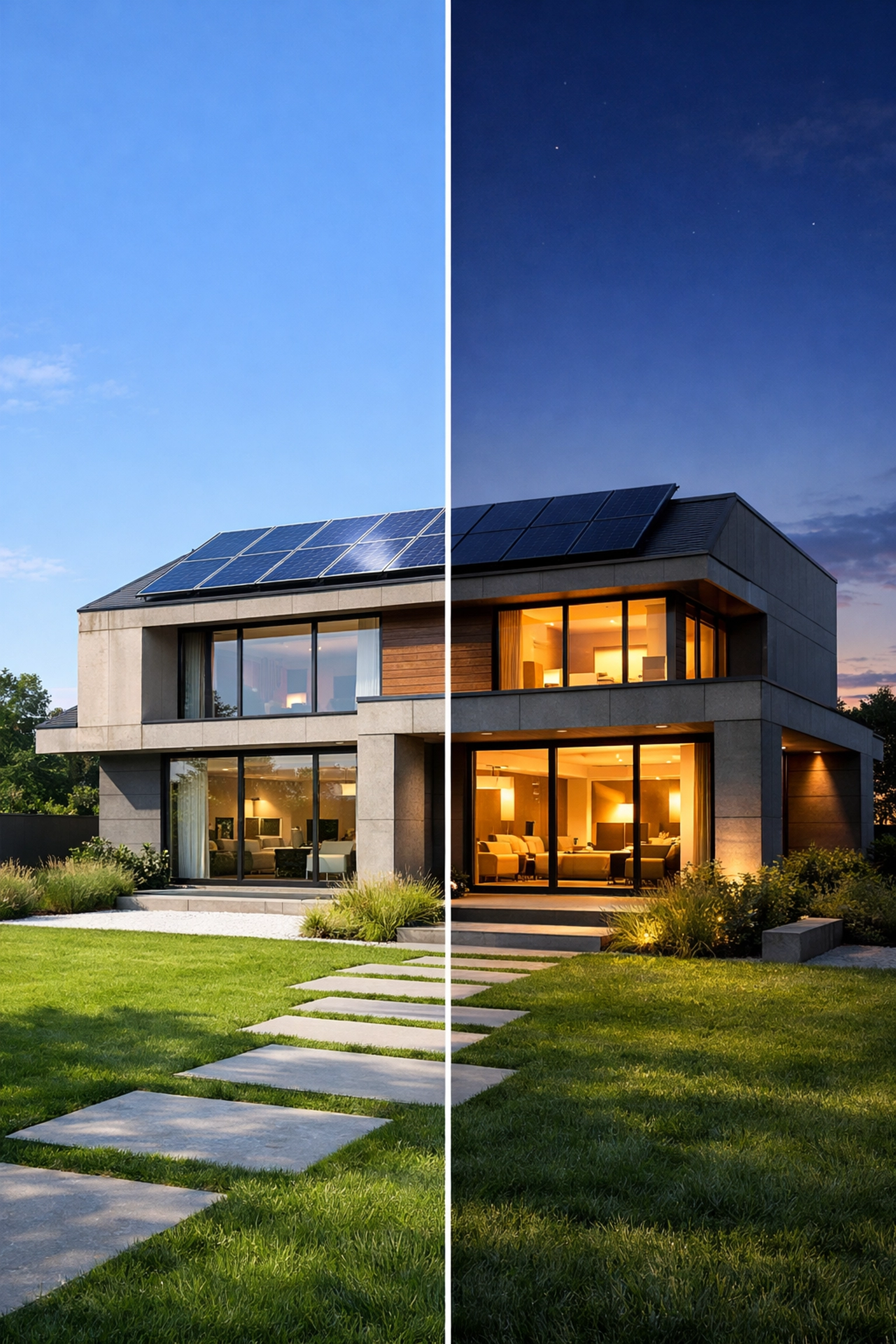
Think of your solar panels like a garden that grows vegetables only during the day. If you don't have a fridge, you have to eat everything immediately or give the leftovers to your neighbours. A solar battery is that fridge. It stores the "leftover" energy your panels produce during the day so you can "eat" it at night.
By adding storage, you can typically increase your solar self-consumption from about 30% to over 80%. That is a massive jump in savings.
Decoding the Tech: How It Actually Works
Before we dive into the brands, let’s clear up the jargon. You don't need a PhD in electrical engineering to understand this, and we’ll keep it simple.
AC vs DC Coupling
This is usually the first question people ask.
- DC-Coupled: The energy stays as "Direct Current" from the panels straight into the battery. It’s highly efficient and great for new installations.
- AC-Coupled: The energy is converted to "Alternating Current" (what your house uses) and then back to DC to be stored. These are perfect for retrofitting a battery to an existing solar system you already have.
Capacity (kWh)
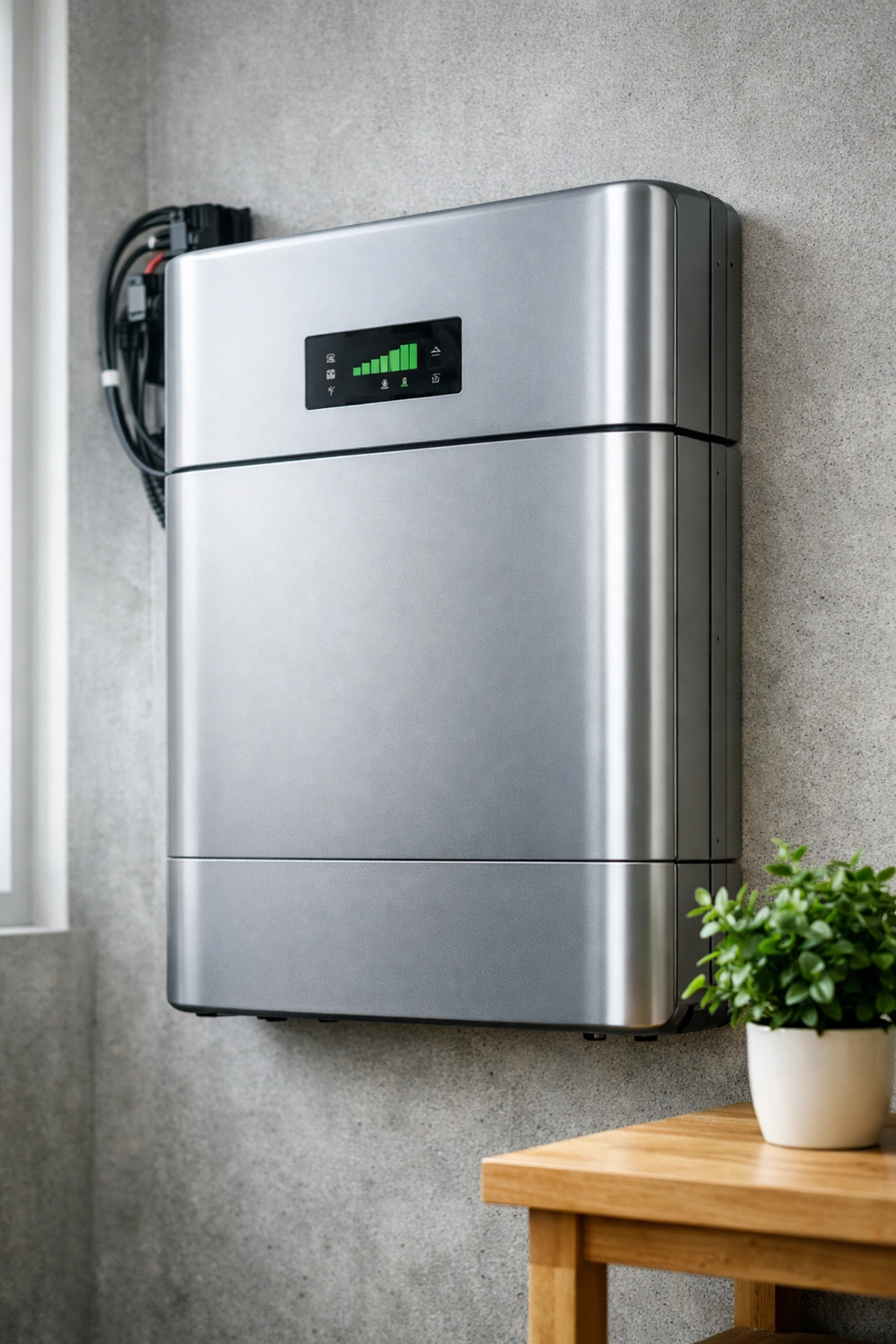
This is how much energy the battery can hold. Think of it like the size of a fuel tank. A 13.5kWh battery (like the Tesla Powerwall 3) can hold 13.5 units of electricity. For the average UK home, this is usually enough to power everything from sunset to sunrise.
Depth of Discharge (DoD)
In the old days, you couldn't use all the energy in a battery without damaging it. Modern lithium-ion batteries have a 100% DoD. This means if you buy a 10kWh battery, you can actually use all 10kWh.
Want to dig deeper into the mechanics? Check out our how it works guide for a full breakdown.
The Big Three: Tesla vs GivEnergy vs SolarEdge
Choosing a battery is a big decision. We work with the best in the business, but each has its own "superpower." Here is how they stack up against each other.
| Feature | Tesla Powerwall 3 | GivEnergy All-In-One | SolarEdge Home Battery |
|---|---|---|---|
| Capacity | 13.5 kWh | 13.5 kWh | 9.7 kWh (Stackable) |
| Peak Power | 11.5 kW | 6.0 kW | 5.0 kW |
| Warranty | 10 Years | 12 Years | 10 Years |
| Best For | High power demands & Backup | Value & UK-based support | Existing SolarEdge users |
| Installation | Internal or External | Internal or External | Indoor (mostly) |
Tesla Powerwall 3: The Heavyweight Champion
The Tesla Powerwall 3 is a beast. It’s an "all-in-one" system, meaning the inverter is built-in. It can handle massive surges, so if you want to run your kettle, oven, and power shower at the same time during a power cut, this is the one for you. Plus, the app is arguably the best on the market.
GivEnergy: The Smart Choice
GivEnergy is a UK favourite for a reason. Their systems are incredibly flexible. The "All-In-One" is their flagship, offering great backup capabilities and a sleek design. They also offer smaller, modular batteries if you’re on a tighter budget. And because they are UK-based, their technical support is top-notch.
SolarEdge: The Ecosystem King
If you already have SolarEdge panels and optimisers, staying within the family makes sense. The SolarEdge Home Battery integrates perfectly with their monitoring platform. It’s highly efficient because it avoids unnecessary energy conversions.
Smart Tariffs: The Secret to Faster ROI
This is where things get really exciting. As an Octopus Trusted Partner, we see firsthand how smart tariffs change the game.
With a battery, you aren't just limited to storing your own solar. You can "Force Charge" your battery from the grid at 2:00 AM when electricity is dirt cheap (on tariffs like Octopus Flux or Intelligent Octopus). You then use that cheap stored energy during the expensive evening peak.
This is called "Arbitrage." It means even on a cloudy day in the middle of January, your battery is still making you money. If you're curious about the financial side, we've put together some solar panel investment advice to help you run the numbers.
Solar-Integrated EV Charging: The Ultimate Power Couple
Do you have an electric vehicle? Or are you planning to get one? Integrating your battery with an EV charger is the smartest move you can make.
Without a battery, your EV charger might pull 7kW of power. If your solar panels are only producing 3kW, you’re pulling the remaining 4kW from the grid. But with a battery, the system can bridge that gap.
Some smart chargers can even communicate with your battery to ensure you only charge using "excess" solar. This effectively means you are driving on sunshine. It’s the ultimate feeling of freedom.
How Much Capacity Do You Actually Need?
We understand if you’re scratching your head over sizing. Too small, and you’re still buying grid power. Too big, and you’ve spent money on capacity you’ll never use.
As a general rule of thumb based on UK homes:
- Low Usage (2-3 bed house): 5kWh – 10kWh
- Medium Usage (4 bed family home): 10kWh – 15kWh
- High Usage (Large home with EV/Heat Pump): 15kWh – 27kWh (Two Powerwalls)
Remember, it’s always better to look at your winter usage. In summer, any battery will fill up quickly. In winter, you want enough capacity to take advantage of those cheap overnight off-peak windows we mentioned earlier.
Where Should You Install It?
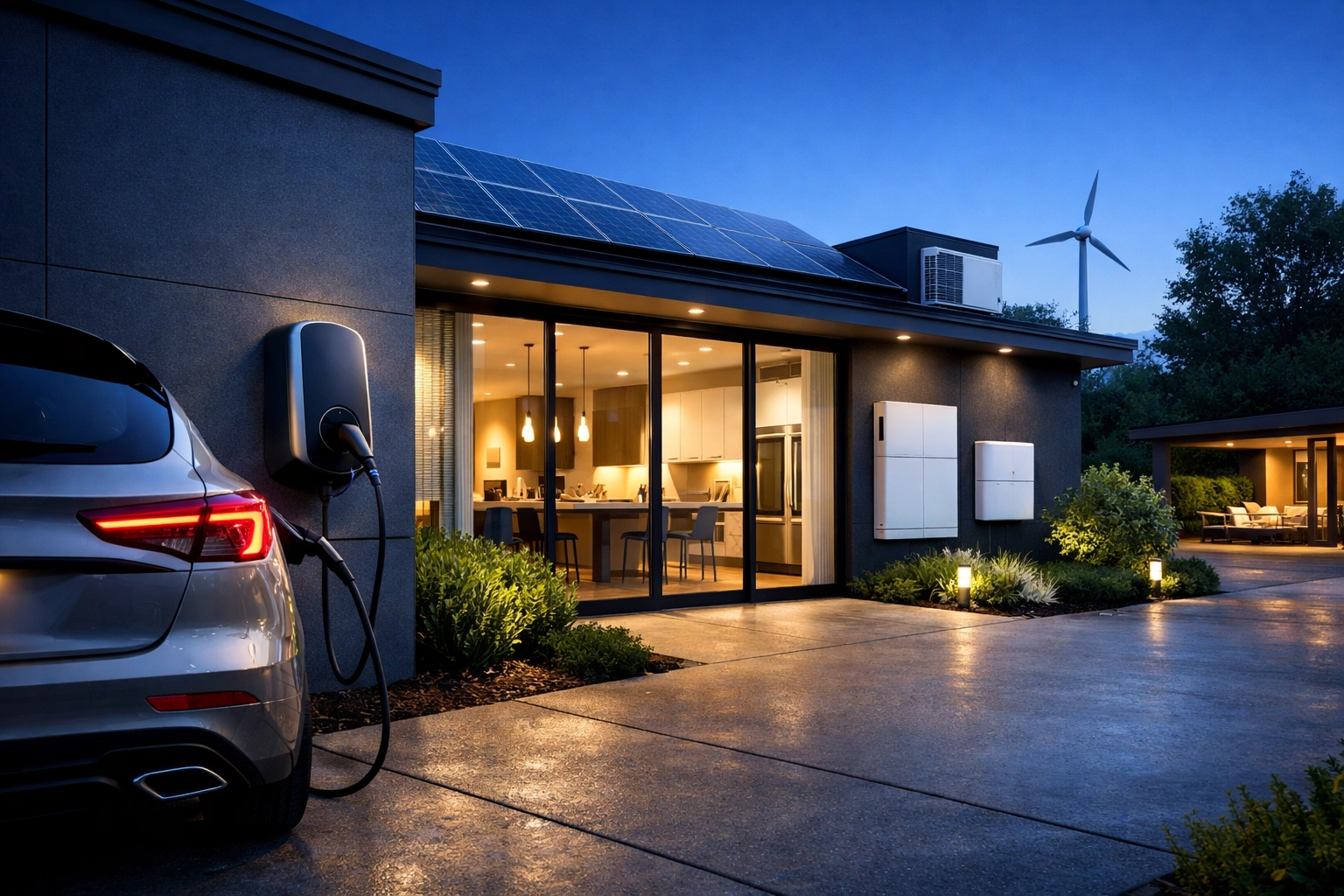
Modern batteries are tough. Most of the systems we install, like the Tesla Powerwall 3 and GivEnergy All-In-One, are IP65 rated. This means they can live happily outside on a wall or inside in a garage or utility room.
However, batteries are like humans: they don't like being too cold or too hot. If you install them outside, we usually recommend a spot that avoids direct midday sun to keep them performing at their peak for longer.
Maintenance and Longevity
The best part about solar batteries? They have no moving parts. Unlike a car or a boiler, there isn't much to go wrong.
Most lithium-ion batteries are rated for 6,000 to 10,000 cycles. One cycle is a full charge and discharge. Even if you cycle it every single day, your battery should last 15+ years. We do recommend an annual visual check and keeping the software updated via the manufacturer's app. For more tips, check out our maintenance section.
Is It Time to Go Off-Grid (Mostly)?
Complete off-grid living in the UK is tough, but "grid-neutrality" is very achievable. This is where, over a full year, you produce as much energy as you consume.
At DES Renewable Energy Ltd, we don't just "fit" batteries; we design energy systems. Whether you are in Bournemouth, Amesbury, or anywhere across the South West, we're here to help you get it right.
Ready to Take the Next Step?
Investing in battery storage is one of the smartest upgrades you can make to your home. It protects you against rising energy costs and puts you in control of your own carbon footprint.
But every home is different. The "perfect" system for your neighbour might not be the best one for you.
Want to see what’s possible for your home?
Get in touch with our expert team today. We’ll look at your energy bills, your roof space, and your future goals to design a system that actually delivers. Let’s work together to make your home its own power station.