


Are you tired of checking the news only to see energy prices climbing again? We’ve all seen the headlines. Between global volatility in the Middle East and shifting market demands, energy prices are anything but stable. Recent forecasts from Cornwall Insight suggest that the average annual energy bill could see a projected increase of £332, potentially pushing the average household bill toward £1,973.
It’s enough to make any homeowner in Poole feel a bit uneasy.
But here’s the good news: you aren’t powerless. By installing a smart battery storage system alongside solar panels, you can take control of your energy destiny. The two big names dominating the UK market right now are Tesla Powerwall and GivEnergy.
Choosing between them can feel like a headache, but that’s why we’re here. As a Tesla Powerwall Certified installer and an Octopus Trusted Partner, DES Renewable Energy Ltd is here to break down the technical jargon and help you decide which system belongs in your home.
Why Do You Need a Battery in 2026?
Before we dive into the "Tesla vs. GivEnergy" debate, let’s talk about why we’re having this conversation at all.
Most solar panel systems generate the most electricity during the day when you’re likely at work or out enjoying the Dorset coast. Without a battery, that excess green energy is sent back to the grid. Then, when you get home and turn on the lights, the oven, and the TV, you’re forced to buy electricity back from the grid at peak prices.
A smart battery allows for self-consumption. This simply means you store your own solar energy during the day and use it at night. It also allows for load shifting, charging your battery from the grid during the middle of the night when prices are rock-bottom (thanks to smart tariffs like Octopus Flux) and using it during the expensive morning and evening peaks.

Tesla Powerwall 3: The Heavyweight Champion
Tesla changed the game with the Powerwall, and the latest Powerwall 3 is a beast. If you’re looking for raw power and a "set and forget" experience, this is usually the top contender.
Massive Power Output
The Powerwall 3 offers a staggering 11.5 kW of continuous power output. But what does that actually mean for your Poole home? It means you can run your kettle, your oven, and your power shower all at the same time without needing to pull a single watt from the National Grid.
Most other batteries might cap out at 5 kW or 6 kW. If you exceed that limit, the system has to "supplement" the power from the grid, costing you money. With Tesla, you have a much higher "ceiling" of power.
All-in-One Integration
The Powerwall 3 includes an integrated solar inverter. An inverter is the "brain" of your system that converts the DC electricity from your panels into the AC electricity your home uses. Having it all in one box makes the installation cleaner and more efficient.
The Tesla Ecosystem
If you already drive a Tesla EV, the integration is seamless. You can manage your car charging, your solar production, and your home battery all from one single, polished app. It’s slick, it’s intuitive, and it works.
GivEnergy: The Modular Marvel
If Tesla is the high-end, all-in-one sports car of the battery world, GivEnergy is the versatile, customisable SUV.
Flexibility is King
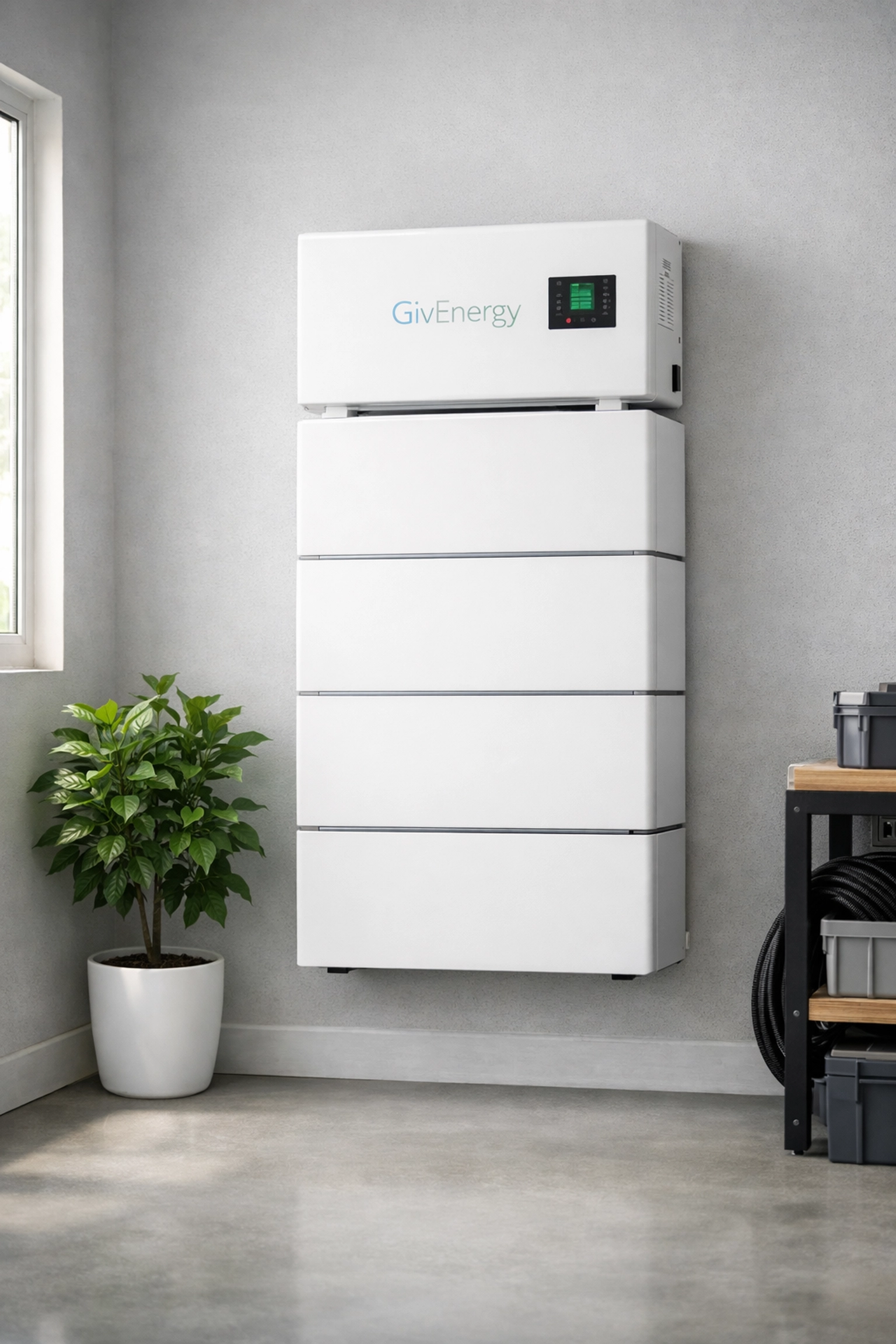
GivEnergy systems are modular. This is a huge advantage if you aren’t sure how much storage you’ll need in five years. You can start with a 9.5 kWh battery and, if you decide to buy an EV or install a heat pump later, you can simply add another battery pack to the stack.
Tesla Powerwall 3 comes in fixed 13.5 kWh blocks. While you can stack them, it’s a much larger jump in both size and cost than adding a smaller GivEnergy module.
Budget-Friendly Performance
GivEnergy is often more accessible for homeowners watching their budget. A 9.5 kWh GivEnergy unit typically costs between £3,900 and £4,500 installed, whereas a Tesla Powerwall 3 sits closer to the £5,800 to £7,200 mark.
For many homes in Poole, the GivEnergy 9.5 kWh battery is the "sweet spot", providing enough capacity to get through the evening peak without the premium price tag of the Tesla.
Side-by-Side: The Specs That Matter
Let's look at the hard data. We understand if you're scratching your head at the numbers, but these are the figures that will determine how much you save on your energy bills.
| Feature | Tesla Powerwall 3 | GivEnergy (All-In-One/9.5kWh) |
|---|---|---|
| Usable Capacity | 13.5 kWh | 9.5 kWh (Expandable) |
| Max Continuous Power | 11.5 kW | 6 kW – 7.2 kW |
| Warranty | 10 Years | 10 – 12 Years |
| Installation Location | Indoor or Outdoor | Indoor or Outdoor |
| Round-Trip Efficiency | ~90% | ~90% |
| Integrated Inverter | Yes | Yes (AIO model) |
| Best For | High power demand & Tesla owners | Scalability & Budget-conscious homes |
Smart Tariffs and the Octopus Connection
Whether you choose Tesla or GivEnergy, the real magic happens when you pair your battery with a smart energy tariff. At DES, we are an Octopus Trusted Solar Installation Partner.
Both Tesla and GivEnergy integrate beautifully with Octopus Energy. This allows your battery to automatically "buy" electricity when it’s cheapest (sometimes even getting paid to take it off the grid during "Plunge Pricing" events!) and sell it back when the grid is struggling.
This interaction can slash your payback period significantly. Instead of just saving money, your battery becomes a mini-power plant that earns you money.

Solar-Integrated EV Charging
Living in Poole often means commuting to Bournemouth, Southampton, or beyond. If you have an Electric Vehicle, your battery choice becomes even more important.
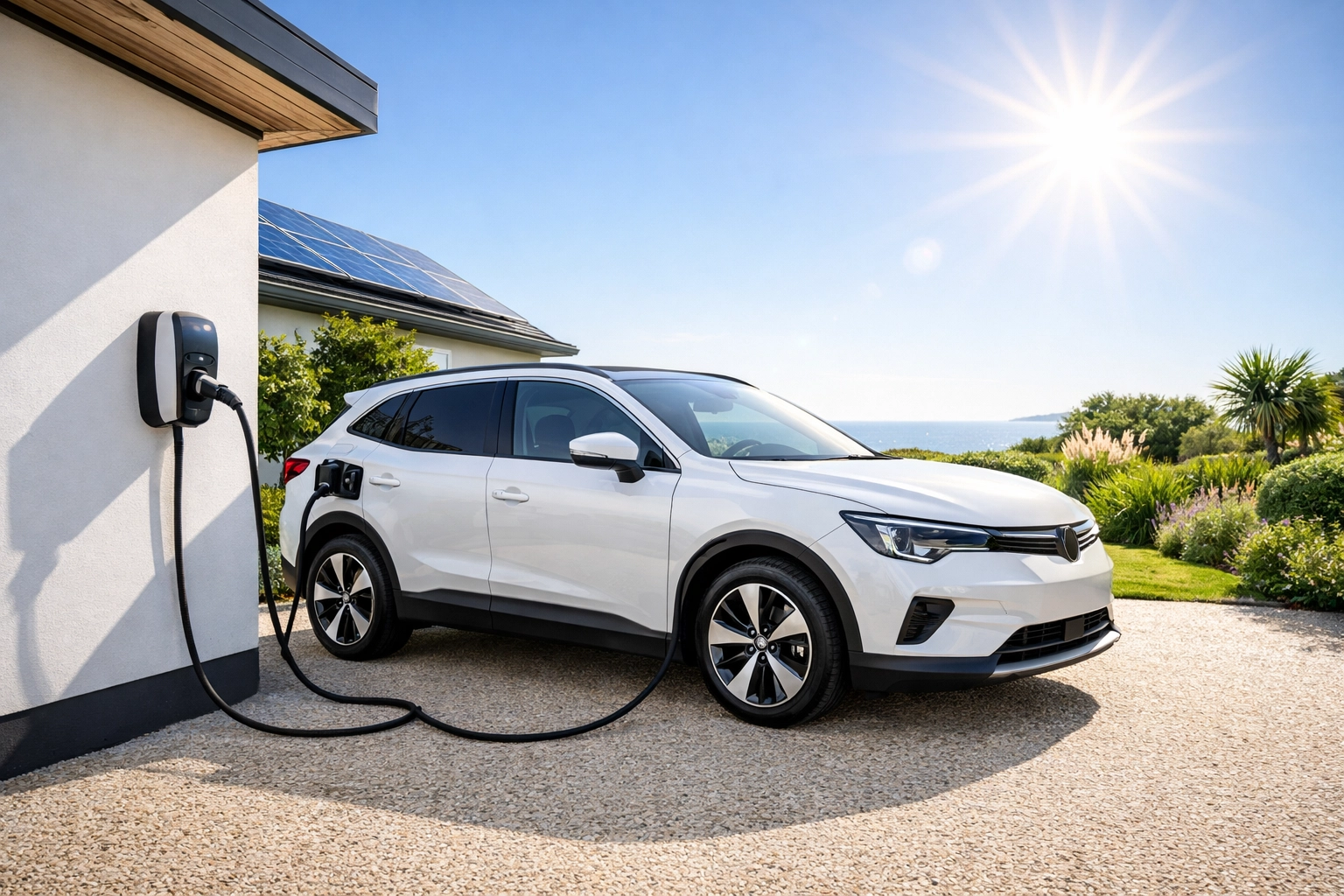
Tesla Powerwall has a feature called "Charge on Solar," which allows your Tesla car to charge using only excess solar energy. It’s incredibly satisfying to know your commute was powered entirely by the Dorset sunshine.
However, GivEnergy isn’t trailing behind. Their ecosystem includes their own EV chargers that "talk" to the battery to ensure your car doesn’t accidentally drain your home storage when you need it for the evening. We also frequently install SolarEdge and Zappi chargers, which can be configured to work in harmony with either battery system.
Which is Better for Your Poole Home?
There is no "one size fits all" answer, and that’s okay. Your choice depends on your specific lifestyle.
Choose the Tesla Powerwall 3 if:
- You have a large family home with high simultaneous electricity use (induction hobs, electric showers, etc.).
- You value the aesthetic and the premium software experience.
- You want a single, powerful unit that can handle almost anything.
- You already own a Tesla EV.
Choose GivEnergy if:
- You want the best value for your initial investment.
- You prefer a modular approach where you can add more storage later.
- You have a medium-sized home and don't need 11.5 kW of output.
- You want to support a British-based brand with excellent UK support.
How We Can Help
Making the jump to renewable energy is a big step, but you don't have to do it alone. At DES Renewable Energy Ltd, we don’t just "fit boxes." We look at your previous year's energy data, your roof orientation, and your future plans to recommend the system that actually makes sense for your wallet.
Whether you're interested in a full solar PV installation or just adding a battery to an existing system, we’re here to guide you. We’ve worked with countless homeowners across Poole and the surrounding areas, and we’d love to help you join the energy revolution.
Ready to stop worrying about the next price cap rise?
Get your free, no-obligation solar quote here or contact our expert team to discuss whether Tesla or GivEnergy is the right fit for your home. Let's make your home smarter, greener, and much cheaper to run.