


Let's be honest. You're here because you've had enough of the glossy sales pitches and you want the real story about solar electricity disadvantages.
Good. Because that's exactly what we're going to give you.
At DES Renewable Energy, we believe informed customers make the best decisions. So let's have a proper conversation about what solar installers in Dorset don't always shout about, and more importantly, whether these disadvantages actually matter for your situation.
The Upfront Cost Is Real (And It's Not Small)
Here's the biggest solar electricity disadvantage: it's expensive to get started.
A typical three-bedroom home in Dorset will pay around £7,050 for a 10-panel system. Depending on your property size and energy needs, you're looking at anywhere between £4,000 and £8,000 for a quality installation.
That's not pocket change. And anyone who tells you otherwise isn't being straight with you.
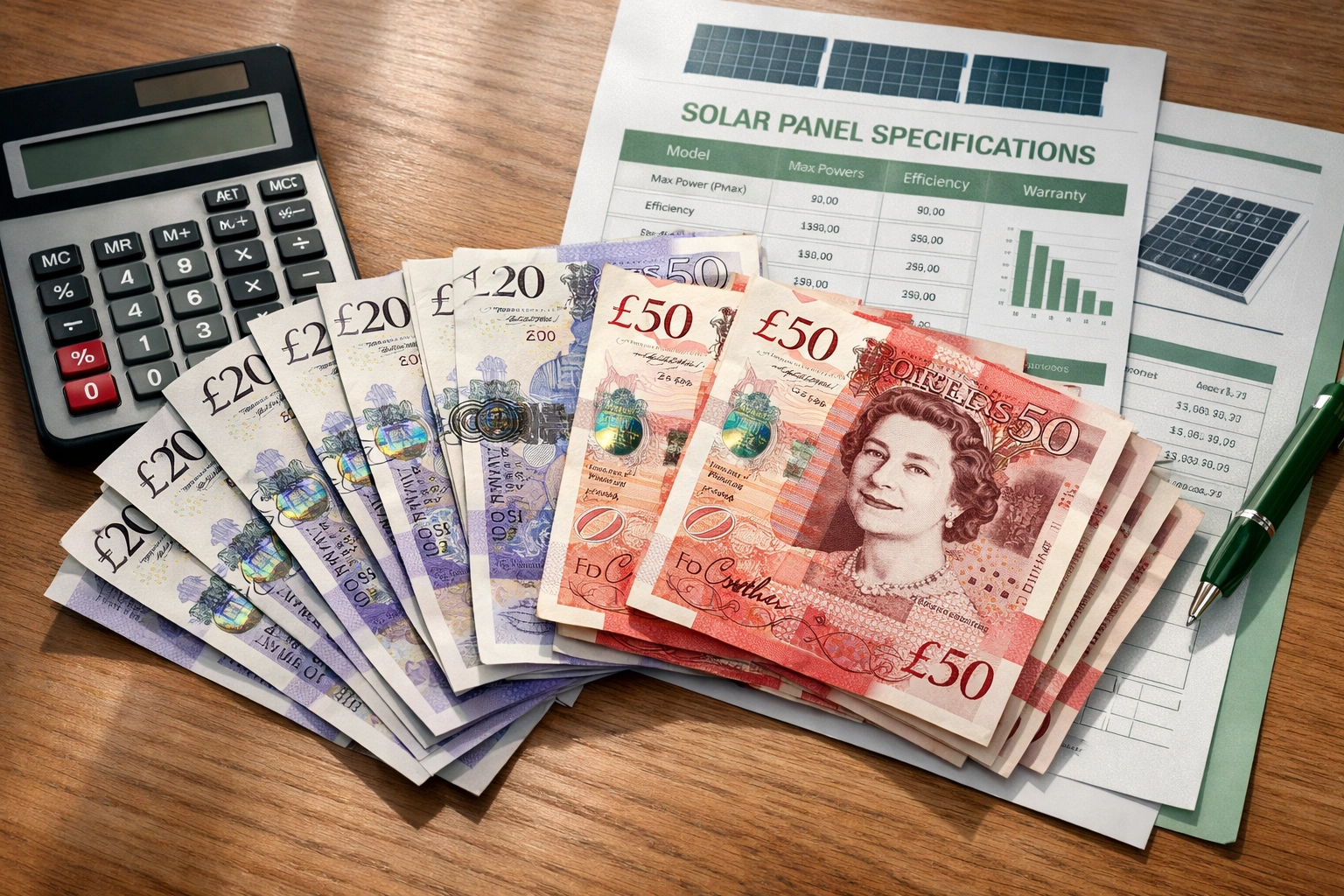
But here's what changes the conversation: payback periods and return on investment. In Dorset, homeowners break even at approximately 13.89 years. After that point, you're generating free electricity for the remaining 10-15 years of your system's 25+ year lifespan.
Think of it like this: you're prepaying for electricity you'll use over the next two decades. And with energy prices continuing to climb, locking in that cost today starts to make financial sense.
Still, you need to have that capital available upfront, or secure financing, which adds interest costs to your total investment. That's the reality, and we won't pretend otherwise.
Is the Cost Worth It?
That depends entirely on your situation:
- Your current electricity bills – Higher consumption means faster payback
- Your roof orientation – South-facing roofs generate the most
- Available incentives – The 0% VAT rate on solar installations (currently available) significantly reduces upfront costs
- Energy price projections – If prices continue rising, your ROI improves
As MCS-approved installers, we'll give you honest projections based on your actual roof and energy usage, not optimistic guesswork.
Solar Panels Don't Work at Night (Yes, Really)
Here's a solar electricity disadvantage that seems obvious but has real implications: solar panels produce absolutely zero electricity after sunset.
None. Not even a trickle.
During winter months in Dorset, you're looking at roughly 8 hours of usable daylight, and that's your entire generation window. The rest of the time, you're pulling power from the grid just like before.

This is where battery storage systems come into play. A battery like the Tesla Powerwall or GivEnergy system stores excess solar generation during the day, then releases it when your panels aren't producing.
But, and this is important, batteries add £4,000 to £8,000 to your total system cost. That's essentially doubling your initial investment for many homeowners.
Is it worth it? Sometimes yes, sometimes no. If you use most of your electricity in the evening (like most households), a battery massively improves your energy independence. If you're home during the day or have electric vehicle charging needs at night, it becomes even more valuable.
Without a battery, you'll typically use only 30-40% of the solar electricity you generate directly. The rest gets exported back to the grid through schemes like the Smart Export Guarantee (SEG), where you'll earn around 4-15p per kWh depending on your tariff.
We're NAPIT-certified installers who can design battery systems that actually match your consumption patterns, not just sell you the biggest battery on the shelf.
Weather Isn't Your Friend (But Modern Tech Helps)
Let's address the elephant in the room: British weather is rubbish for solar, right?
Well… sort of.
Solar panels do work on cloudy days, but they don't reach anywhere near peak efficiency. On an overcast winter day in Bournemouth, your panels might operate at 10-25% of their rated capacity. That's the harsh reality of weather-dependent technology.
Dorset is actually one of the UK's sunnier regions, but "sunnier" is relative. You're still dealing with frequent cloud cover, shorter winter days, and the occasional week of proper grey British weather that makes you question all your life choices.

Here's where quality components make a massive difference:
Premium inverters like SolarEdge use power optimizers on each panel, meaning shading or low-light conditions on one panel don't drag down your entire system. Traditional "string" inverters treat all panels as a single unit, one shaded panel reduces output across the board.
High-efficiency panels (20%+ efficiency ratings) capture more energy in low-light conditions than budget alternatives. Yes, they cost more upfront. But in Dorset's actual climate conditions, not laboratory testing conditions, they generate significantly more real-world electricity.
Does this eliminate the weather disadvantage? No. But it substantially reduces it.
Your Roof Might Not Be Suitable
Here's a solar electricity disadvantage that stops projects before they start: not every roof works for solar.
Your roof needs to tick several boxes:
- Sufficient space – Each panel is roughly 1.7m x 1m; a 10-panel system needs about 17-20m² of unobstructed space
- Appropriate orientation – South-facing is ideal, but south-east and south-west work too
- Minimal shading – Trees, chimneys, or neighbouring buildings casting shadows significantly impact generation
- Structural integrity – Your roof structure must support the additional weight (typically 10-15kg per panel)
- Suitable roofing material – Some materials (like slate or thatch) make installation more complex and expensive
If you have a small terraced house with a north-facing roof shaded by a massive oak tree, solar probably isn't your best option. And that's okay, not every home is suitable for every technology.
A proper site survey from certified installers (like our MCS-approved team) will tell you definitively whether your property works for solar. We'd rather tell you "no" upfront than install a system that underperforms for years.
The Manufacturing Process Isn't Green (Yet)
Here's an uncomfortable truth: solar panels aren't emission-free across their entire lifecycle.
Manufacturing solar panels requires mining raw materials, industrial processing at high temperatures, and energy-intensive production. This creates an initial carbon footprint that takes 2-3 years of operation to offset through clean energy generation.
It's still massively better than burning fossil fuels for 25 years. But it's worth acknowledging that "solar equals instant environmental virtue" is an oversimplification.
The solar industry is improving, manufacturing processes are becoming cleaner, and panel efficiency increases mean we need fewer panels to generate the same power. But if someone tells you solar panels have zero environmental impact, they're not giving you the full picture.
Maintenance Isn't Zero (But It's Minimal)
Solar electricity systems aren't fit-and-forget technology. They require periodic maintenance:
- Panel cleaning – Bird droppings, dust, and debris reduce efficiency; professional cleaning every 1-2 years maintains optimal performance
- Inverter monitoring – Checking your inverter display or app regularly ensures your system is performing correctly
- Professional inspections – Annual or biannual checks from qualified installers identify potential issues before they become expensive problems
- Panel degradation – Panels typically lose 0.5-0.8% efficiency per year; after 25 years, they'll operate at roughly 80-85% of original capacity
Is this a dealbreaker? For most homeowners, no. Maintenance costs are relatively low compared to the savings. But it's another factor to consider in your total cost of ownership.
Why We're Telling You All This
Because honesty builds trust, and trust matters when you're investing thousands of pounds in your home.
As MCS-approved and NAPIT-certified installers operating throughout Dorset, Bournemouth, and Poole, we'd rather have an honest conversation about solar electricity disadvantages upfront than deal with disappointed customers later.

Solar isn't perfect. But for many Dorset homeowners with suitable properties and realistic expectations, it's still an excellent long-term investment that reduces energy bills, increases property value, and cuts carbon emissions.
The question isn't whether solar has disadvantages: it does. The question is whether those disadvantages outweigh the benefits for your specific situation.
Ready for an Honest Conversation?
If you want a straight-talking assessment of whether solar makes sense for your Dorset property: including all the disadvantages we've discussed: get in touch with our team.
We'll give you realistic generation projections, honest payback calculations, and upfront answers about whether your roof is suitable. No pressure, no sales tactics: just the information you need to make an informed decision.
Because that's how solar should be sold: with complete transparency about both the advantages and the disadvantages.