


Installing solar panels or a battery storage system is one of the biggest investments you'll make in your home. Get it right, and you'll enjoy decades of reduced energy bills, increased property value, and genuine energy independence. Get it wrong, and you could be left with a poorly performing system, voided warranties, and an installer who's nowhere to be found when things go sideways.
Across the South: from Dorset through Wiltshire and beyond: homeowners are increasingly falling victim to what the industry calls "solar cowboys." These are installers who prioritise quick profits over quality workmanship, leaving customers with substandard installations and little recourse when problems arise.
So how do you spot the difference between a cowboy operation and a genuine renewable energy specialist? Here are seven critical red flags to watch for.
1. High-Pressure Sales Tactics and "Limited Time" Offers
A legitimate renewable energy installer treats your project as a long-term partnership, not a one-time transaction. Cowboys, on the other hand, rely on aggressive sales pressure to close deals before you have time to think critically.
Watch out for salespeople who:
- Demand you sign contracts the same day they visit
- Claim there's a "special government scheme" ending tomorrow (spoiler: there isn't)
- Offer massive discounts that expire if you don't commit immediately
- Show up unannounced at your door claiming to be conducting surveys in your area
A proper solar consultation involves a thorough site survey, shading analysis, discussion of your energy usage patterns, and time to consider multiple quotes. If someone's rushing you, they're likely hiding something.

2. Missing or Questionable Certifications
In the UK, renewable energy installations are regulated by specific accreditation bodies. The most important credential for solar and battery installers is MCS certification (Microgeneration Certification Scheme). Without it, your installation won't qualify for export payments under the Smart Export Guarantee (SEG), and many equipment warranties become invalid.
Additionally, look for:
- NAPIT or NICEIC electrical certification
- RECC (Renewable Energy Consumer Code) membership
- Relevant insurance cover (public liability and professional indemnity)
- A registered company you can verify at Companies House
Cowboys often claim certification without actually holding it, or let their memberships lapse after winning contracts. Always verify credentials directly through the MCS database or NAPIT's installer search: don't just trust the certificate on their website.
3. Unrealistic Performance Promises
"Your electricity bills will drop to zero!"
"This system will pay for itself in three years!"
If it sounds too good to be true, it probably is. While solar panels and battery storage can dramatically reduce your energy costs, any installer promising complete elimination of your bills without detailed analysis of your specific situation is misleading you.
A reputable specialist will:
- Base projections on your actual annual consumption (visible on your energy bills)
- Account for your roof's orientation, pitch, and shading
- Use realistic assumptions about future energy prices
- Explain seasonal variations in generation
- Provide conservative estimates rather than best-case scenarios
In the South of England, a well-designed system typically generates between 850–1,000 kWh per installed kW per year. Anyone quoting figures significantly higher than this is either using inflated assumptions or doesn't understand local solar irradiance.

4. They're Not Actually Local to the South
One of the biggest mistakes homeowners make is choosing an installer based solely on price, without considering proximity. An installer who's based in the Midlands or further north might offer a lower quote, but what happens when you need warranty service or repairs in two years?
Local specialists offer several critical advantages:
- They understand regional planning requirements and conservation area restrictions
- They have established relationships with local DNOs (Distribution Network Operators) for grid connection applications
- They can respond quickly to service calls or system issues
- They have a reputation to protect in the community
- They're familiar with local roof types and weather patterns
If your installer can't provide a local office address, local references, or evidence of recent installations in your area, consider it a major red flag. You want someone who'll still be answering the phone when you need them in 2035.
5. Vague Pricing and Hidden Costs
Transparent pricing is the hallmark of a professional operation. Cowboys rely on confusion and complexity to hide inflated margins or unexpected costs that emerge after you've signed.
Be wary of quotes that:
- Don't itemise equipment costs separately from labour
- Include vague line items like "electrical upgrades" without explanation
- Differ dramatically between cash and finance options (suggesting inflated APR)
- Don't clearly state what's included in the price (scaffolding? DNO application? commissioning?)
- Promise "free" upgrades or equipment that somehow gets added to your finance agreement
A quality installer will provide a detailed, transparent breakdown showing exactly what you're paying for. They should be able to explain every line item and why it's necessary for your specific installation.
6. No Understanding of Local Grid Connection Requirements
Solar panel and battery installations aren't just about mounting panels on your roof: they involve complex electrical work and often require notification or approval from your local Distribution Network Operator (DNO).
Different parts of the South fall under different DNOs (Southern Electric Power Distribution, Scottish and Southern Electricity Networks, etc.), each with their own requirements and processes. An installer who doesn't understand these regional variations, or worse, plans to skip the proper notification process entirely, is putting you at risk.
Ask potential installers:
- Have they worked with your specific DNO before?
- What's the typical approval timeline in your area?
- Will they handle the G99 or G100 application on your behalf?
- Do they understand export limitation requirements if your local network has capacity constraints?
If they can't answer these questions confidently, or seem unfamiliar with the DNO application process, walk away. Improper grid connections can result in safety issues, system shutdowns, and legal liability.
7. Poor Track Record and Fly-by-Night Operations
Thanks to the internet, researching an installer's reputation has never been easier: yet many homeowners still skip this crucial step. A few minutes of investigation can save you thousands of pounds in headaches.
Check multiple sources:
- Google Reviews: Look for patterns, not just star ratings. Multiple reviews mentioning poor communication, delays, or unresolved issues are serious warnings.
- Trustpilot: Often more reliable than company websites, which only feature cherry-picked testimonials.
- Checkatrade or Which? Trusted Traders: These platforms verify installer credentials and track complaints.
- Companies House: Check how long they've been trading and whether they've had previous company dissolutions (a common tactic for dodging warranty obligations).
Be particularly concerned about:
- Companies with no online presence or reviews
- Businesses operating under multiple trading names
- Overwhelmingly negative reviews describing installation quality problems
- Patterns of complaints about unresponsive aftersales service
- Recent company formations (less than two years old) making big promises about long-term support
Why This Matters for Your 25-Year Investment
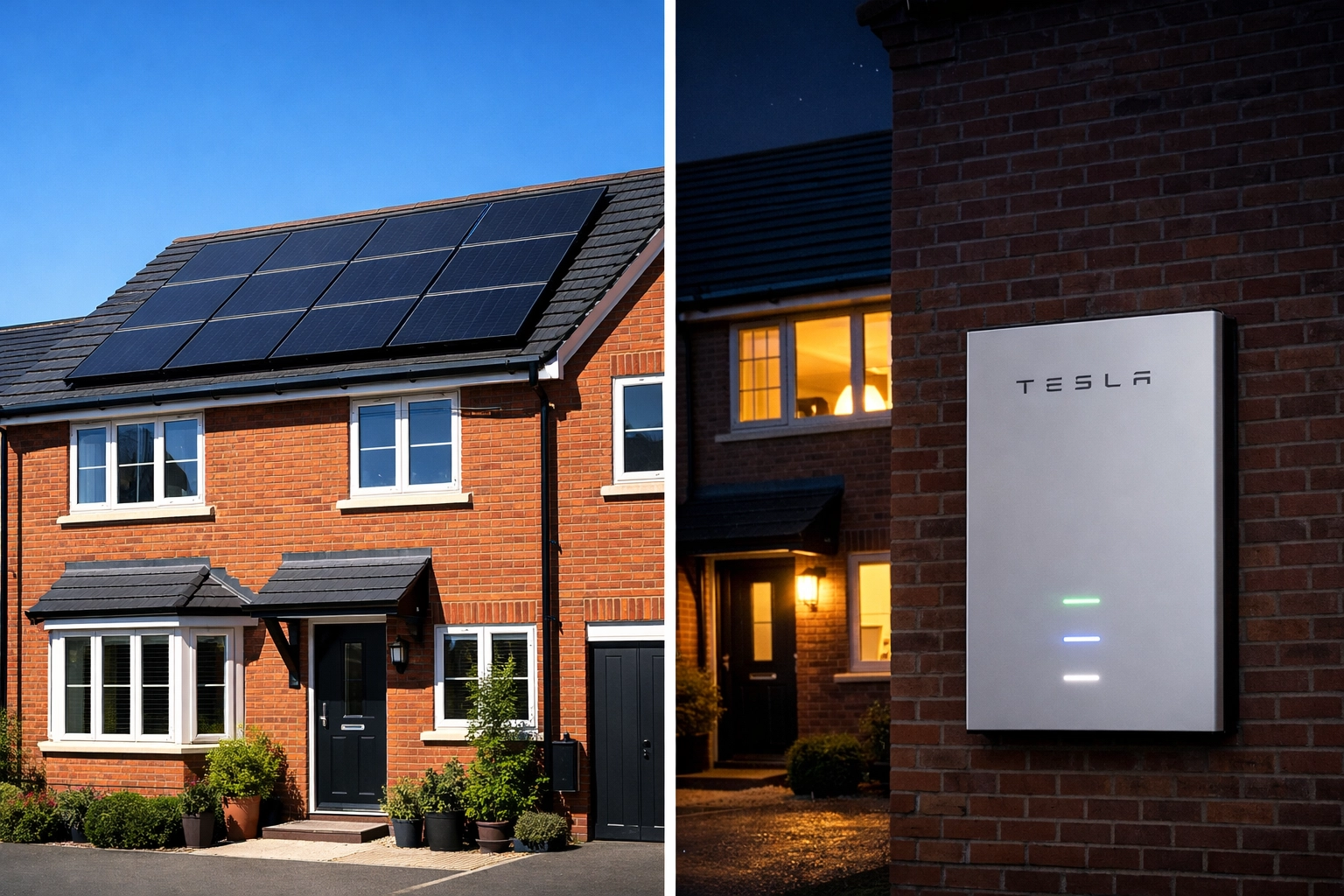
Solar panels typically come with 25-year performance warranties. Battery systems like the Tesla Powerwall 3 carry 10-year guarantees. Your inverter might be warrantied for 12 years or more. These aren't short-term purchases: they're long-term investments in your home's energy future.
That's why choosing a specialist over a cowboy isn't just about the quality of the initial installation (though that's crucial). It's about ensuring you have a reliable partner who'll be there for the lifetime of your system.
At DES Renewable Energy, we've built our reputation across the South by doing things properly from day one. We hold all necessary certifications, provide transparent pricing, and maintain a local presence from Bournemouth to Chippenham and everywhere in between. When you call us in five years because you have a question about your system performance, we'll still be here to answer.
Your Next Steps
If you're considering solar panels, battery storage, or both, take your time. Get at least three quotes from established local installers. Ask the difficult questions. Verify credentials independently. Check reviews thoroughly.
And if something feels off: if you're being pressured, if claims sound unrealistic, if pricing isn't transparent: trust your instincts and keep looking. The right installer will earn your business through expertise and transparency, not sales tactics and false urgency.
The renewable energy revolution is real, and it's transforming how homeowners across the South power their properties. Just make sure you're working with specialists who'll be around to support your investment for decades to come, not cowboys chasing a quick commission.
Ready to speak with a certified renewable energy specialist? Our team at DES Renewable Energy provides honest assessments, transparent pricing, and quality installations backed by manufacturer partnerships with industry leaders like Tesla and SolarEdge. Contact us today for a no-pressure consultation about your home's renewable energy potential.