


If you’re running a business in 2026, you’ve likely spent more time than you’d care to admit staring at energy invoices. Between fluctuating wholesale prices and the general uncertainty of the global market, energy has moved from a "background cost" to a "boardroom priority."
You might be considering business solar power as a way to claw back some control. But, let’s be honest: commercial solar is a significant investment. You want to know exactly when that investment starts paying for itself and what the real-world return on investment (ROI) looks like.
At DES Renewable Energy Ltd, we believe in total transparency. It’s not just about the "sunny side" of things; it’s about understanding the data, the tax implications, and even the honest disadvantages of solar.
Here are 10 things you need to know about commercial solar ROI to help you decide if it’s the right move for your company.
1. Annual Returns are Often Higher Than the Stock Market
When people think of ROI, they often think of 5% or 7% as a "good" return. However, commercial solar projects typically deliver an annual ROI of 15% to 25%.
Because energy costs are a guaranteed expense, every kilowatt-hour (kWh) you generate yourself is a direct saving on your bottom line. Most UK businesses find that their system pays for itself entirely within 4 to 6 years. When you consider that a high-quality Tier 1 solar panel system has a lifespan of 25 to 30 years, you’re looking at two decades of essentially free energy.
2. Tax Incentives Dramatically Shorten Your Payback Period
One of the most powerful tools for boosting your ROI isn't the sun: it’s the tax man. Under current UK rules, businesses can take advantage of Full Expensing. This allows companies to deduct 100% of the cost of qualifying plant and machinery investments (including solar panels) from their profits in the year of purchase.
This means for every £10,000 you spend on solar, you could potentially reduce your corporation tax bill by £2,500 (assuming a 25% tax rate). If the world of capital allowances feels a bit overwhelming, don't worry: and that’s okay. Most of our clients work closely with their accountants and our technical team to map this out before a single panel is installed. You can learn more about these financial structures on our solar panel investment page.
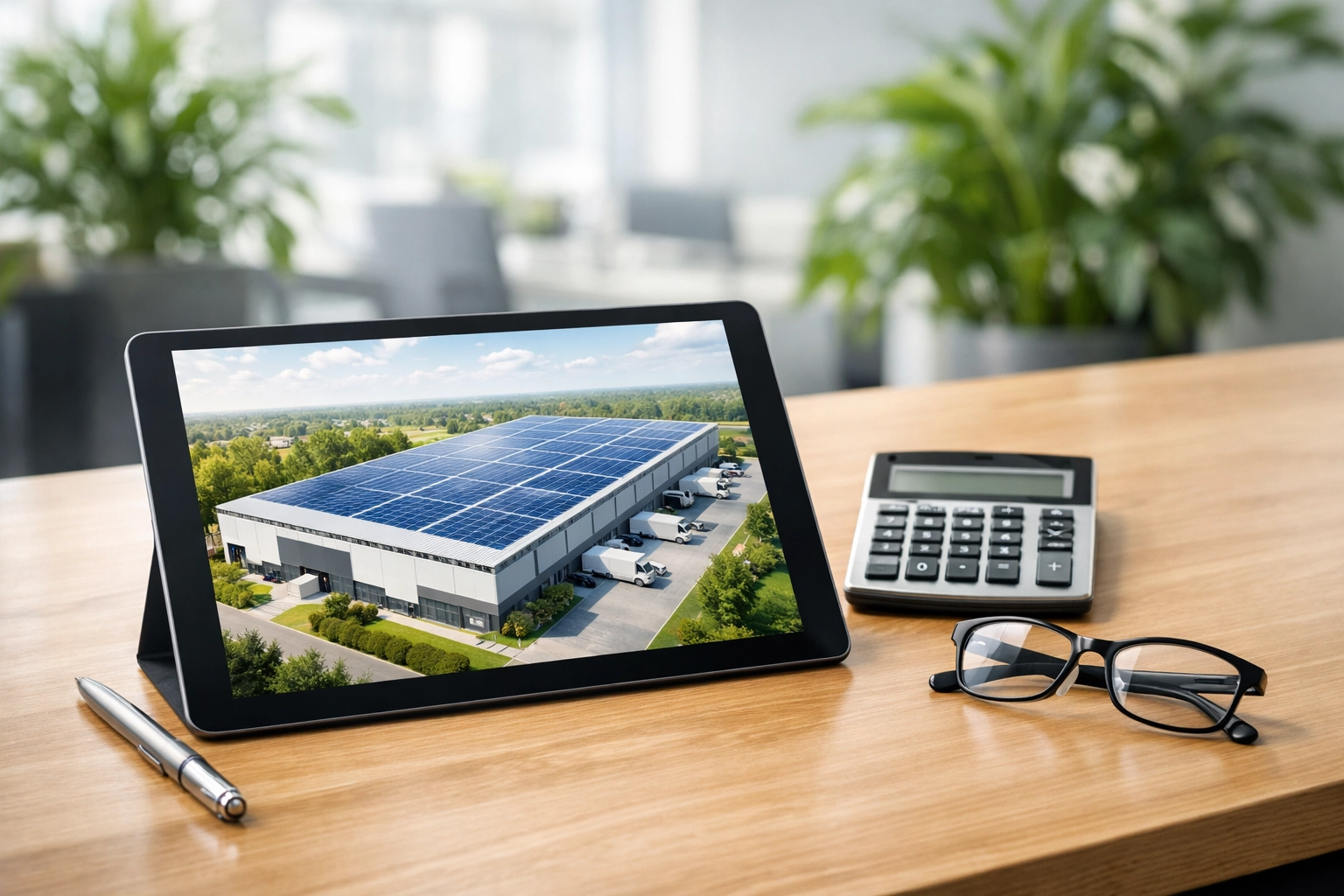
3. Protection Against Energy Market Volatility
We live in a world where global events: like the ongoing Middle East conflict: can cause wholesale gas and electricity prices to spike overnight. Cornwall Insight recently forecasted that energy costs remain sensitive to these international pressures, and while the domestic price cap is often in the news (with the average bill hovering around £1,973), commercial rates are even more exposed to market swings.
By installing business solar power, you are effectively "buying" your electricity for the next 25 years at a fixed, upfront price. This budget stability is a massive ROI factor that doesn’t always show up on a simple spreadsheet. It gives you a competitive advantage; while your competitors are hiking prices to cover their rising utility bills, your energy costs remain flat.
4. Matching Consumption to Generation is Key
Your ROI depends heavily on how much of the energy you produce you actually use. This is called "self-consumption." If your business operates 9-to-5, Monday to Friday, your energy usage curve likely matches the sun’s output perfectly.
However, if you produce massive amounts of power on a Sunday when the factory is closed, that energy is sent back to the grid. While you can earn money through the Smart Export Guarantee (SEG), the rate you get for selling power is much lower than the rate you pay to buy it. To maximise ROI, we often recommend sizing the system to match your "base load" or incorporating battery storage like the Tesla Powerwall to shift that Sunday sun to Monday morning.
5. The "Honest Disadvantages" of Solar
We promised transparency, so let’s talk about the downsides. Solar isn't a magic wand.
- The Upfront Cost: Even with tax breaks, the initial capital outlay is significant.
- Roof Suitability: If your roof is North-facing or shaded by neighbouring buildings, your ROI will drop.
- Operational Downtime: During installation, there might be slight disruptions, though we aim to keep these to a minimum.
- Intermittency: It doesn't work at night. If your business runs 24/7, you will still be reliant on the grid (or batteries) for half of your operations.
Understanding these advantages and disadvantages of solar power is vital. If a provider tells you there are no downsides, they aren't being honest with you.
6. Solar Increases Your Property Value
Commercial buildings with high EPC (Energy Performance Certificate) ratings are more attractive to tenants and buyers. Data suggests that commercial properties with solar installations can sell for 3% to 10% more than those without.
If you plan to sell your premises in the next decade, the solar array isn't just a cost-saving measure; it’s an asset that adds to the valuation of your business. This "exit value" is a critical part of the ROI calculation that many business owners overlook.
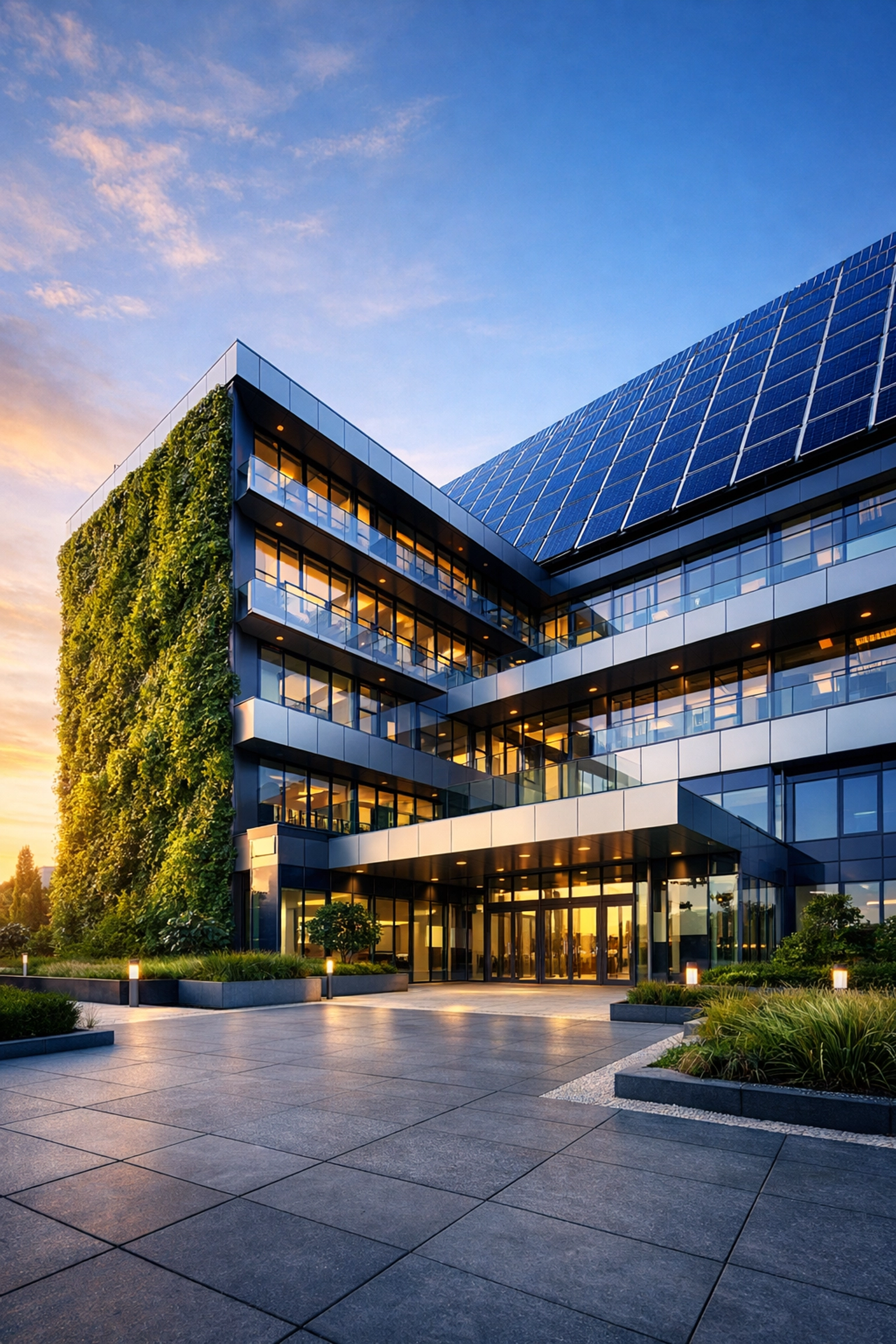
7. System Size and Location Matter
It might seem obvious, but a system in the South of England will generally perform better than one in the North due to higher irradiance levels. However, even in "grey" Britain, solar is incredibly effective. Modern panels are designed to capture daylight, not just direct sunlight.
The size of the system also dictates the "per-watt" cost. Due to economies of scale, a 100kW system is cheaper per panel to install than a 10kW system. We provide bespoke calculations to show you exactly how your specific location and roof space will impact your solar installation results.
8. Selling Excess Energy Back to the Grid
While self-consumption is the goal, your surplus energy still has value. Through the Smart Export Guarantee, you can sign a contract with an energy supplier to pay you for every unit of electricity you feed back into the national grid.
While these rates (typically 5p-15p per kWh) are lower than the 25p-30p you might save by using the power yourself, they provide a secondary revenue stream. For a large warehouse with a massive roof, this "export income" can shave an extra year off the payback period.
9. Maintenance and Longevity
To protect your ROI, you need to protect your equipment. Commercial solar is relatively low maintenance because there are no moving parts, but "low maintenance" doesn't mean "no maintenance."
- Cleaning: Dust, bird droppings, and industrial soot can reduce efficiency by 10-15%.
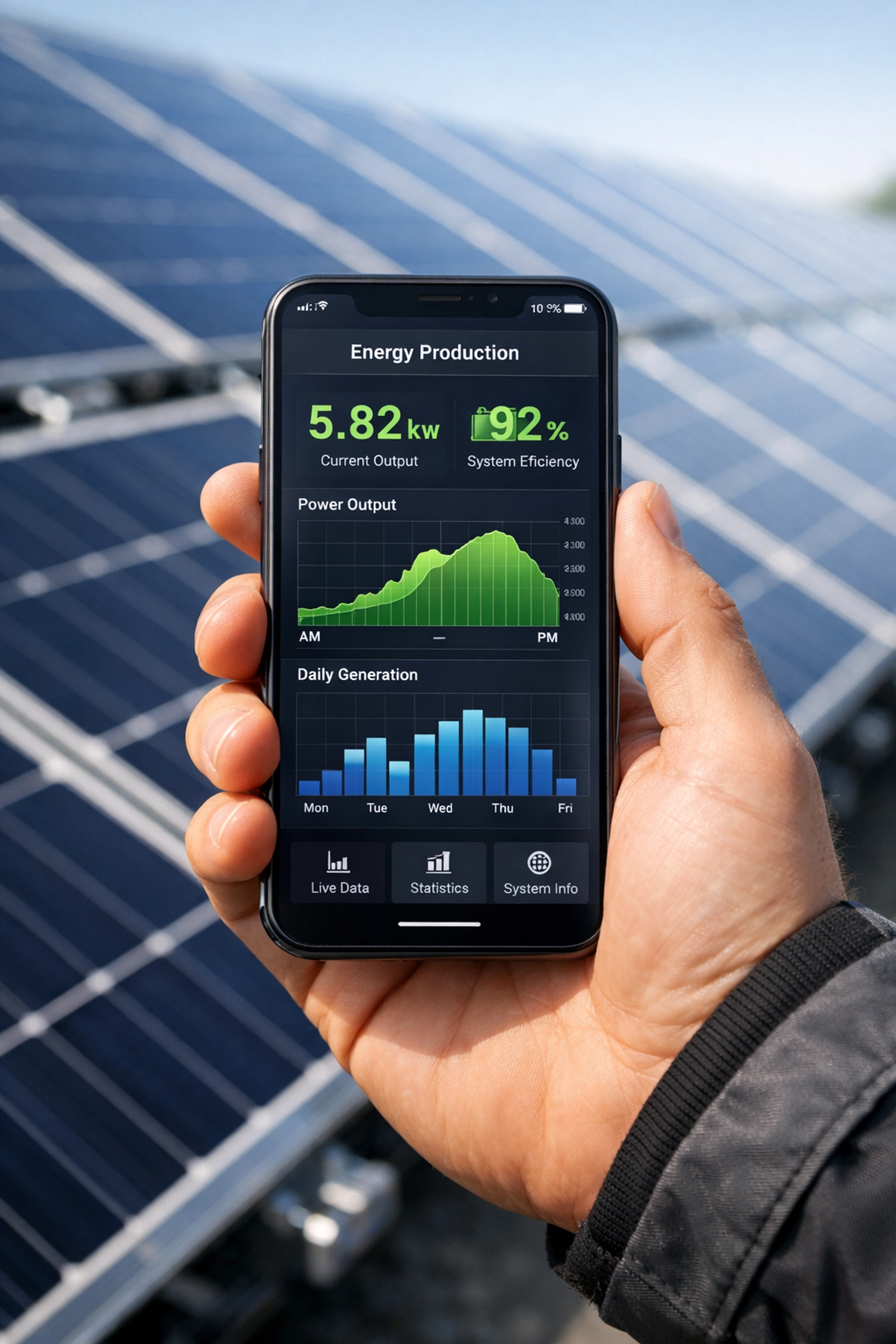
- Monitoring: Using smart monitoring software allows you to see if a single string of panels has underperformed, allowing for quick fixes.
- Inverter Health: While panels last 25 years, inverters typically need replacing after 12-15 years. Budgeting for this ensures your ROI remains accurate.
Check out our solar installation and maintenance category for more tips on keeping your system at peak performance.
10. Decarbonisation and Brand Reputation
Finally, there’s the "Green ROI." More and more contracts, especially in government and large-scale supply chains, now require proof of a carbon reduction strategy.
Installing solar panels is a visible, measurable way to lower your carbon footprint. It’s not just about the money saved; it’s about the contracts won because your business aligns with the sustainability goals of your clients. In the modern economy, being "green" is often a prerequisite for doing business.
Summary Table: Commercial Solar ROI Factors
| Factor | Impact on ROI | Note |
|---|---|---|
| Self-Consumption | High | Using your own power is 2-3x more valuable than selling it. |
| Full Expensing (Tax) | High | Immediate reduction in Corporation Tax bill. |
| Grid Prices | Medium-High | As grid prices rise, your solar "savings" increase. |
| Maintenance | Low-Medium | Essential to keep efficiency high and prevent output drops. |
| Export (SEG) | Low | A helpful secondary income stream, but not the main driver. |
How to Move Forward
Calculating the ROI for your specific building requires a bit of "heavy lifting" in terms of data analysis, and that’s okay: that’s what we’re here for. We look at your half-hourly energy data, your roof orientation, and your future growth plans to provide a transparent, honest forecast.
If you’re ready to stop guessing and start measuring, we’d love to help. You can explore our commercial case studies to see how we’ve helped other businesses achieve their energy goals, or simply contact us to discuss your needs.
Whether you’re just starting your research or you’re ready for a technical site survey, our team at DES Renewable Energy Ltd is here to provide the expert help and advice you need to make an informed decision for your business. For a quick estimate, you can also head over to our solar quote page.