


The UK solar market in 2026 is busier than ever. With energy prices remaining a primary concern for households and the push for Net Zero accelerating, thousands of homeowners are making the jump to renewable energy. However, this "gold rush" has brought with it a familiar problem: the "Solar Cowboy."
When you decide to invest £10,000 to £20,000 in a solar and battery storage system, you aren't just buying hardware; you are entering a 25-year relationship with the technology and the company that installs it. Choosing the wrong partner can lead to more than just a poor return on investment: it can result in roof damage, electrical hazards, and a system that becomes a "brick" the moment a component fails.
In this guide, we’ll break down the critical differences between renewable energy specialists and the fly-by-night "cowboys" to help you protect your home and your investment.
What is a 'Solar Cowboy'?
A "Solar Cowboy" is an installer or a sales-led company that prioritises quick turnovers and high-pressure sales over technical integrity and long-term support. They often appear during market booms, offering prices that seem too good to be true, only to vanish or rebrand when warranty claims start rolling in.
You can usually spot them by these red flags:
- High-Pressure Sales: They want a deposit today. They might use "limited-time government grants" (that don't actually exist) to rush your decision.
- Vague Equipment Specs: They offer "high-efficiency panels" without naming the manufacturer.
- Subcontracted Labour: They don't have their own internal teams. They hire whoever is cheapest on the day to fit your system.
- The Vanishing Act: They have no physical office, limited reviews, or a history of changing company names every two years.
For a deeper look at what can go wrong, you can read about common problems with solar panels.
The Specialist Standard: Why Accreditations Matter
At DES Renewable Energy, we believe a specialist isn't just someone who knows how to fix a panel to a roof. It is a company that adheres to rigorous industry standards. In the UK, there are two names you must look for: MCS and NAPIT.
MCS (Microgeneration Certification Scheme)
If your installer is not MCS certified, your installation effectively does not exist in the eyes of the UK energy grid. Without an MCS certificate:
- No SEG Payments: You cannot sign up for the Smart Export Guarantee (SEG) to get paid for the excess energy you send back to the grid.
- Warranty Risks: Most Tier-1 manufacturers will not honour warranties if the system wasn't installed by a certified professional.
- Insurance Issues: Your home insurance provider may refuse to cover your roof or electrical system if the work wasn't performed by an accredited body.
NAPIT & Electrical Safety
While MCS focuses on the technology, NAPIT ensures the electrical integration is safe. Solar systems involve high-voltage DC (Direct Current) and AC (Alternating Current) electricity. A specialist ensures your consumer unit is upgraded correctly and that the system is fully earthed and fire-safe.
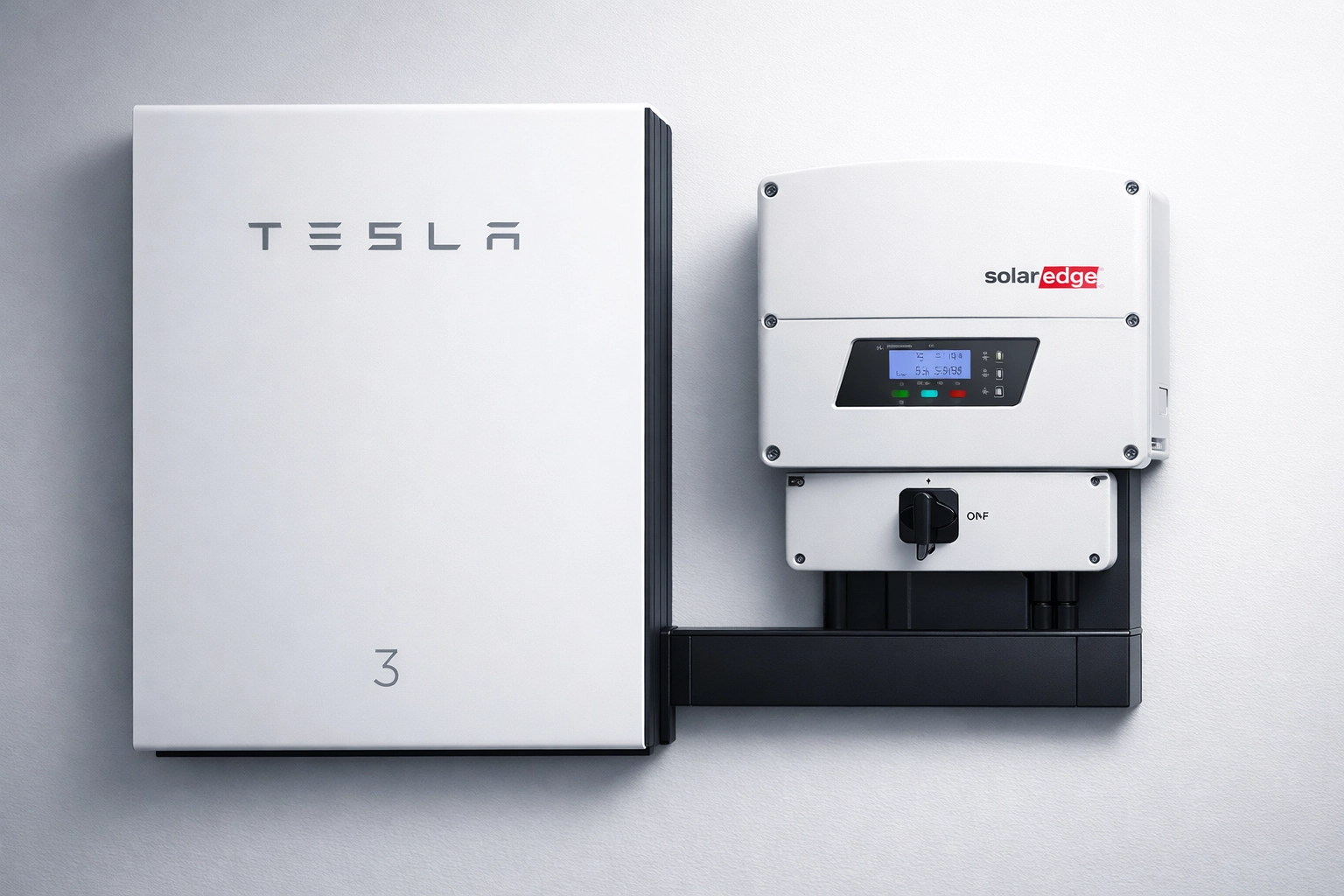
Tier-1 Equipment: Why We Install Tesla & SolarEdge
A common tactic for "cowboys" is to use "white-label" or generic equipment. On paper, a 400W generic panel looks the same as a 400W Tier-1 panel. In reality, the difference is the "degradation rate."
Cheap panels might lose 20% of their efficiency in just five years. By contrast, Tier-1 equipment is designed to perform at peak levels for decades. This is why we focus on future-proofing your home by only using industry-leading hardware.
The Power of the Tesla Powerwall 3
In 2026, the Tesla Powerwall 3 has become the gold standard for home energy storage. Unlike cheaper alternatives, it features an integrated solar inverter, meaning fewer components on your wall and higher efficiency. It’s also designed to handle the UK’s damp climate with an excellent IP rating.
SolarEdge Optimisation
Standard "string" inverters are fine until a single leaf or a chimney shadow hits one panel. When that happens, the output of your entire array drops to the level of that one shaded panel. Specialists use SolarEdge Power Optimisers, which allow every panel to work independently. If one panel is in the shade, the others keep pumping out maximum power.
Specialists vs. Cowboys: The Comparison
| Feature | Renewable Energy Specialist | "Solar Cowboy" |
|---|---|---|
| Survey | Full technical site survey & shade analysis. | "Desktop" quote via Google Maps only. |
| Equipment | Tier-1 (Tesla, SolarEdge, GivEnergy). | Generic or unbranded components. |
| Accreditation | MCS, NAPIT, RECC/HIES. | Often uncertified or using "borrowed" IDs. |
| Warranty | 25-year product & 10-year workmanship. | 1-2 years (if the company still exists). |
| Monitoring | App-based, per-panel performance tracking. | Basic total-generation meter only. |
| Aftercare | Dedicated maintenance and support teams. | No answer when you call with a fault. |
The 25-Year Relationship: Why Aftercare Matters
Most homeowners view solar as a "fit and forget" technology. While it is low maintenance, it is not "no maintenance." Over 25 years, your system will face UK gales, snow, and heatwaves.
A specialist partner provides solar installation maintenance to ensure your system continues to provide the ROI you were promised. If a "cowboy" installs your system and goes out of business six months later, who do you call when your inverter displays an error code? You’ll likely end up paying a specialist a premium to come out and fix a system they didn't install: often discovering that the original wiring was substandard.

Financial Reality: Is 'Cheap' Actually More Expensive?
Let’s look at the numbers. A "cowboy" quote might be £2,000 cheaper than a specialist quote for a 4kW system with battery storage.
- Cowboy System: Lower efficiency + no SEG payments + potential repair costs = 12-15 year payback period.
- Specialist System: High efficiency + SEG payments (£200-£400/year) + 25-year warranty = 6-8 year payback period.
When you look at the investment value of solar, the higher-quality system pays for itself twice as fast and continues to generate "free" electricity long after the components of a cheaper system would have failed.
How to Choose the Best Partner for Your Home
If you are currently speaking to installers, here is a 4-step checklist to ensure you are dealing with a specialist:
- Ask for their MCS Number: Don't just take their word for it. Check the MCS database to ensure their certification is active and registered to their current trading name.
- Request a Detailed Shade Analysis: A specialist will use software to show exactly how your roof's orientation and nearby obstructions will affect your generation month-by-month.
- Check the "Workmanship" Warranty: Manufacturers cover the parts, but the installer covers the labour. Ensure they offer at least a 5-to-10-year workmanship warranty backed by an insurance scheme like HIES.
- Look for Local Presence: A company with a local office and a history in your region is much more likely to be there for you in ten years than a national sales firm with no local engineers.
For more detailed advice, check our full guide on how to choose the best solar panel installation company.

Final Thoughts
Investing in renewable energy is one of the smartest moves a UK homeowner can make in 2026. It protects you from volatile energy markets and significantly reduces your carbon footprint. However, the quality of your partner determines whether that investment is a dream or a nightmare.
Don't settle for the lowest price; look for the highest value. A specialist partner like DES Renewable Energy brings the technical expertise, the Tier-1 partnerships, and the long-term commitment required to power your home for the next quarter-century.
Ready to start your journey with a partner you can trust?
Contact our expert team today for a no-obligation technical survey and see how we can future-proof your home.