


Getting the right solar panel system size isn't about guesswork: it's about matching your household's actual energy needs with what your roof can realistically accommodate. Too small, and you're leaving savings on the table. Too large, and you're spending money on capacity you'll never use.
This guide walks you through the exact steps to calculate the perfect system size for your UK home, taking into account your energy consumption, roof space, and future plans like electric vehicles or battery storage.
Step 1: Work Out Your Current Energy Usage
Before you can size a solar system, you need to know how much electricity your household actually uses. The easiest way to find this is by checking your electricity bills: most providers show your total annual consumption in kilowatt-hours (kWh).
Can't find a full year's worth of bills? Look for a statement that covers at least a few months and multiply accordingly. Alternatively, many energy suppliers now offer online accounts where you can view 12 months of usage data in one place.
Average UK household consumption sits around 2,700 kWh per year, though this varies significantly depending on:
- Number of occupants
- Home size and insulation quality
- Heating system (gas vs electric)
- Appliance efficiency
- Whether anyone works from home

If your annual usage is closer to 3,500–4,500 kWh, you're in line with a typical 3-4 bedroom house with a family. Smaller homes or couples might use 1,800–2,500 kWh, while larger properties with electric heating can easily exceed 5,000 kWh.
One important consideration: if you're planning to add an electric vehicle or switch to an electric heating system in the next few years, factor that additional consumption into your calculations now. We'll cover future-proofing in more detail later.
Step 2: Understand UK Solar Generation Reality
Here's the part many homeowners don't realise until after installation: the UK receives an average of just 3–4 hours of peak sunlight per day. That's the time when your panels operate at or near their maximum capacity.
This doesn't mean your panels only work for 3–4 hours: they'll generate electricity whenever there's daylight, even on overcast days. But their output will be significantly lower outside those peak hours.
What does this mean for system sizing? A 4kW system won't produce 4kW of power continuously throughout the day. Instead, it'll peak at 4kW during optimal conditions and generate considerably less the rest of the time.
For planning purposes, assume your system will produce roughly 3–4 times its rated capacity in kWh per day under average UK conditions. So a 4kW system generates approximately 12–16 kWh on a typical day during spring and summer, dropping to 4–6 kWh during winter months.
Step 3: Choose Your System Size
For most UK homes, a 3–6 kW system strikes the right balance between cost, performance, and available roof space. Here's how to narrow that range based on your household:
3–3.5 kW System
- Suitable for: 1-2 bedroom properties, couples, low energy users
- Annual generation: ~2,500–3,000 kWh
- Typical cost: £4,500–£6,000
4 kW System (Most Popular)
- Suitable for: Average 3 bedroom house, families
- Annual generation: ~3,400–3,800 kWh
- Typical cost: £6,000–£7,500
- Covers approximately 70–80% of typical household consumption
5–6 kW System
- Suitable for: Larger homes, high energy users, future EV charging
- Annual generation: ~4,250–5,000+ kWh
- Typical cost: £7,500–£10,000
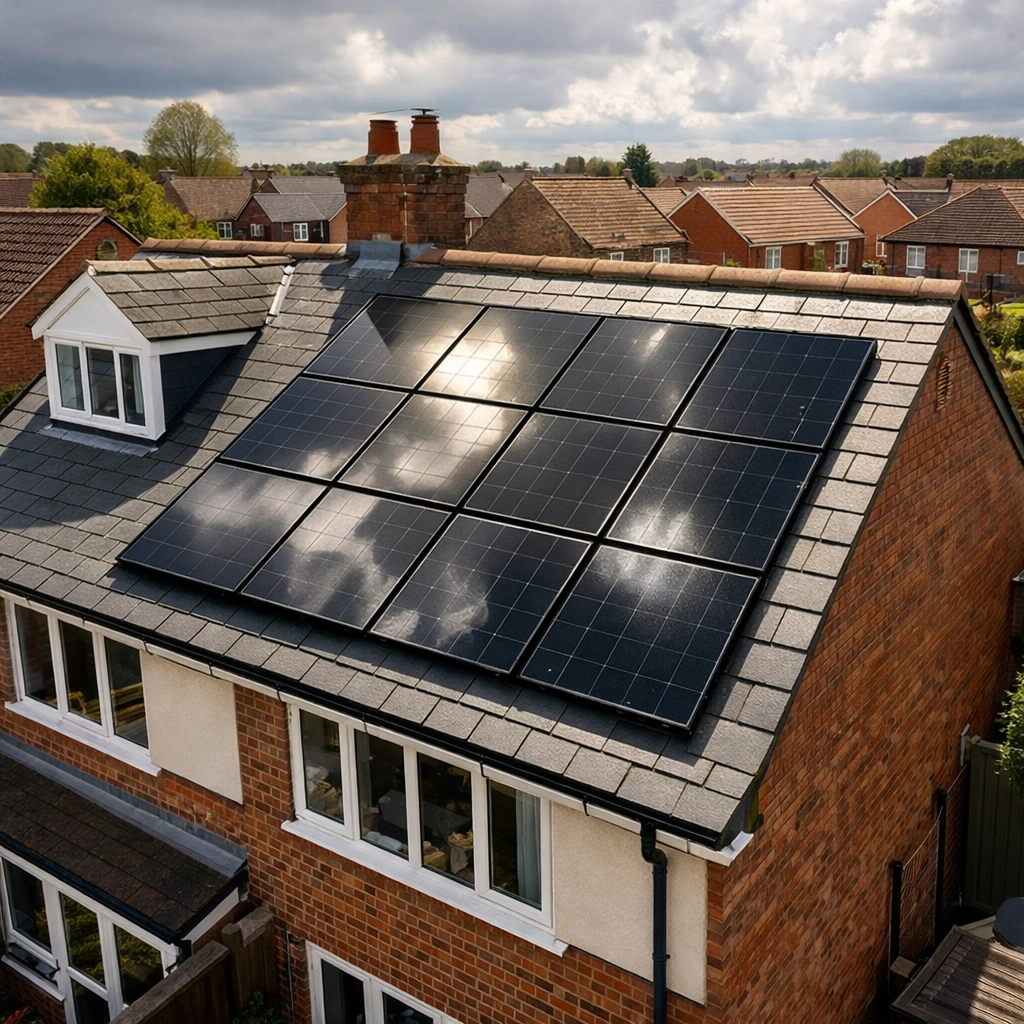
Most installers recommend staying within the 4kW range for domestic properties unless you have specific reasons to go larger: such as confirmed plans to purchase an electric vehicle or install a heat pump.
Step 4: Calculate How Many Panels You'll Need
Once you've identified your target system size, you can work out how many physical panels you'll need. Modern residential solar panels typically range from 350W to 450W each, with 400W panels becoming increasingly common.
Here's the simple formula:
Number of panels = System size (in watts) ÷ Panel wattage
Let's say you want a 4kW (4,000W) system using 400W panels:
4,000W ÷ 400W = 10 panels
The same 4kW system with 350W panels would require:
4,000W ÷ 350W = 11.4 panels (round up to 12)
| System Size | 350W Panels | 400W Panels | 450W Panels |
|---|---|---|---|
| 3 kW | 9 panels | 8 panels | 7 panels |
| 4 kW | 12 panels | 10 panels | 9 panels |
| 5 kW | 15 panels | 13 panels | 12 panels |
| 6 kW | 18 panels | 15 panels | 14 panels |
Higher-wattage panels mean fewer panels overall, which can be beneficial if you're working with limited roof space. However, they typically cost slightly more per unit.
Step 5: Check Your Roof Space
Now comes the practical constraint: does your roof have enough space to accommodate the system you want?
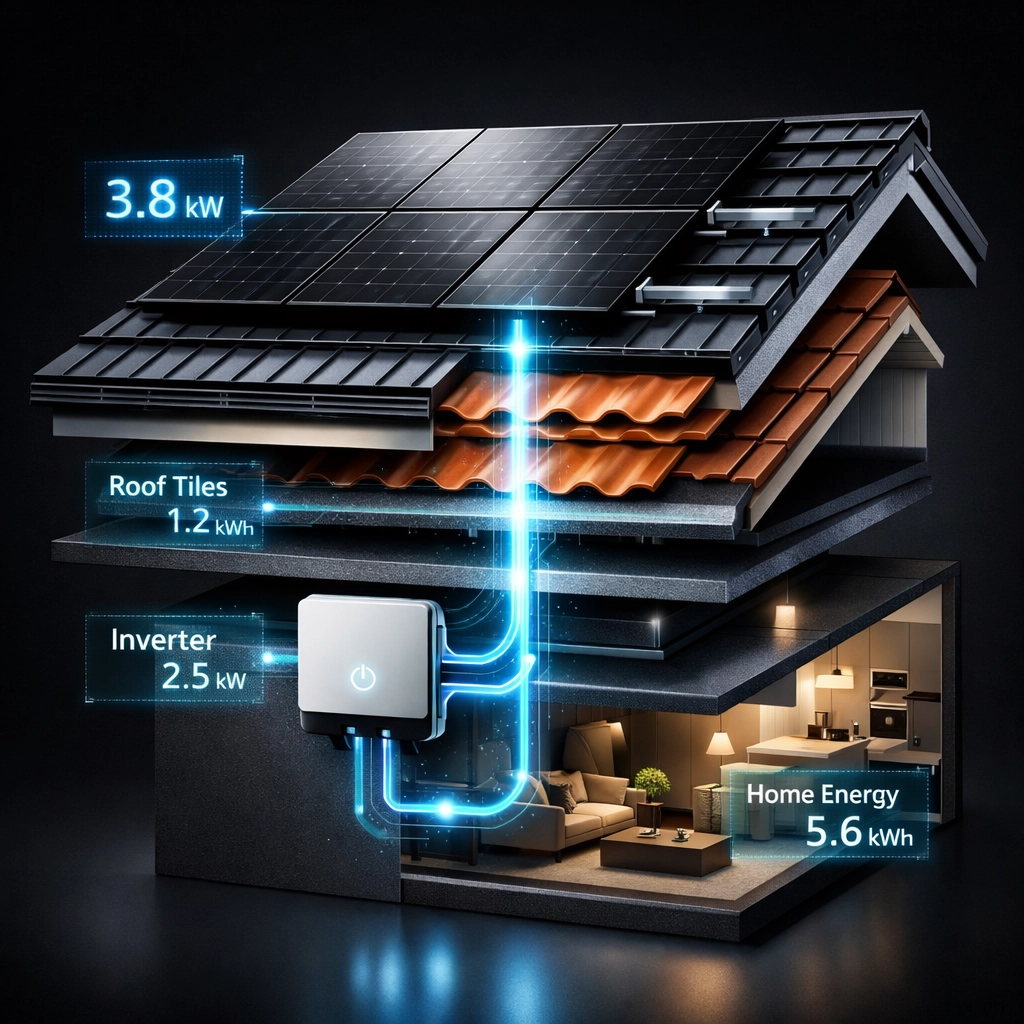
A standard 400W panel measures approximately 1.7 square metres. To calculate total roof space needed, multiply the number of panels by this figure, then add roughly 15% for spacing, mounting equipment, and avoiding obstacles like chimneys or skylights.
4kW System Example (10 × 400W panels):
- Basic panel area: 10 × 1.7m² = 17m²
- With spacing allowance: 17m² × 1.15 = ~20m² required
South-facing roofs are ideal, but don't rule out east or west-facing options: they can still generate 80–90% of what a south-facing installation produces. North-facing roofs in the UK generally aren't recommended, as they receive minimal direct sunlight.
Roof pitch matters too. The optimal angle in the UK is between 30–40 degrees, though most standard pitched roofs (which typically sit around 35 degrees) work perfectly well.
If your roof space is limited, consider:
- Using higher-wattage panels to maximise output per square metre
- Exploring whether a smaller system might meet your needs adequately
- Checking if you have any flat-roof outbuildings or garages that could accommodate additional panels
Future-Proofing: EVs and Battery Storage
One of the biggest mistakes homeowners make is sizing their system purely for today's usage, without considering how their energy needs might change.
Electric Vehicles
If there's any chance you'll purchase an electric vehicle in the next 5–10 years, factor that into your system sizing now. The average EV adds approximately 2,000–3,000 kWh to your annual electricity consumption, depending on your mileage.
For context, that's roughly equivalent to the entire energy usage of a small household. If you're on the fence between a 4kW and 5kW system, and an EV is in your future, the larger system suddenly makes much more sense.
Battery Storage
Adding a solar battery allows you to store excess generation for use during evening peak times when your panels aren't producing. A 3.5–4.8 kW system paired with a battery can cover 50–70% of average household consumption, significantly reducing grid dependency.
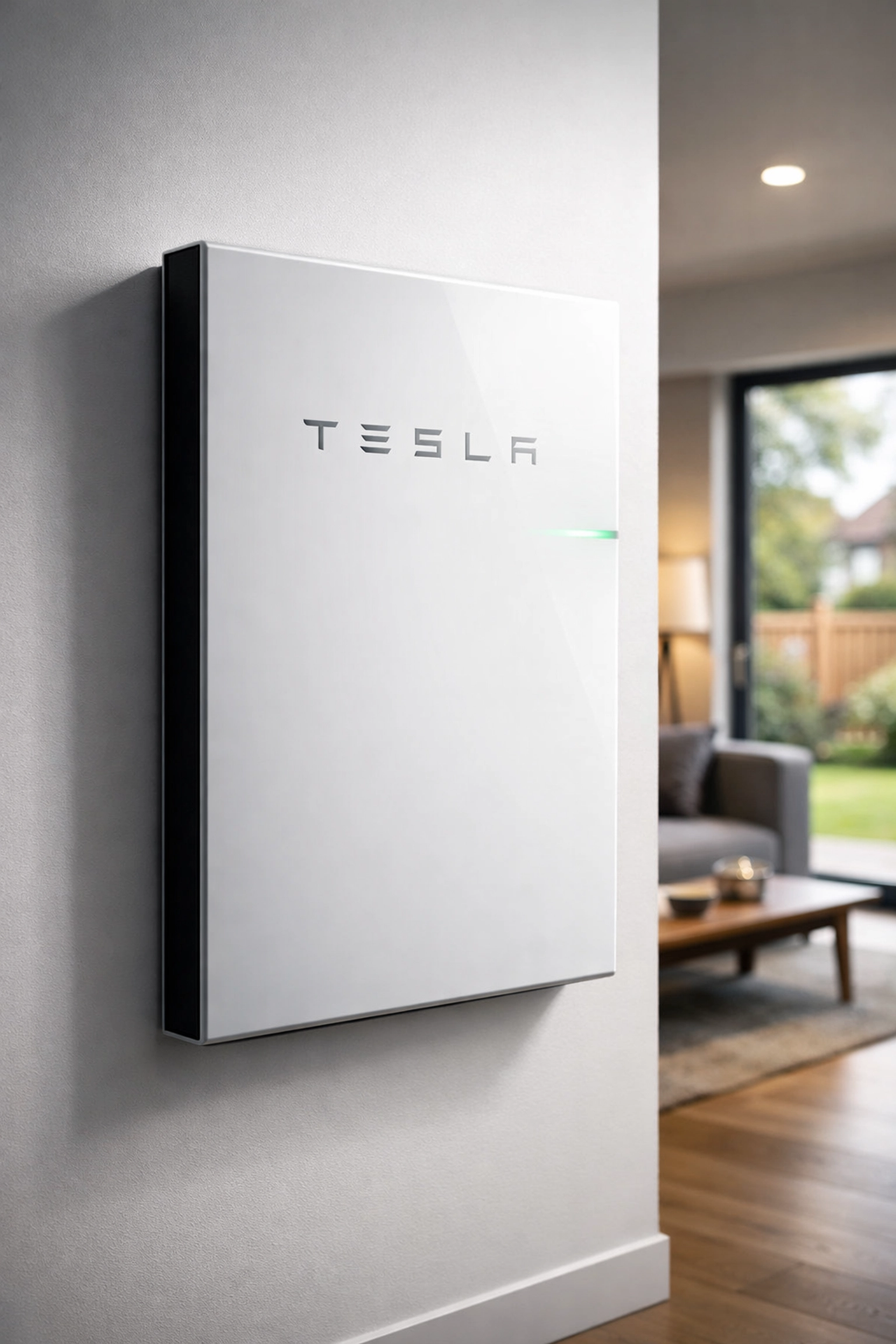
Battery systems typically range from 5–13.5 kWh of storage capacity. For most households, an 8–10 kWh battery strikes the right balance. You can add battery storage during initial installation or retrofit it later: though installing everything together is usually more cost-effective.
Quick Reference: Sizing at a Glance
Small Home (1-2 bed, 1,800–2,500 kWh/year)
- System size: 3–3.5 kW
- Panels needed: 8–10 (400W panels)
- Roof space: ~14–17m²
Average Home (3 bed, 2,700–3,500 kWh/year)
- System size: 4–4.5 kW
- Panels needed: 10–12 (400W panels)
- Roof space: ~20–24m²
Large Home (4+ bed, 4,000–5,000+ kWh/year)
- System size: 5–6 kW
- Panels needed: 13–15 (400W panels)
- Roof space: ~26–30m²
With EV (add 2,000–3,000 kWh/year)
- Add 1.5–2 kW to your base system size
Get Your Personalised System Size
These calculations provide a solid starting point, but every home is different. Roof orientation, shading from trees or neighbouring buildings, your specific consumption patterns, and local installation costs all influence what makes sense for your property.
The best next step is a professional site survey. At DES Renewable Energy Ltd, we assess your roof, review your energy bills, and provide a detailed proposal showing exactly what system size will work best for your home: and what kind of savings you can realistically expect.
Contact our team for a free, no-obligation site survey and quote. We'll take the guesswork out of sizing and show you exactly what solar can do for your household.