


For many UK homeowners, the day your solar panels are finally commissioned is a landmark moment. You watch the meter spin backwards, check the app every ten minutes to see how many kilowatts you’re generating, and enjoy the immediate drop in your monthly energy bills. It feels like the hard work is done.
However, at DES Renewable Energy Ltd, we often tell our clients that installation is just the "end of the beginning." A high-quality solar PV system is designed to last 25 to 30 years, but achieving that longevity requires more than just good luck. It requires a proactive approach to aftercare.
The solar industry has unfortunately been plagued by a "fit and forget" mentality. Some installers: often referred to in the trade as "solar cowboys": will fit your system, take your money, and disappear, leaving you stranded if a component fails or performance dips in year seven.
In this guide, we will walk you through the most common aftercare pitfalls and explain how you can ensure your system remains a high-performing asset for decades to come.
The "Fit and Forget" Fallacy
The most dangerous assumption you can make is that solar panels require zero maintenance. While it is true that solar PV systems have no moving parts (unlike a wind turbine or a gas boiler), they are still sophisticated electrical power plants sitting on your roof, exposed to the harshest elements of the British weather.
From driving rain and gale-force winds to the accumulation of grime and bird droppings, your panels are under constant environmental stress. If you ignore your system for years at a time, you aren’t just risking a slight dip in efficiency: you are potentially shortening the lifespan of your hardware and risking your manufacturer warranties.
Pitfall 1: Neglecting the Impact of "Soft Shading"
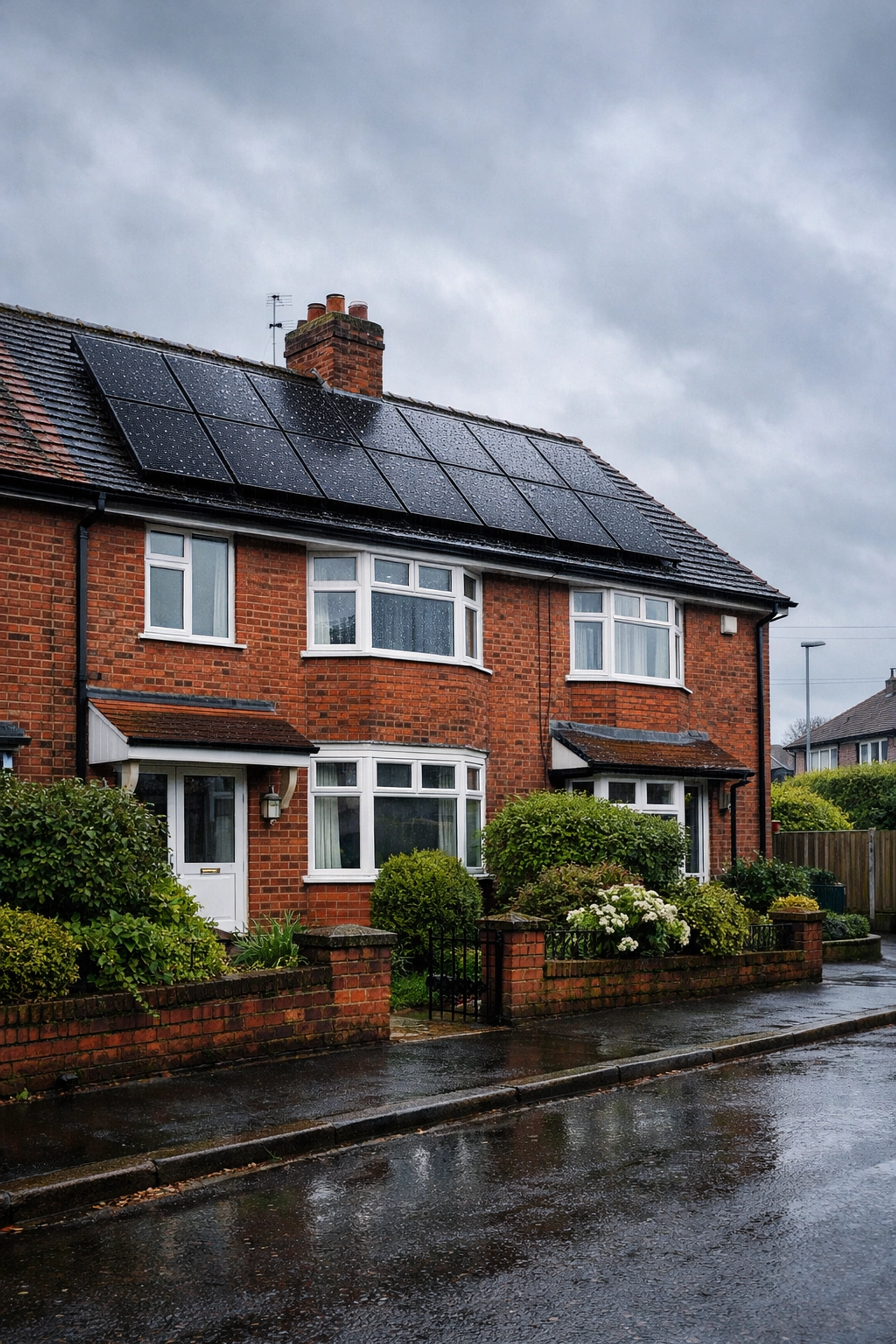
Most people understand that a massive oak tree blocking the sun is bad for solar production. However, many underestimate "soft shading": the thin layer of dust, traffic pollution, or pollen that builds up over the months.
In the UK, we often assume that our frequent rainfall is enough to keep panels clean. While rain does help, it isn't a substitute for a dedicated cleaning schedule. Research suggests that dirty panels can lose up to 25% of their energy output. If your system is supposed to save you £800 a year, a 25% drop means you are essentially throwing £200 away annually.
The Solution:
We recommend a professional cleaning every 6 to 12 months, depending on your location. If you live near the coast (salt spray) or in a high-traffic urban area (soot and dust), you may need more frequent attention.
A word of warning: Never use a pressure washer on your panels. The high pressure can damage the seals between the glass and the frame, leading to water ingress and total panel failure. Similarly, avoid harsh chemicals that can strip the anti-reflective coating off the glass. Professional solar PV maintenance and cleaning services use deionised water and soft-bristled brushes to ensure the glass remains pristine without being compromised.
Pitfall 2: Ignoring Your Monitoring Data
In 2026, there is no excuse for not knowing exactly how your system is performing. Modern systems like the Tesla Powerwall 3 and SolarEdge inverters come with incredibly sophisticated monitoring platforms.
The pitfall here isn't the technology; it’s the human element. Many homeowners stop checking their apps after the first six months. By the time they notice a problem: usually when a surprisingly high electricity bill arrives: the system might have been underperforming or even completely offline for weeks.
The Solution:
Set a routine. Check your production levels once a week. You don't need to be a data scientist; you just need to look for consistency. If you notice a sudden drop in production that can't be explained by a cloudy day, it’s time to investigate.
At DES, we provide technical support for our clients to help interpret this data. If you see an error code on your inverter or a "flatline" in your production graph, catching it early could save you hundreds of pounds in lost generation.
Pitfall 3: Choosing "Cheap" Over "Tier-1"
Your aftercare experience is largely dictated by the hardware you choose at the start. If you opt for "no-name" panels or budget inverters because they save you £1,000 on the initial quote, you may find yourself in a difficult position five years down the line.
Cheap components have a higher failure rate, and the companies behind them often lack the UK-based infrastructure to honour warranties. If a budget inverter fails and the manufacturer has gone bust, your "cheap" system suddenly becomes very expensive to fix.
The Solution:
Stick to Tier-1 manufacturers like SolarEdge, Tesla, and GivEnergy. These companies offer robust 10 to 25-year warranties and have a significant presence in the UK. When you choose an installer who specialises in these brands, you aren't just buying hardware; you’re buying a long-term relationship. For instance, as SolarEdge installers, we have direct lines to their technical teams, ensuring that any warranty claims or hardware issues are resolved swiftly.
Pitfall 4: Misunderstanding Warranties (MCS and NAPIT)
One of the biggest pitfalls homeowners face is the "orphaned system" scenario. This happens when your original installer goes out of business, and you realize your paperwork isn't in order.
To keep your system peaking for 25+ years, your warranties must be valid. This requires the installation to be registered with the Microgeneration Certification Scheme (MCS). Without an MCS certificate, you cannot access the Smart Export Guarantee (SEG) payments, and many manufacturers will refuse to honour hardware warranties because the installation cannot be proven to meet industry standards.
The Solution:
Always verify your partner’s credentials. DES Renewable Energy is an Octopus Trusted Solar Installation Partner and is fully accredited by MCS and NAPIT. This ensures that your installation is logged correctly in national databases, protecting your investment even if the manufacturer or installer landscape changes in the future.
Pitfall 5: DIY Repairs and Safety Risks
Solar systems involve high-voltage DC (Direct Current) electricity. DC is significantly more dangerous than the AC electricity found in your home's wall sockets because it doesn't "pulse": it provides a constant, high-energy flow that can cause electrical fires if connections are loose or cables are damaged by pests like pigeons or squirrels.
We have seen cases where homeowners try to fix a loose bracket or "tinker" with the wiring themselves. This is not only incredibly dangerous but will also void your insurance and your manufacturer's warranty.
The Solution:
If you suspect a physical fault, such as a loose cable or a cracked panel, call in the professionals. Periodic visual inspections (every 2 years) by a qualified technician can identify potential fire risks, such as "hot spots" on panels or signs of thermal stress in the wiring, before they become critical issues. If you are worried about the state of your system, our support team can help diagnose whether a site visit is necessary.
| Maintenance Task | Frequency | DIY or Professional? |
|---|---|---|
| Monitoring App Check | Weekly | DIY |
| Visual Check (Ground Level) | Bi-Annually | DIY |
| Professional Cleaning | 6-12 Months | Professional |
| Inverter Health Check | Annually (Via App) | DIY / Professional |
| Full Electrical Inspection | Every 5 Years | Professional |
The Role of Battery Storage in Long-Term Health
In 2026, aftercare isn't just about the panels; it’s about the battery. A battery system, such as the Tesla Powerwall, requires its own set of considerations. Batteries prefer a stable temperature and should be kept away from extreme heat or freezing conditions where possible (though the Powerwall 3 has excellent internal thermal management).
Regularly updating your battery's firmware is a vital part of aftercare. These updates, often delivered "over-the-air," can improve efficiency, unlock new features, and extend the chemical life of the battery cells. Ensuring your system is connected to a stable Wi-Fi network is the best way to facilitate these updates.

Choosing a Partner for the Long Haul
At the end of the day, avoiding aftercare pitfalls comes down to who you choose to work with. A specialist renewable energy partner doesn't just walk away once the panels are on the roof. They provide the framework for your system's 25-year lifespan.
When evaluating an installer, ask them:
- "What is your process for handling a warranty claim in 10 years?"
- "Do you offer ongoing maintenance and cleaning packages?"
- "Are you MCS and NAPIT registered?"
At DES Renewable Energy Ltd, we pride ourselves on being a specialist partner. We focus on high-end, Tier-1 equipment because we know it stands the test of time. Whether it's through our work as GivEnergy installers or our comprehensive maintenance and repair services, our goal is to ensure your investment continues to pay dividends long into the 2040s and 2050s.
Final Thoughts
Your solar system is one of the smartest investments you can make for your home and the environment. By avoiding the pitfalls of neglect, "cheap" hardware, and DIY repairs, you can ensure that your system remains at peak performance for its entire 25+ year lifespan.
Don't wait for a fault to occur before thinking about aftercare. Be proactive, stay informed by your monitoring data, and partner with professionals who are committed to the long-term success of your transition to renewable energy.
Ready to ensure your solar journey starts on the right foot: or need a health check for your existing system? Contact our expert team today or get a bespoke solar quote to see how we can help you future-proof your home.