


If you're a business owner watching your energy bills climb year after year, you're not alone. Energy costs have become one of the most unpredictable expenses for UK businesses: and one of the hardest to control.
Here's the good news: commercial solar panels offer a proven way to take back control. By generating your own electricity on-site, you can dramatically reduce your reliance on the grid, lock in predictable energy costs, and even boost your business's green credentials.
But where do you start? This guide breaks down everything you need to know about commercial solar installation: from the financial benefits to the practical considerations: so you can make an informed decision for your business.
What Are Commercial Solar Panels?
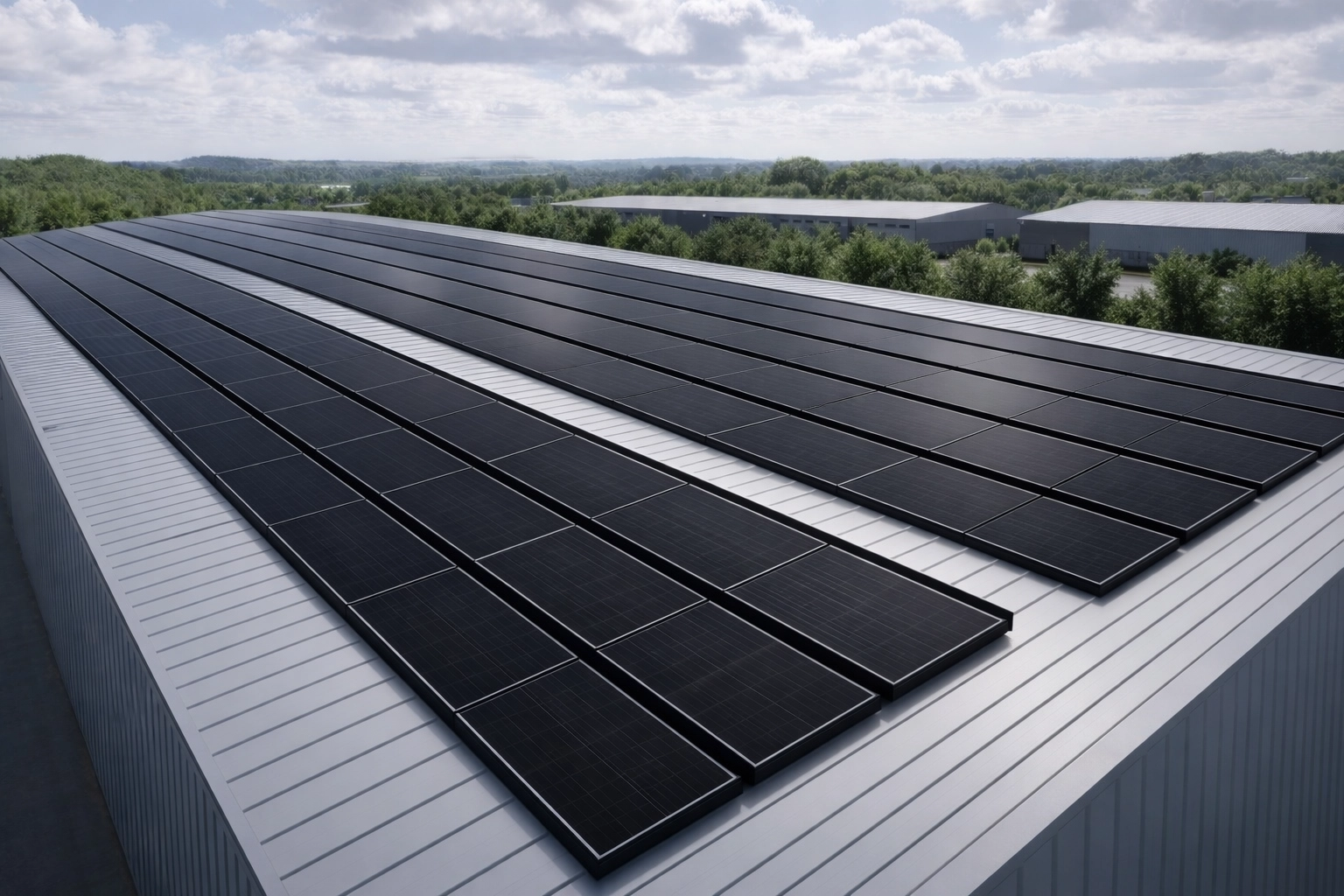
Commercial solar panels work on the same principle as residential systems, just on a larger scale. Photovoltaic (PV) cells capture sunlight and convert it into electricity that powers your business operations: lighting, HVAC, IT systems, machinery, and more.
The key difference? Commercial installations are designed to meet the higher energy demands of businesses. They typically feature:
- Larger panel arrays covering expansive roof areas or ground space
- Higher capacity inverters to handle greater electricity output
- More sophisticated monitoring systems to track performance and energy usage
- Scalable designs that can grow with your business
Once installed, your solar panels generate free electricity during daylight hours. Any excess power can be exported back to the grid (earning you money through the Smart Export Guarantee), or stored in battery systems for use during peak demand periods.
How Commercial Solar Slashes Your Energy Bills
Let's talk numbers: because that's what matters most to your bottom line.
The average UK business spends a significant portion of its operating budget on electricity. With commercial solar panels, you can reduce those costs by 50–75%, depending on your energy consumption patterns and system size.
Here's how the savings stack up:
| Business Type | Typical Annual Savings | 25-Year Projected Savings |
|---|---|---|
| Small warehouse | £4,000–£8,000 | £100,000–£200,000 |
| Medium office building | £8,000–£15,000 | £200,000–£375,000 |
| Large industrial facility | £20,000–£50,000+ | £500,000–£1,250,000+ |
These figures assume current electricity rates: and with prices historically trending upward, your actual savings could be even higher over time.
Beyond the direct bill reductions, solar provides something equally valuable: predictability. Instead of budgeting around volatile utility rates tied to global energy markets, you gain a degree of energy independence. Your solar panels produce power at a fixed cost (essentially free after the initial investment), making long-term financial planning far more straightforward.
UK Tax Benefits and Financial Incentives
The UK government offers several incentives that make commercial solar installation even more attractive from a financial perspective.
Capital Allowances
Under the current Full Expensing scheme (available until March 2026), businesses can deduct 100% of qualifying solar panel costs from their taxable profits in the year of purchase. For a business paying corporation tax at 25%, this effectively reduces the net cost of your solar installation by a quarter.
Smart Export Guarantee (SEG)
When your panels generate more electricity than you're using, you can sell the surplus back to the grid. SEG rates vary by energy supplier, but typically range from 3p to 15p per kWh: providing an additional revenue stream that improves your overall return on investment.
Reduced VAT
Solar panel installations for businesses may qualify for reduced VAT rates in certain circumstances, further lowering your upfront costs.
Enhanced Capital Allowances
Energy-efficient equipment, including solar panels, can qualify for Enhanced Capital Allowances, providing additional tax relief and improving your cash flow position.
Understanding Your ROI and Payback Period
One of the first questions business owners ask is: "How long until this pays for itself?"
For most commercial solar installations in the UK, the payback period falls between 4–8 years. After that point, you're essentially generating free electricity for the remaining lifespan of your system: typically 25–30 years or more.
Let's look at a realistic example:
A medium-sized warehouse in Southampton:
- System size: 50kW
- Installation cost: £40,000
- Annual energy savings: £8,500
- SEG income: £500/year
- Tax savings (Full Expensing): £10,000
- Net cost after tax relief: £30,000
- Payback period: Approximately 3.3 years
After the payback period, that same business would enjoy around £9,000 in annual savings for the next 20+ years. That's potentially £180,000 or more in long-term value from a single investment.
Rooftop vs Ground-Mounted Systems: Which Is Right for Your Business?
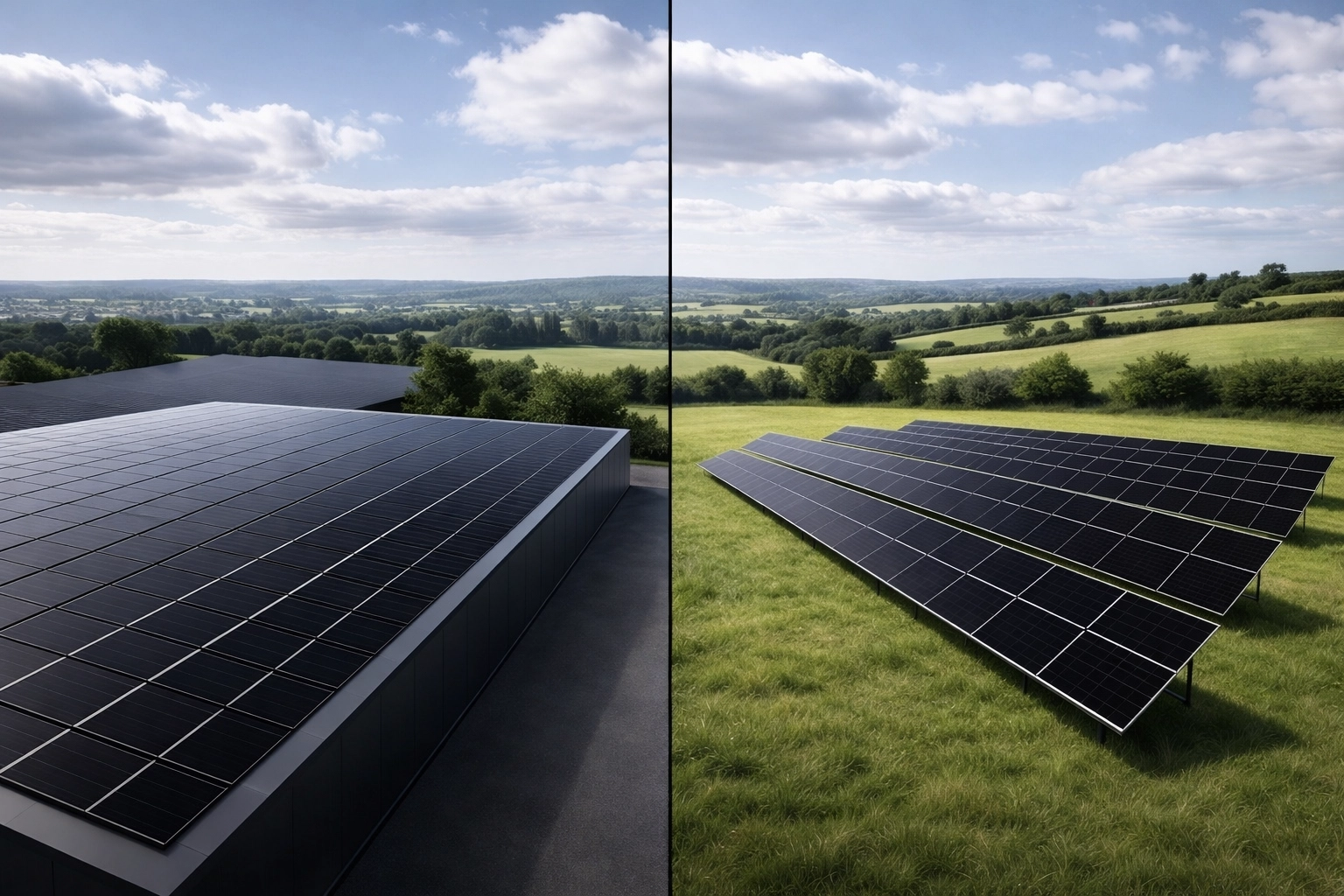
Commercial solar installations generally fall into two categories, each with distinct advantages.
Rooftop Solar Systems
Best for: Warehouses, factories, office buildings, retail units
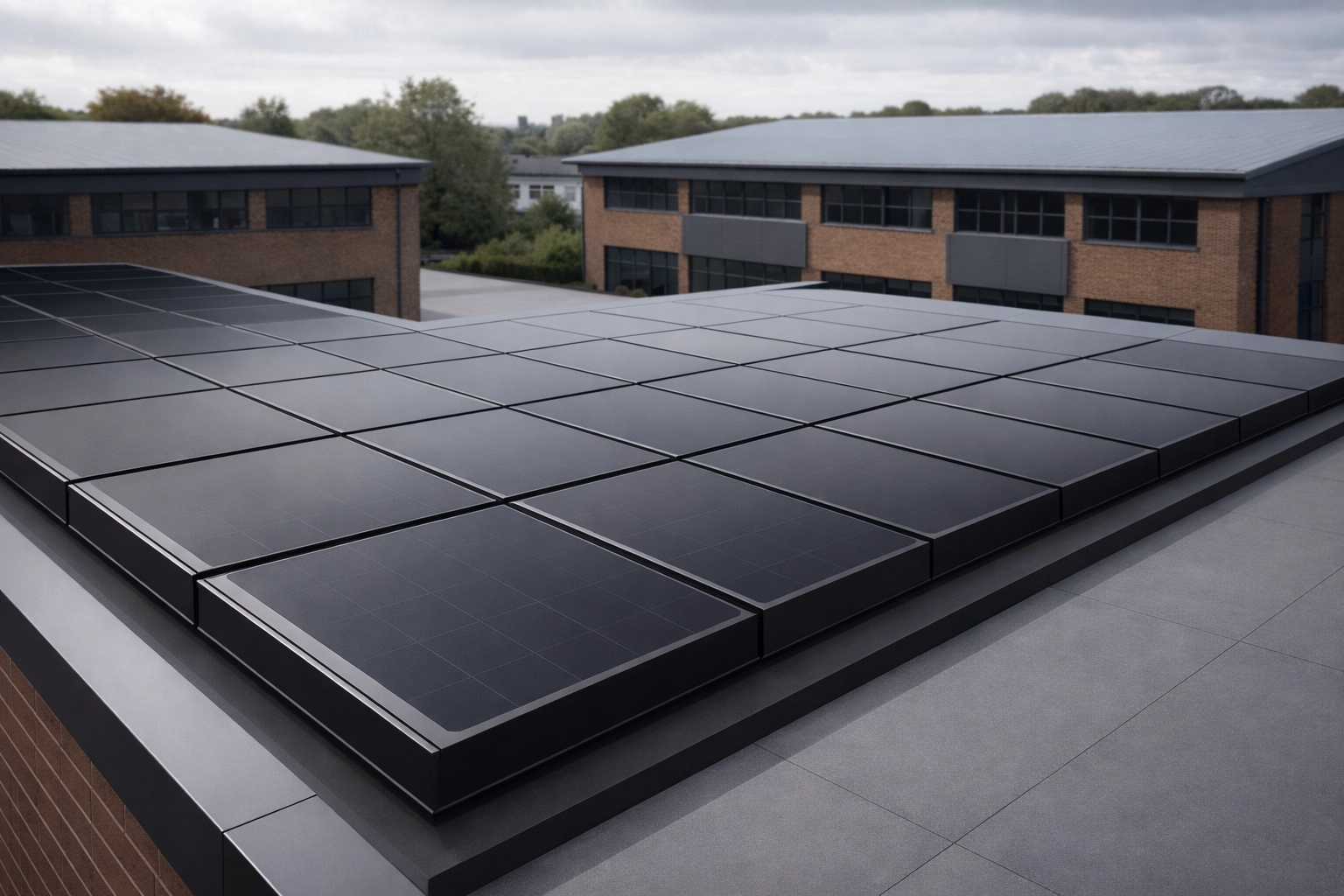
Rooftop installations make excellent use of otherwise unused space. They're particularly suited to businesses with large, flat roofs: common in industrial and commercial properties across the South West.
Advantages:
- No additional land required
- Roof shading can reduce cooling costs
- Out of sight, maintaining your property's appearance
- Often quicker to install and permit
Ground-Mounted Solar Arrays
Best for: Agricultural businesses, companies with available land, large-scale energy users
If your roof isn't suitable (due to age, orientation, or structural limitations), ground-mounted systems offer a flexible alternative.
Advantages:
- Optimal panel positioning for maximum energy generation
- Easier maintenance access
- Can be scaled to very large capacities
- No roof modifications needed
A site survey will determine which option: or combination of both: makes the most sense for your specific situation.
Is Your Business Suitable for Commercial Solar?
Not every property is ideal for solar, but you might be surprised how many are. Here are the key factors we assess:
Roof condition and age: Your roof should be in good condition with at least 15–20 years of life remaining. If you're planning roof repairs or replacement soon, it's worth doing that first.
Available space: Generally, you'll need at least 100m² of unshaded roof or ground space for a worthwhile commercial installation. More space means more panels and greater savings.
Roof orientation: South-facing roofs generate the most energy, but east and west-facing roofs can still be highly productive. Flat roofs offer flexibility through angled mounting systems.
Shading: Nearby buildings, trees, or structures that cast shadows can reduce system efficiency. Modern panel technology and smart inverters have minimised this issue, but it's still a consideration.
Energy consumption patterns: Businesses that use most of their electricity during daylight hours will see the greatest immediate savings. However, battery storage can help shift solar energy to evening or overnight use.
Pairing Solar with Battery Storage
While solar panels alone deliver significant savings, adding battery storage takes your energy independence to the next level.
Battery systems like the Tesla Powerwall or GivEnergy All In One allow you to:
- Store excess daytime generation for use during evening peaks
- Maintain power during grid outages (critical for some businesses)
- Maximise self-consumption of your solar energy
- Reduce reliance on expensive peak-rate electricity
For businesses with operations outside standard daylight hours: or those wanting maximum resilience: battery storage is worth serious consideration. You can learn more about the benefits of renewable energy for businesses on our website.
Why Businesses Across the South West Trust DES Renewable Energy
At DES Renewable Energy, we've helped businesses throughout Bournemouth, Poole, Southampton, and the wider South West region make the switch to solar. Our team specialises in commercial solar installation: from initial site assessment through to ongoing support.
What sets us apart:
- MCS Certified installers: Ensuring your installation meets the highest industry standards and qualifies for available incentives
- Tailored system design: We don't do one-size-fits-all. Every commercial installation is designed around your specific energy needs and property
- Premium equipment: We install only high-quality, modern black-on-black solar panels and industry-leading hardware built to last
- Local expertise: We understand the South West market, local planning requirements, and the unique needs of businesses in our region
- End-to-end service: From feasibility studies and planning applications to installation and aftercare, we handle everything
Ready to Slash Your Business Energy Bills?
Commercial solar panels represent one of the smartest investments a UK business can make right now. With substantial tax benefits, predictable returns, and protection against rising energy costs, the question isn't really whether to go solar: it's when.
The sooner you install, the sooner you start saving.
Your next step: Book a free, no-obligation site survey with our commercial team. We'll assess your property, analyse your energy usage, and provide a detailed proposal showing exactly what solar could do for your business.
Get in touch with DES Renewable Energy today and take the first step toward energy independence.