


If you are running a business in the UK today, you don’t need us to tell you that energy costs are a headache. Between global market volatility and the ongoing impact of international conflicts on gas supplies, the "predictable" overhead is a thing of the past.
As of March 2026, many businesses are still feeling the sting of energy bills that hover far above 2021 levels. Whether you are managing a warehouse in Manchester or a manufacturing plant in the Midlands, the question isn't just about "going green": it’s about financial survival. You might have heard that business solar power offers a Return on Investment (ROI) of somewhere between 15% and 25%.
But is that actually good? And why are some people quoting even higher numbers?
In this guide, we’re going to break down the cold, hard numbers of commercial solar. We’ll look at the advantages and disadvantages of solar power, why the payback period is often shorter than you think, and how you can lock in energy security for the next 25 years.
Understanding the "Real" ROI of Commercial Solar
When we talk about a 15-25% ROI, we are being realistic. We know you’ve probably seen flashy ads promising 40% returns or "free energy forever." While those numbers can happen in perfect conditions, we prefer to give you the honest truth.
A 15-25% annual return is, frankly, incredible. Compare that to leaving your capital in a high-street business savings account yielding 4-5%, or the volatile stock market. Solar PV is a physical asset on your roof that works for you every single day.
ROI vs. Internal Rate of Return (IRR)
We understand if you’re scratching your head at the different financial terms. In simple terms:
- ROI (Return on Investment): This is the total profit you make over the life of the system compared to what you paid.
- Payback Period: How many years it takes for the electricity savings to "pay back" the initial cost.
- IRR (Internal Rate of Return): A more technical look at the annual percentage return on your capital.
Most UK businesses are currently seeing an IRR of 8-15% and a full payback in 5 to 8 years. After that point? Every kilowatt-hour your roof generates is essentially profit.
Why the UK Market is Primed for Solar in 2026
You might be wondering if you’ve missed the boat. The truth is, the technology has never been more efficient. Even with the current Middle East tensions causing ripples in global energy markets and keeping grid prices high, solar remains your best hedge against inflation.
Recent data shows that for a mid-sized commercial system (around 100kWp), the annual savings can reach £24,400. Over a 25-year lifespan, that is a cumulative saving of over £600,000. And that’s okay: taking control of your overheads isn’t just good for the planet; it’s a smart CFO move.
| Sector | Typical Payback Period | Estimated 25-Year Savings |
|---|---|---|
| Manufacturing/Industrial | 3 – 5 Years | £500,000 – £1,200,000+ |
| Agricultural/Farms | 3.5 – 5 Years | £300,000 – £800,000 |
| Education/Schools | 4 – 6 Years | £150,000 – £400,000 |
| Retail/Offices | 5 – 8 Years | £100,000 – £350,000 |
Note: These figures depend on roof size, orientation, and self-consumption rates.
The Honest Advantages and Disadvantages of Solar Power
We believe in being transparent. While we are expert installers, we know that solar isn't a "magic wand" for every single company. You need the full picture to make an informed decision for your board or your partners.
The Advantages: Beyond the Monthly Bill
The most obvious benefit of business solar power is the reduction in your "daytime" energy spend. If your machinery runs from 9 am to 5 pm, you are the perfect candidate for solar.
- Energy Independence: You aren't at the mercy of the next global price spike.
- Carbon Reporting: With new ESG (Environmental, Social, and Governance) requirements, having solar helps you win contracts with larger firms that demand "green" supply chains.
- Low Operating Costs: Once installed, there are no fuel costs and very few moving parts.
- Capital Allowances: You can often offset the cost of the installation against your taxable profits through the "Full Expensing" capital allowance scheme.
The Disadvantages: The Reality Check
And that’s okay: every investment has downsides. Here is what we tell our clients during the initial consultation:
- The Upfront Cost: Even with a high ROI, the initial capital outlay can be significant. However, many businesses now use asset finance to spread the cost.
- Roof Suitability: If your roof is old or shaded by nearby buildings, the efficiency will drop. We always recommend a structural survey first.
- Intermittency: It doesn't generate at night. For 24/7 operations, you may need to look into battery storage solutions like the Tesla Powerwall.
- Long-term Commitment: This is a 25-year asset. If you are planning to move premises in 2 years, the ROI might not make sense unless it adds significant value to the building sale.
How to Maximise Your Commercial Solar ROI
If you want to hit that 25% ROI mark, you can’t just "slap some panels on the roof." It requires a bit of strategy. As a Goodwe installer and SolarEdge partner, we’ve seen what works.
1. Focus on Self-Consumption
The secret to a fast payback is using the energy you generate. Exporting energy back to the grid gives you a few pence per unit (through the Smart Export Guarantee), but using that energy saves you 20p to 30p per unit.
2. Don’t Skimp on the Inverter
The panels get all the glory, but the inverter is the brain of the system. High-quality inverters ensure you are converting as much DC power to AC power as possible. We often work as SolaX installers to provide robust, high-efficiency options for commercial sites.
3. Smart Monitoring
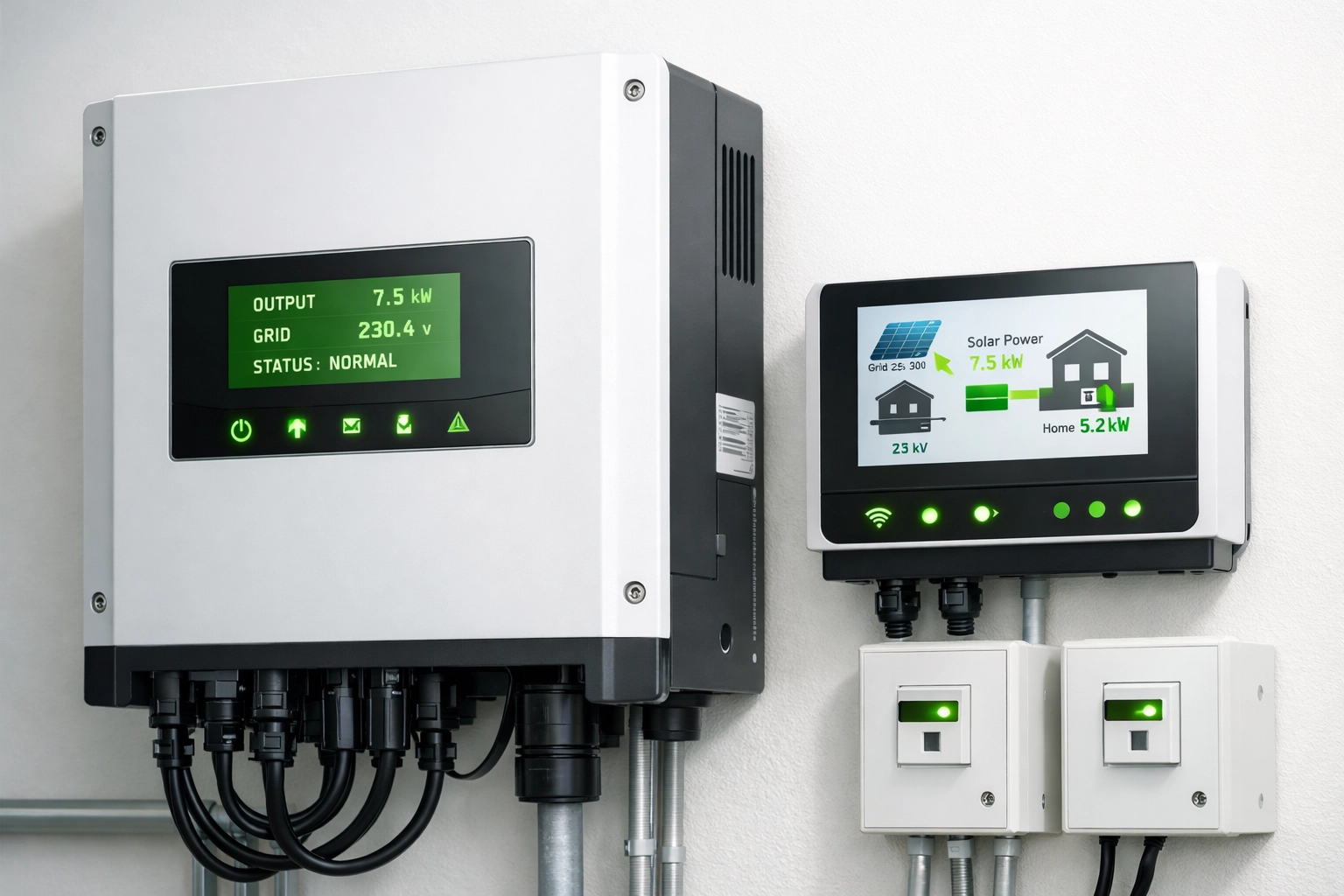
You can’t manage what you don’t measure. Using smart monitoring allows you to shift high-energy tasks (like charging a fleet of EVs or running heavy dryers) to the middle of the day when your panels are peaking.
Maintenance: Keeping the ROI Healthy
One of the common questions we get is, "Do I need to clean them every week?" The short answer is no. But "maintenance-free" is a myth that we’d like to debunk.
To keep your ROI between that 15-25% bracket, you should consider:
- Annual Visual Inspections: Checking for bird nesting or debris.
- Professional Cleaning: Depending on your location (e.g., near a dusty farm or a busy motorway), a professional clean every 1-2 years can boost yield by 5-10%.
- System Health Checks: Monitoring for any "string" failures where a group of panels might not be performing.
If you ever run into issues, our technical support team is always on hand to help you get back to peak generation.
Case Study: Real World Results
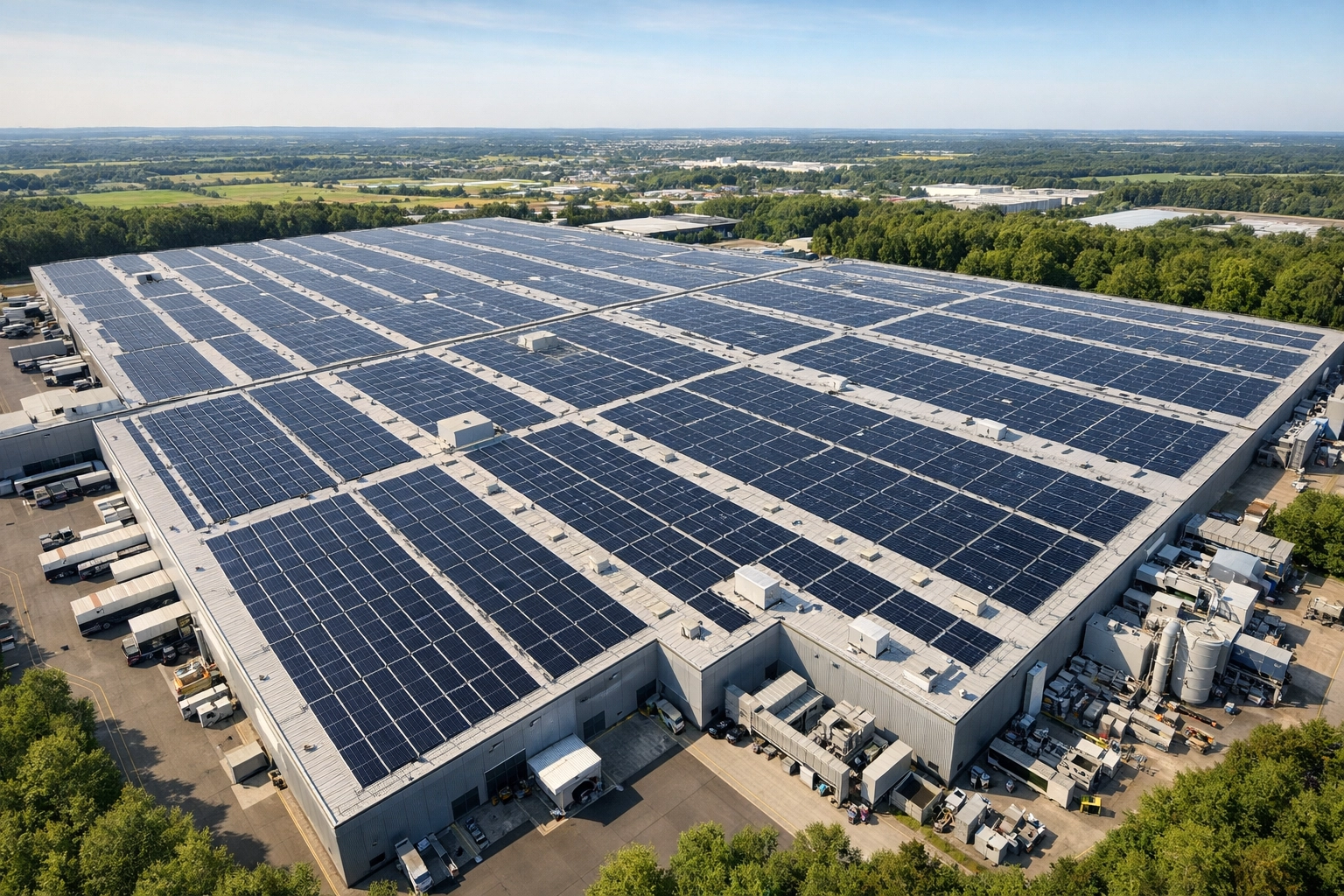
We’ve seen businesses across the UK transform their bottom line. For instance, manufacturing plants with large roof spans often see their payback hit the 3-year mark because their energy usage perfectly matches the solar generation curve.
You can explore some of our recent work on our commercial case studies page to see the exact numbers behind local UK installations. From industrial units to agricultural sheds, the data consistently shows that solar is a "when," not an "if."
Is Business Solar Right for You?
We know that making a six-figure investment in energy infrastructure feels daunting. And that's okay. It’s a big step.
The best way to start is with an honest conversation about your specific energy profile. We’ll look at your half-hourly data, your roof space, and your future growth plans to give you a realistic ROI projection: not a sales pitch.
Whether you are looking for a solar quote or just want to understand the advantages and disadvantages of solar power for your specific sector, we are here to help.
At DES Renewable Energy Ltd, we pride ourselves on being a partner you can trust. As an Octopus Trusted Solar Installation Partner, we have the credentials to back up our expertise.
Ready to see the numbers for your business?
The path to a 20% ROI starts with a single piece of data. We’d love to help you figure out if solar is the right move for your company this year.
Contact us to discuss your needs and let’s build a more stable energy future for your business together.