


You've installed solar panels on your Poole home. Brilliant. But here's the thing: you're not just cutting your electricity bills anymore. You're also making money by selling excess energy back to the grid.
The question is: which export tariff actually pays you the most?
Let's break down the Smart Export Guarantee (SEG), compare the best tariffs available to Poole residents in 2026, and work out which one puts the most cash back in your pocket.
What Is the Smart Export Guarantee (SEG)?
The Smart Export Guarantee is a government-backed scheme that requires energy suppliers to pay you for the surplus electricity your solar panels generate and export back to the grid.
Think of it this way: during a sunny afternoon, your panels might generate 15 kWh of electricity. Your home uses 7 kWh. The remaining 8 kWh doesn't vanish into thin air. It flows back into the national grid, and your energy supplier pays you for it.
SEG replaced the old Feed-in Tariff (FiT) scheme back in 2020, and while it's not quite as generous as FiT was, it's still a solid way to earn money from your solar system. The rates vary depending on which supplier you choose and whether you opt for a flat-rate or time-of-use tariff.
And here's the important bit: you need a smart meter to track exactly how much energy you're exporting. Without one, you're leaving money on the table.

How Poole Homeowners Can Make Money From Solar Exports
Let's get practical. Say you've got a typical 4 kW solar panel system on your Poole property. On average, you might export around 1,200 kWh per year (this assumes decent sun exposure and moderate household usage during the day).
Here's what that looks like with different tariff rates:
- At 15p per kWh: You'd earn £180 per year
- At 17.5p per kWh: You'd earn £210 per year
- At 20p per kWh: You'd earn £240 per year
Not life-changing money on its own, but when combined with the savings on your electricity bills, solar panels start to look like a pretty smart investment. And if you've got battery storage? The numbers get even better: more on that in a moment.
The Best Flat-Rate SEG Tariffs in 2026
If you prefer simplicity, flat-rate tariffs are straightforward. You get paid the same amount per kWh no matter what time of day you export. Here are the top contenders available to Poole residents right now:
| Tariff | Export Rate | Key Details |
|---|---|---|
| OVO SEG Install Exclusive | 20p per kWh | Only available if OVO installs your system: highest flat rate currently |
| E.ON Next Export Premium v3 | 17.5p per kWh | 12-month fixed term, requires E.ON-approved installer |
| Octopus Energy Outgoing Octopus | 15p per kWh | Simple flat rate, no battery required, widely available |
Octopus Energy Outgoing Octopus is probably your best bet if you want flexibility and don't want to be locked into a specific installer. It's a solid middle-ground option with no hidden catches.
But here's where things get interesting: if you're willing to be a bit more strategic, smart tariffs can pay you significantly more.

Smart Tariffs: Octopus Flux and Time-of-Use Export Rates
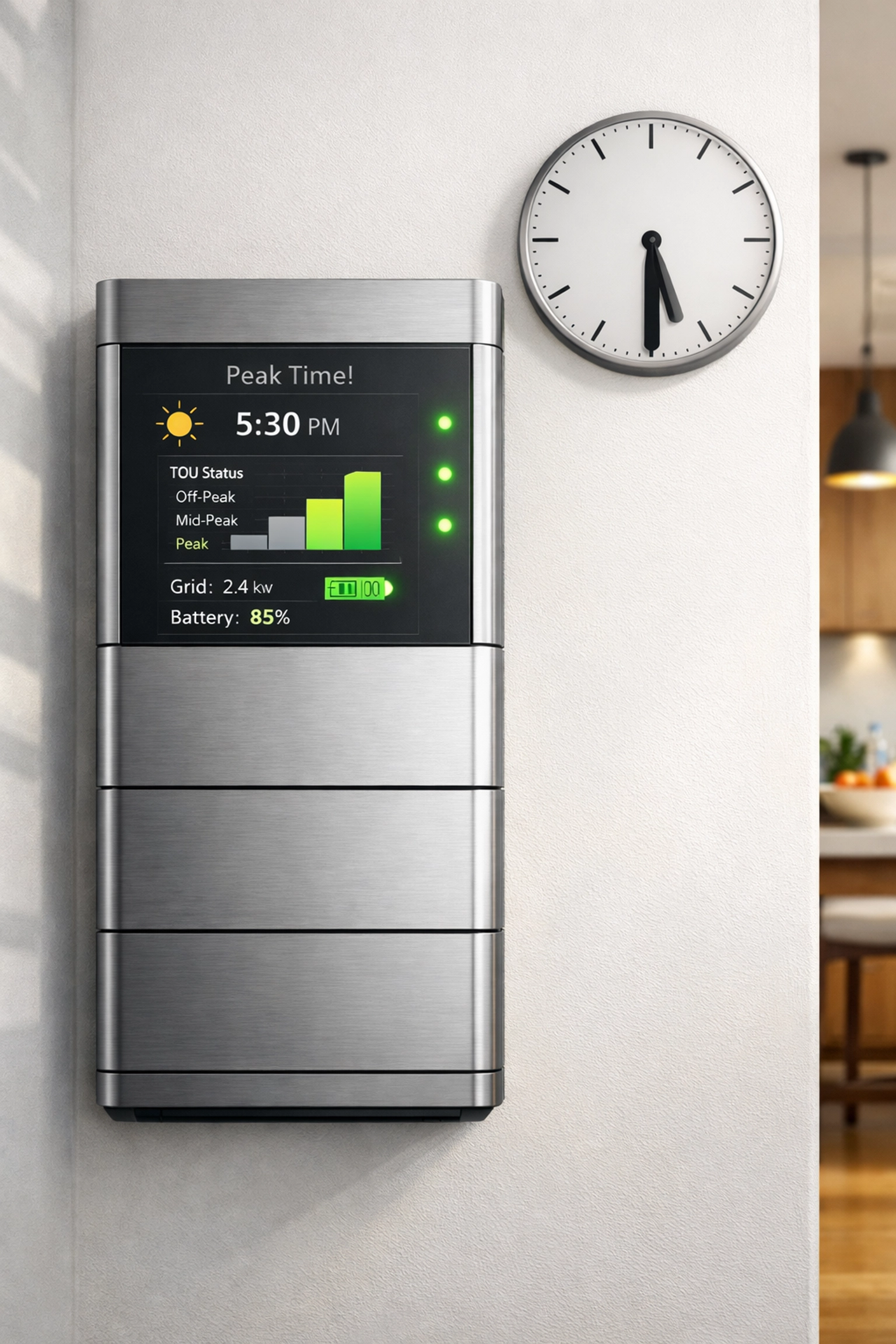
Smart tariffs reward you for exporting energy during peak demand periods. Instead of a flat rate all day, you get higher payments when the grid needs electricity most: typically between 4 PM and 7 PM on weekdays.
Octopus Energy Flux is the standout option here. It's designed for homeowners with battery storage, and the rates look like this:
- Peak export rate (4-7 PM): Up to 29.32p per kWh
- Off-peak export rate (overnight): 4.99p per kWh
- Standard daytime rate: Around 15p per kWh
Let's say you've got a battery that stores 10 kWh of solar energy during the day. You discharge that battery and export it during the 4-7 PM peak window. That's £2.93 per day (10 kWh x 29.32p), compared to just £1.50 on a flat 15p tariff.
Over a year, that's an extra £522 in export earnings: just by timing your exports smartly.
But here's the catch: this only works if you have a battery. Without storage, you can't control when your panels export energy. You're at the mercy of when the sun shines and when your household uses power.
Why Professional Installation Matters for Accurate Metering
This is where a lot of Poole homeowners trip up. You can have the best tariff in the world, but if your system isn't installed and metered correctly, you won't get paid properly.
Here's what you need:
A smart meter with export capability. Not all smart meters track exports accurately. You need a SMETS2 meter (the newer generation) configured to measure both import and export. If your installer doesn't set this up properly, you could be exporting energy for free.
Accurate inverter settings. Your solar inverter needs to communicate with your meter to log export data correctly. A professional installer will configure this during commissioning: it's not something you can easily DIY.
MCS certification. To be eligible for SEG payments, your solar system must be installed by an MCS-certified installer. No certification? No payments. Simple as that.
We see this mistake surprisingly often: homeowners choose a cheap, uncertified installer to save a few hundred pounds upfront, then lose thousands in SEG payments over the system's lifetime because the metering wasn't set up right.
Don't be that person.
DES Renewable Energy: Your Octopus Trusted Partner in Poole
Here's where we come in. DES Renewable Energy Ltd is an Octopus Energy Trusted Partner, which means we're specifically trained and certified to install solar systems that work seamlessly with Octopus tariffs: including Flux and Outgoing Octopus.
Why does that matter? Because when you work with us, we handle:
- Smart meter setup and configuration to track your exports accurately
- Inverter programming to ensure data flows correctly to your supplier
- Battery integration if you're going for a Flux setup
- All the paperwork to get you registered for SEG payments
We're MCS-certified, fully insured, and we've been installing solar systems across Poole, Bournemouth, and Dorset for years. We know the local building regulations, the typical roof pitches in the area, and how to maximize your system's performance given Poole's coastal weather patterns.
And because we're an Octopus Trusted Partner, we can guide you through the entire process: from system design to tariff selection to long-term monitoring.
Which Tariff Should You Choose?
It depends on your setup and how hands-on you want to be. Here's a quick decision tree:
If you don't have battery storage:
Go with Octopus Outgoing Octopus (15p per kWh). It's simple, widely available, and you don't need to worry about timing your exports.
If you have battery storage and want to maximize earnings:
Choose Octopus Flux. You'll need to be strategic about when you charge and discharge your battery, but the peak export rate of 29.32p per kWh makes it worth the effort.
If you're having a new system installed and want the highest guaranteed rate:
Consider the OVO SEG Install Exclusive (20p per kWh) if you're comfortable having OVO install your system. Just be aware that you're locked into their installer network.
The "best" tariff isn't the same for everyone. It depends on your energy usage patterns, whether you have storage, and how much time you want to spend optimizing your system.
That's why we always start with a conversation: contact us to discuss your specific situation, and we'll help you work out which tariff makes the most financial sense for your Poole property.
Final Thoughts: Don't Leave Money on the Table
If you've already got solar panels but haven't signed up for a SEG tariff, you're literally giving away free electricity. And if you're planning a new installation, choosing the right tariff from day one can add thousands of pounds to your return on investment over the system's lifetime.
Get the metering right. Choose a tariff that suits your setup. Work with a certified installer who knows what they're doing.
We're here to help Poole homeowners make the most of their solar systems: from initial design through to ongoing support. Ready to start earning from your excess energy? Let's talk.