


When you hear "air conditioning," you probably picture a wall-mounted unit blasting cold air during those rare British heatwaves. But here's what most people don't realise: modern air conditioning systems, specifically reversible heat pump units, can heat your home just as effectively as they cool it. And in 2026, more UK homeowners are waking up to this reality.
Let's clear up the confusion straight away. We're not talking about traditional air-con units that struggle in the cold. We're talking about air-source heat pumps that double as air conditioning. These systems extract heat from outside air (yes, even when it's cold) and pump it into your home during winter, then reverse the process in summer. Think of them as your heating system and cooling system rolled into one sleek package.
So why are UK homeowners making the switch? Here are seven compelling reasons.
1. They're Ridiculously Efficient Compared to Traditional Heating
Heat pumps don't generate heat: they move it. For every 1 kWh of electricity they use, they can deliver 3–4 kWh of heating. That's a 300-400% efficiency rate. Your gas boiler? It tops out around 90-95% efficiency on a good day.
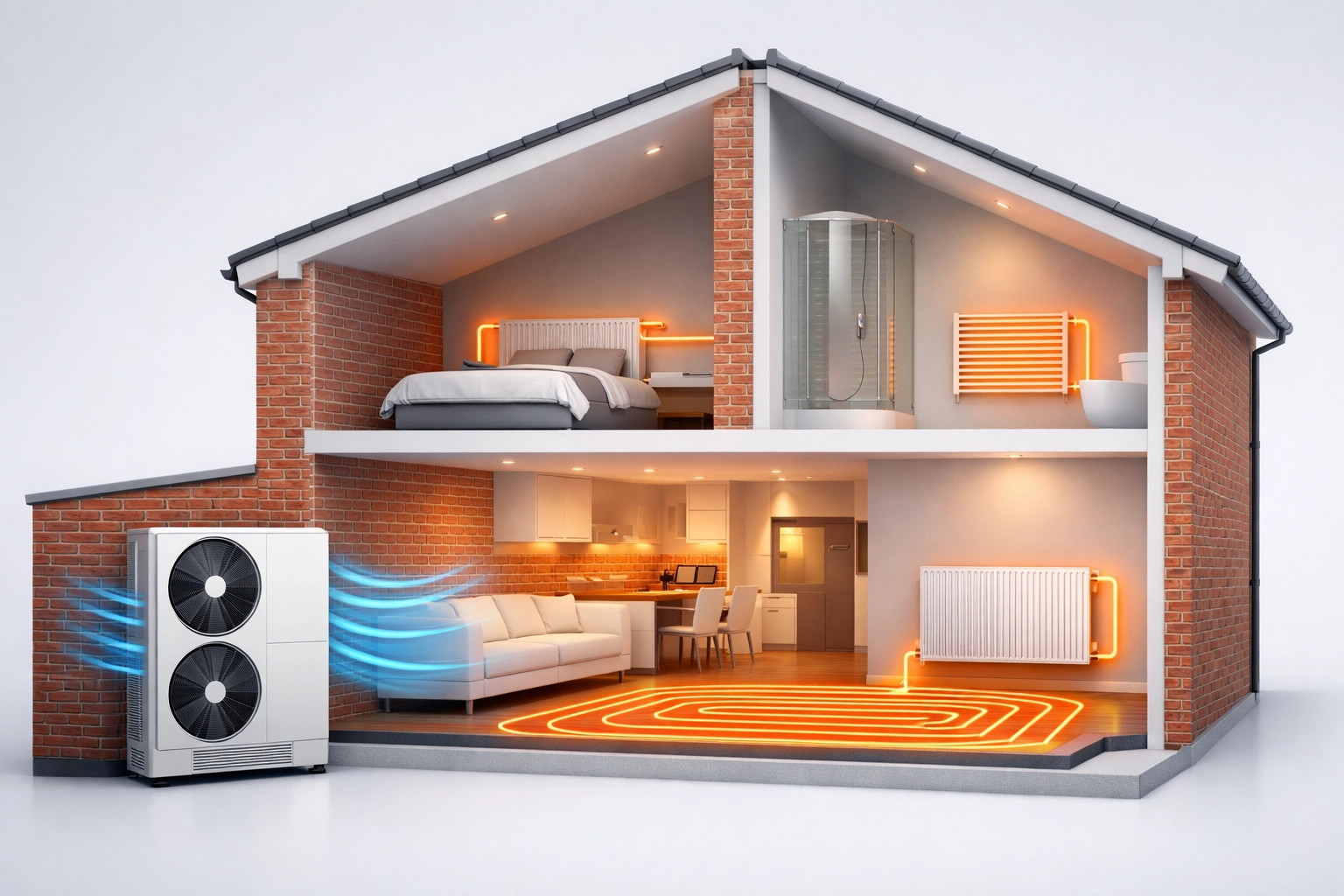
In practical terms, this means lower running costs. Depending on your current heating system and energy tariff, you could see heating bills drop by 20-40% annually. With energy prices remaining volatile throughout 2026, that efficiency gap matters more than ever.
The catch? Heat pumps work best in well-insulated homes. If your property is draughty with single-glazed windows, you'll need to address those issues first to get the full benefit. But for most modern UK homes built after 2000, or older properties that have been properly upgraded, the efficiency gains are substantial.
2. Year-Round Comfort Without Multiple Systems
Why install separate heating and cooling systems when one unit can do both? That's the beauty of reversible heat pumps. In January, they keep your home warm. In July (or those increasingly common August scorchers), they keep you cool.
This matters more now than it did a decade ago. UK summers are getting warmer. The Met Office data shows we're experiencing more frequent heatwaves, and homes designed to retain heat suddenly become uncomfortably hot. Having cooling capability isn't the luxury it once was: it's becoming a necessity.
Instead of relying on portable fans or retrofitting separate air conditioning later, you get both functions from day one. One installation, one maintenance schedule, one system to understand.
3. Government Grants Make the Numbers Work
Let's talk money. A full air-source heat pump installation typically runs between £8,000–£12,000 depending on your property size and system complexity. That's not pocket change.
But here's where it gets interesting: the Boiler Upgrade Scheme offers up to £7,500 in grants for eligible heat pump installations in England and Wales. Scotland has its own equivalent schemes. These aren't loans: they're straight-up reductions to your installation cost.
Suddenly, that £10,000 system costs you £2,500 upfront. Factor in the running cost savings, and most homeowners see payback within 6-10 years. Given that heat pumps last 20+ years with proper maintenance, you're looking at a decade of essentially free heating and cooling after the system pays for itself.
Traditional air conditioning units? No grants. No government support. You're on your own for the full cost, and you still need a separate heating solution.
4. Your Carbon Footprint Drops Dramatically
If you're thinking about how to reduce your carbon footprint, switching to a heat pump is one of the most impactful changes you can make.
Even when powered by the UK's current electricity grid (which is still a mix of renewables, gas, and nuclear), heat pumps produce roughly 50-70% less CO₂ than gas boilers. As the grid continues to decarbonise: which it is, rapidly: that advantage only grows.
Pair your heat pump with solar panels, and the environmental case becomes even stronger. You're essentially heating and cooling your home with sunshine. For many homeowners we work with across the South Coast, that combination of solar and heat pumps creates an almost entirely renewable home energy system.
It's not just about feeling good, either. With the UK's net-zero targets and increasing focus on home energy performance certificates (EPCs), properties with renewable heating systems are becoming more valuable. Future-proofing your home's value while cutting emissions? That's a win-win.
5. They're Quieter Than You Think
One common objection we hear: "Won't it be noisy?" Fair question. Early heat pump models had a reputation for sounding like a small aircraft landing in your garden.
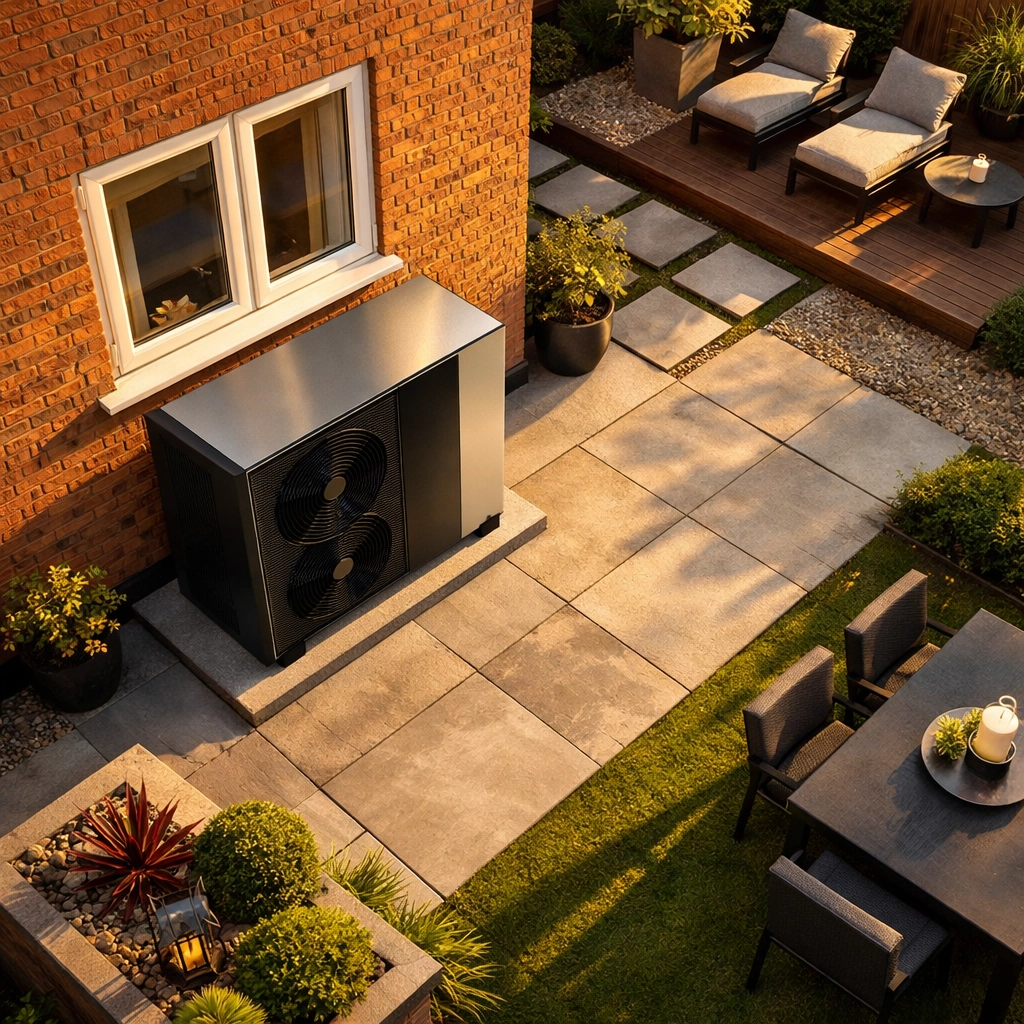
Modern units? Completely different story. Quality systems operate at around 40-50 decibels: roughly the volume of a quiet conversation or a modern fridge. You'll hear it if you're standing next to the outdoor unit, but your neighbours three doors down won't be complaining.
Indoor units are even quieter, often operating at whisper-level volumes. Many have "night mode" settings that reduce fan speed for near-silent operation while you sleep.
Compare this to a traditional boiler, which can clang, whoosh, and kettling sounds when it's working hard. Heat pumps are genuinely peaceful by comparison.
6. No Gas Safety Certificates, No Boiler Breakdowns
Here's something people don't consider until they've made the switch: you're eliminating an entire category of home maintenance hassle.
No more annual gas safety certificates. No more worrying about carbon monoxide. No more panic when your boiler packs in during the coldest week of winter and every heating engineer in a 50-mile radius is booked solid for three weeks.
Heat pumps are electric. They're sealed systems with fewer moving parts than boilers. Annual servicing is recommended (and important), but the systems are inherently more reliable. Many manufacturers offer warranties of 5-7 years as standard, with some extending to 10+ years.
When something does go wrong, diagnostics are often simpler because modern heat pumps have built-in smart monitoring. Many systems can alert your installer to potential issues before they become full breakdowns.
7. They Integrate Beautifully With Smart Homes
If you're already using smart thermostats, solar systems, or home batteries, heat pumps slot right into that ecosystem.

Most modern heat pump systems come with Wi-Fi connectivity and smartphone apps as standard. You can adjust temperatures, set schedules, and monitor energy consumption from anywhere. Some systems even use AI to learn your patterns and optimise heating schedules automatically.
The real magic happens when you integrate them with solar panels and battery storage. Your system can be programmed to heat your home using excess solar generation during the day, storing that heat in your property's thermal mass (walls, floors) for evening use. It's like having a thermal battery alongside your electrical one.
For households looking to maximise renewable energy self-consumption, this integration is genuinely transformative.
The Reality Check: What You Need to Know Before Switching
This isn't a sales pitch: it's an honest assessment. Heat pumps aren't perfect for every situation, and going in with realistic expectations matters.
Upfront cost is higher, even with grants. If you're comparing against a simple boiler replacement (£2,000-£3,000), heat pumps require more investment. The payback period is real, but you need to be comfortable with that initial outlay.
Installation is more involved than swapping out a boiler. You're adding external units, potentially upgrading radiators, and possibly needing electrical work. Good installers will survey your property properly and give you honest guidance about what's required.
They work differently from boilers. Heat pumps provide consistent, lower-temperature heat rather than short bursts of high heat. Your home stays at a steady, comfortable temperature all day rather than heating up and cooling down in cycles. Some people love this; others take time to adjust.
Your property needs to be reasonably well-insulated. We touched on this earlier, but it's worth repeating. Heat pumps work beautifully in modern homes or properly upgraded older properties. In poorly insulated homes, they'll struggle and cost more to run than they should.
Is This the Right Move for Your Home?
If you're in a reasonably modern home (or an older property that's been well-upgraded), replacing your ageing gas boiler, and planning to stay in your property for at least 5-7 years, the case for heat pumps is strong. Add in government grants and rising gas prices, and the financial argument stacks up nicely alongside the environmental benefits.
The "air conditioning as heating" angle isn't marketing spin: it's genuinely what these systems do. They're heat pumps that can reverse. The fact that they also keep you cool during increasingly warm UK summers is a bonus that's becoming more valuable each year.
If you're considering making the switch, start with a proper assessment of your property. Check your insulation levels, understand your current heating costs, and get quotes from MCS-certified installers who can access those government grants for you.
Want to explore whether a heat pump system makes sense for your home? Our team at DES Renewable Energy works with homeowners across the South Coast to design integrated renewable energy solutions. We'll give you an honest assessment: sometimes that means recommending you improve insulation first, and we're fine with that. Get in touch to arrange a no-obligation site survey.
The heating landscape is changing. For many UK homes in 2026, air-source heat pumps represent the smartest path forward: combining efficiency, comfort, and future-proofing in one elegant system.