You have likely seen the glossy brochures promising "free energy for life." You have probably also heard the sceptics claiming that solar panels are an eyesore that never pays for itself. So, where does the truth actually lie?
At DES Renewable Energy Ltd, we believe in being straight with you. Solar power is an incredible technology that can save you thousands of pounds, but it is not a magic wand. It is a long-term financial investment. Sometimes the numbers stack up perfectly, and sometimes they don't, and that’s okay.
In this guide, we are going to break down the advantages and disadvantages of solar power using real, honest numbers for 2026. Whether you are looking at your family home in Bournemouth or managing a large warehouse, here is what you need to know.
The Financial Advantages: What the Numbers Say
The most common question we get is: "Will this actually save me money?" The short answer is yes, but the scale of those savings depends on how you use your power.
Slashing Your Cost Per Kilowatt-Hour
In early 2026, grid electricity prices remain a significant burden for UK households and businesses alike. While market fluctuations occur, the average grid rate often hovers around 25p to 30p per kWh.
When you generate your own solar energy, the "levelised cost" of that electricity (the total cost of the system divided by the energy it produces over 25 years) is roughly 7p to 9p per kWh. You are essentially prepaying for your electricity at a massive discount for the next two or three decades.
Payback Time and the Break-Even Point
For a typical 4kW to 6kW residential system, you are looking at an initial investment that often falls between £6,000 and £9,000, depending on your choice of panels and whether you include battery storage like the Tesla Powerwall 3.
- Average Payback Period: Currently, most UK homeowners hit their break-even point in 6 to 9 years.
- Total Lifetime Savings: Since modern panels are warrantied for 25 years (and often last 30+), you could see total savings exceeding £20,000 to £30,000 over the life of the system.
The Honest Disadvantages: The Parts Nobody Likes to Mention
We wouldn't be doing our job if we only talked about the sunshine. There are genuine drawbacks to solar power that you need to consider before signing a contract.
1. The "Winter Gap" and Intermittency
The most obvious disadvantage is that panels don't work at night. But the bigger issue in the UK is seasonality. A solar array might produce five times more energy in June than it does in December.
If you are looking for total energy independence, you will need a robust storage solution or a backup plan. Without a battery, you’ll still be buying a lot of "expensive" grid power during those dark winter evenings. And that’s okay, most people use a hybrid approach.
2. High Upfront Costs
Even with the VAT on solar panels currently at 0%, several thousand pounds is a lot of money to find upfront. While financing options exist, the "sticker shock" is a real barrier for many. If you don't have the capital or the ability to take a low-interest loan, the long-term savings might feel too far out of reach.
3. Roof Suitability and Aesthetics
Not every roof is a candidate for solar. If your roof is north-facing, heavily shaded by a neighbour’s oak tree, or made of certain fragile materials, the efficiency drops significantly. Furthermore, some people simply don't like the look of black silicone wafers on their roof. While "all-black" panels have made them much sleeker, they are still a visible change to your home.
| Factor | Advantage | Disadvantage |
|---|---|---|
| Running Costs | Extremely low/Near zero | Minimal cleaning required |
| Energy Security | Protects against price hikes | Dependent on weather/daylight |
| Property Value | Generally increases value | Initial aesthetic change |
| Environmental | Zero carbon emissions | Carbon footprint of manufacturing |
When Solar Power Isn't Worth It (And Why That’s Okay)
We often turn down installations because the numbers simply don't make sense for the customer. We want you to be happy with your investment, and that means being honest when it’s a bad fit.
Solar might NOT be worth it for you if:
- You plan to move house in the next 2–3 years: You won't have enough time to reach the break-even point. While solar adds value to a home, you rarely get 100% of the installation cost back in the sale price immediately.
- Your electricity usage is extremely low: If you live alone and barely use any power, the fixed cost of the system will take 15+ years to pay back.
- Your roof is in poor condition: If your roof needs replacing in 5 years, you’ll have to pay to take the panels off and put them back on again. It is always better to fix the roof first!
- Significant Shading: If your home is in a valley or surrounded by tall buildings in a place like Fareham or Eastleigh, the output might be too low to justify the cost.
If any of these apply to you, it’s better to focus on smaller efficiency wins like LED lighting or better insulation first.
Business Solar Power: A Different ROI Game
For companies, the math for business solar power is even more compelling. Most businesses operate during the day, exactly when the sun is shining.
Commercial systems often see a faster payback period (sometimes as low as 4 to 5 years) because they have a high "self-consumption" rate. Instead of selling excess power back to the grid for a few pence, businesses use it to run machinery, servers, and lighting, saving 25p+ for every unit generated.
In 2026, with the push toward "Green Credentials" and ESG (Environmental, Social, and Governance) reporting, having solar panels on your warehouse or office isn't just about the bill, it’s about your brand’s reputation.
Maintenance: Will You Be Up on the Roof Every Weekend?
One of the great advantages of solar is that it has no moving parts. This means maintenance is surprisingly low.
However, "low maintenance" doesn't mean "no maintenance." To keep your system running at peak efficiency, you should:
- Annual Visual Check: Look for debris, bird nests, or cracked glass from the ground.
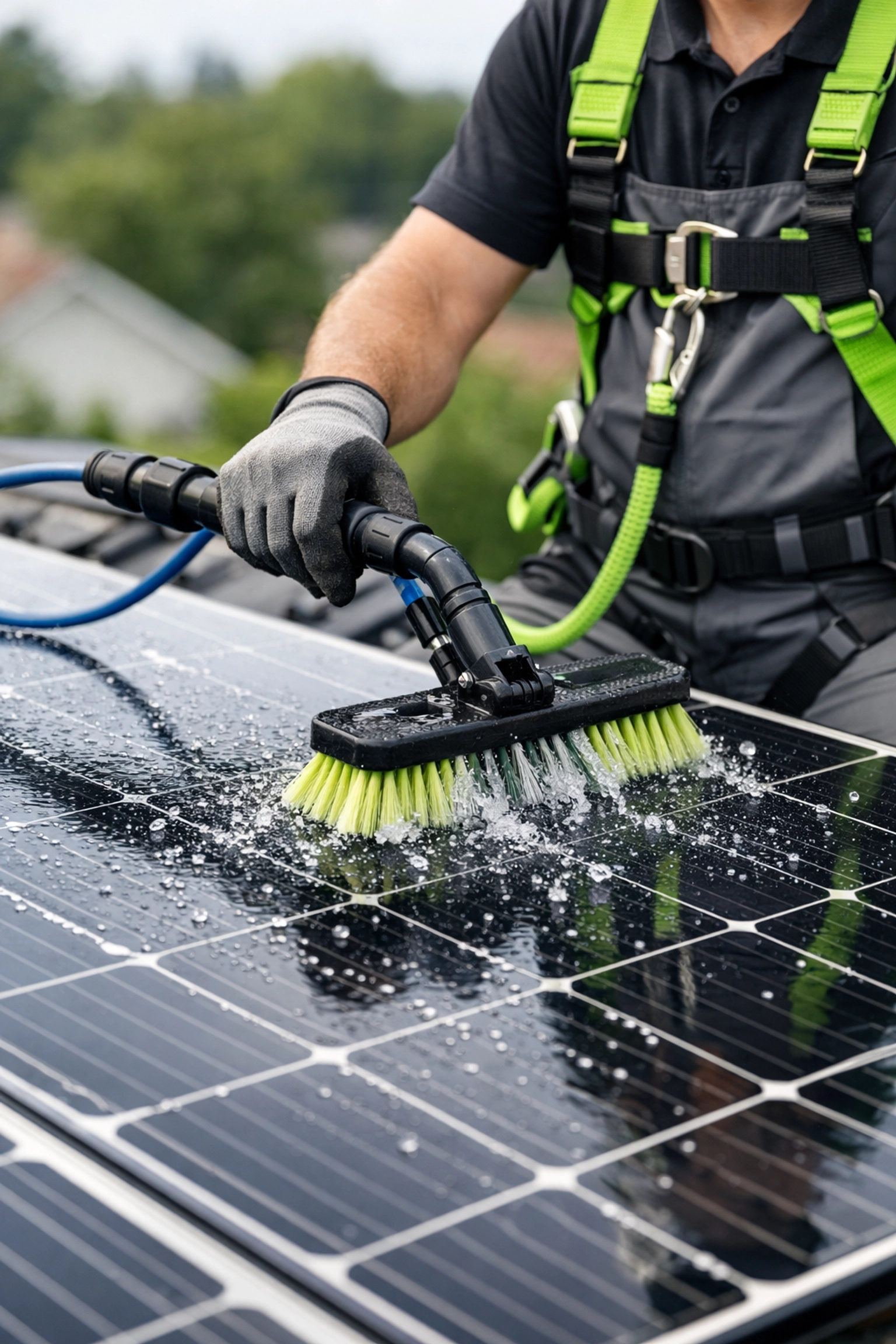
- Professional Cleaning: Every 2–3 years, especially if you live near the coast in Lymington or Highcliffe, salt and grime can build up.
- Inverter Check: The panels might last 30 years, but the inverter (the "brain" of the system) usually needs replacing after 10–12 years. Factor this into your long-term budget.
If you’re worried about the technical side, don't be. Most modern systems come with an app that lets you track production from your phone. If the numbers dip, you’ll know it’s time to call in the experts.
The 2026 Outlook: Why Now?
Why is everyone talking about solar right now? Aside from the climate crisis, there are two massive drivers: AI and EVs.
The rise of Artificial Intelligence data centres and the mass adoption of Electric Vehicles are putting unprecedented strain on the national grid. Demand is skyrocketing, which means prices are unlikely to drop back to 2010 levels ever again. By installing solar now, you are effectively "locking in" your energy price for the next quarter-century.
Whether you are interested in a high-end Sunsynk installation or a straightforward array for a cottage in Burley, the technology is more efficient than ever. Modern panels now reach 22-24% efficiency, which is a huge leap from the 15% we saw a decade ago.
Making the Decision That’s Right for You
Solar power is a fantastic way to take control of your energy costs and do your part for the planet. But it needs to make sense for your wallet, too.
If you are feeling a bit overwhelmed by the technical jargon or the varying quotes, we understand. It is a big decision. The best way to move forward is with a bespoke survey that looks at your specific roof, your specific energy bills, and your specific goals.
We provide honest assessments for homeowners across the South: from Chippenham to Dorchester and Devizes. We will tell you if solar is a "slam dunk" for your home, or if you are better off waiting.
Ready to see your honest numbers?
Contact us to discuss your needs and get a transparent, no-pressure quote from our team. Let’s figure out if solar is the right move for you, together.