


So, you’ve finally made the jump. You’ve had your Tier-1 solar panels installed, your Tesla Powerwall is humming along in the garage, and you’re watching your electricity bills plummet. It’s a great feeling, isn't it?
I’m Jason Brown, Director at DES Renewable Energy, and I see this "honeymoon phase" every day. But here’s the thing: many homeowners treat solar like a "set and forget" appliance, similar to a fridge. While solar is incredibly low-maintenance, it isn't no-maintenance.
If you want your system to actually hit that 25-year (or even 30-year) performance mark, you need to avoid a few common pitfalls. Most "Solar Cowboys" won't tell you about these because they’ve already moved on to the next job. At DES, we’re in it for the long haul.
Here are the seven most common mistakes I see homeowners making with their solar aftercare, and how you can avoid them to ensure your investment pays off for decades.
1. The "Hosepipe on a Hot Day" Disaster
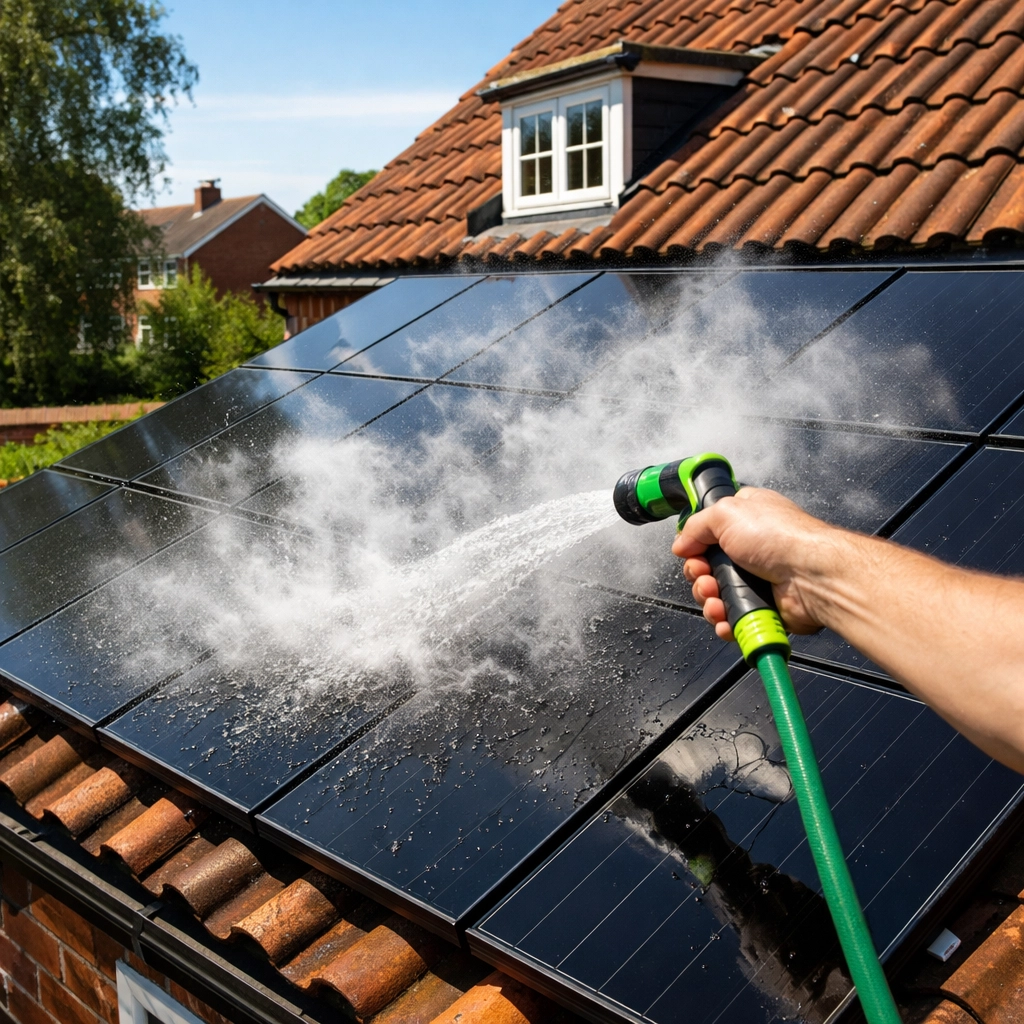
It’s a scorching July afternoon in the UK (yes, we do get them occasionally!). You look up and see your panels look a bit dusty. You grab the garden hose and give them a good blast of cold water.
The Mistake: This is a recipe for "thermal shock."
On a hot day, your solar panels can easily reach temperatures of 65°C or more. When you hit that scorching glass with cold tap water, the sudden temperature drop causes the glass to contract rapidly. This can lead to tiny fractures or, in worst-case scenarios, the entire pane shattering. Even if it doesn't shatter, you’re likely to leave mineral deposits from the hard water, which creates a film that blocks sunlight.
The Fix: Clean your panels in the early morning or late evening when the glass is cool to the touch. This protects the integrity of the panels and ensures the water doesn't evaporate instantly, leaving unsightly streaks.
2. Using "Kitchen Cupboard" Chemicals
We’ve seen it all: homeowners using dish soap, window cleaner, or even vinegar to try and get that "showroom shine" on their array.
The Mistake: Modern solar panels, especially the Tier-1 equipment we install from brands like SolarEdge, come with specialised anti-reflective coatings. These coatings are designed to help the cells absorb as much light as possible. Harsh chemicals, particularly those with high acidity or abrasive surfactants, can strip these coatings away. Once that coating is gone, your energy production will take a permanent hit.
The Fix: In 90% of cases, plain deionised water and a gentle touch are all you need. If you have particularly stubborn bird droppings, use a specialist solar cleaning solution that is pH-neutral and approved by manufacturers. For more advice on keeping things running smoothly, check out our Expert Help & Advice section.
3. Scrubbing Like You’re Cleaning a Casserole Dish
If you see a stubborn spot, your instinct might be to grab a stiff brush or: heaven forbid: a bit of steel wool.
The Mistake: Scratches. Even tiny, microscopic scratches on the surface of the glass will scatter incoming sunlight. Instead of the light passing directly through to the silicon cells, it bounces off the scratches. Over time, a "cloudy" panel caused by improper scrubbing can reduce your output by 5% to 10%.
The Fix: Use a soft-bristle brush designed specifically for solar panels or a microfiber cloth on an extension pole. Think of it more like cleaning a high-end camera lens rather than a kitchen floor.
4. The "Human Footprint" (Walking on Your Panels)
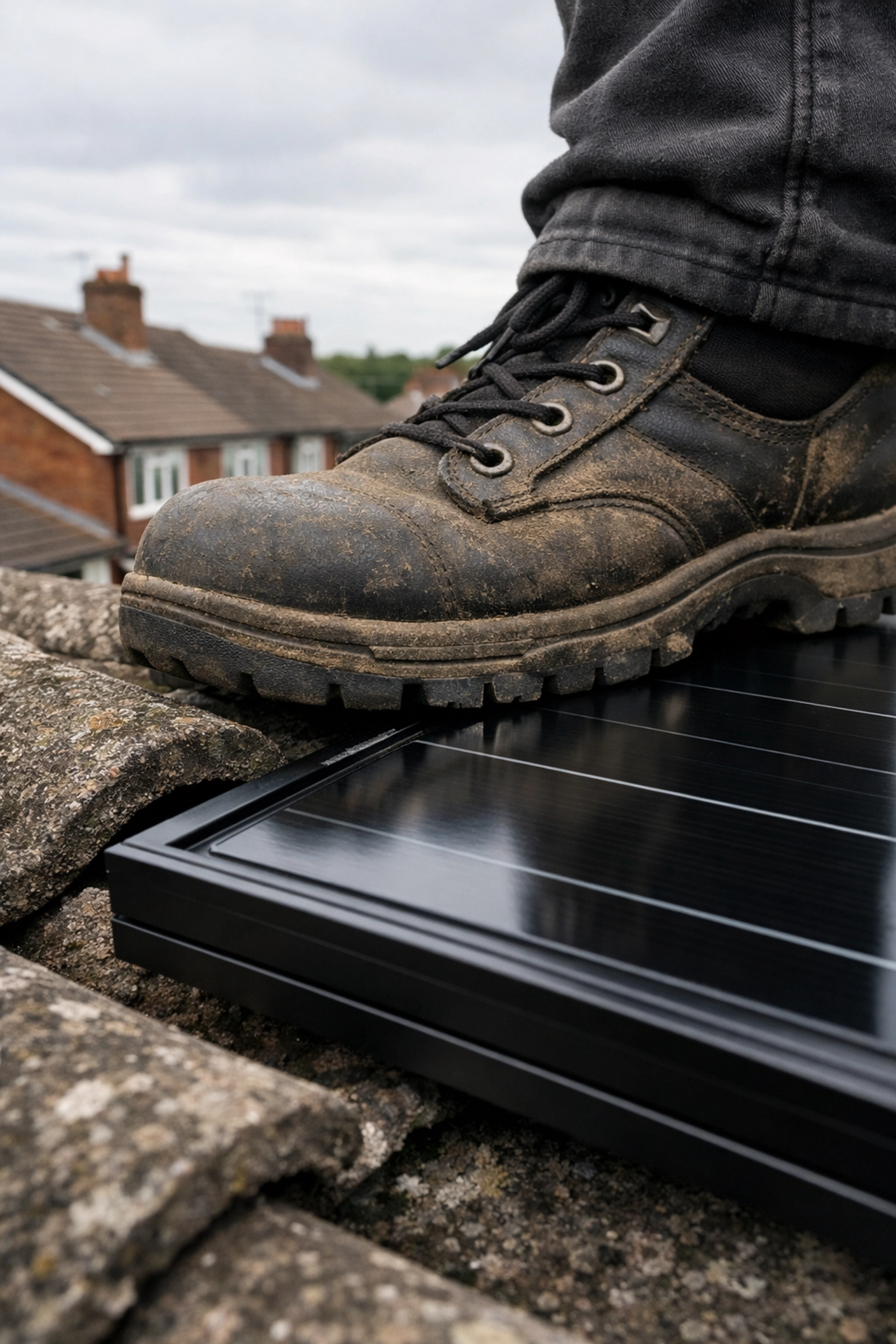
You’re up on the roof cleaning the gutters or fixing a tile, and you think, "I'll just step on the solar frame to reach that bit."
The Mistake: This is perhaps the most dangerous mistake for the health of your system. Even if the glass doesn't crack under your weight, the pressure causes the silicon cells underneath to flex. This creates "microcracks." You won't see them with the naked eye, but they create "hot spots" where electricity can't flow properly. Over time, these hot spots can lead to cell failure or even be a fire risk.
The Fix: Never, under any circumstances, walk on your solar panels. If a panel is out of reach, use a water-fed pole or hire a professional who has the right equipment to reach them safely from a ladder or cherry picker. If you're worried about damage, have a look at our technical support page.
5. Ignoring Your Local Wildlife
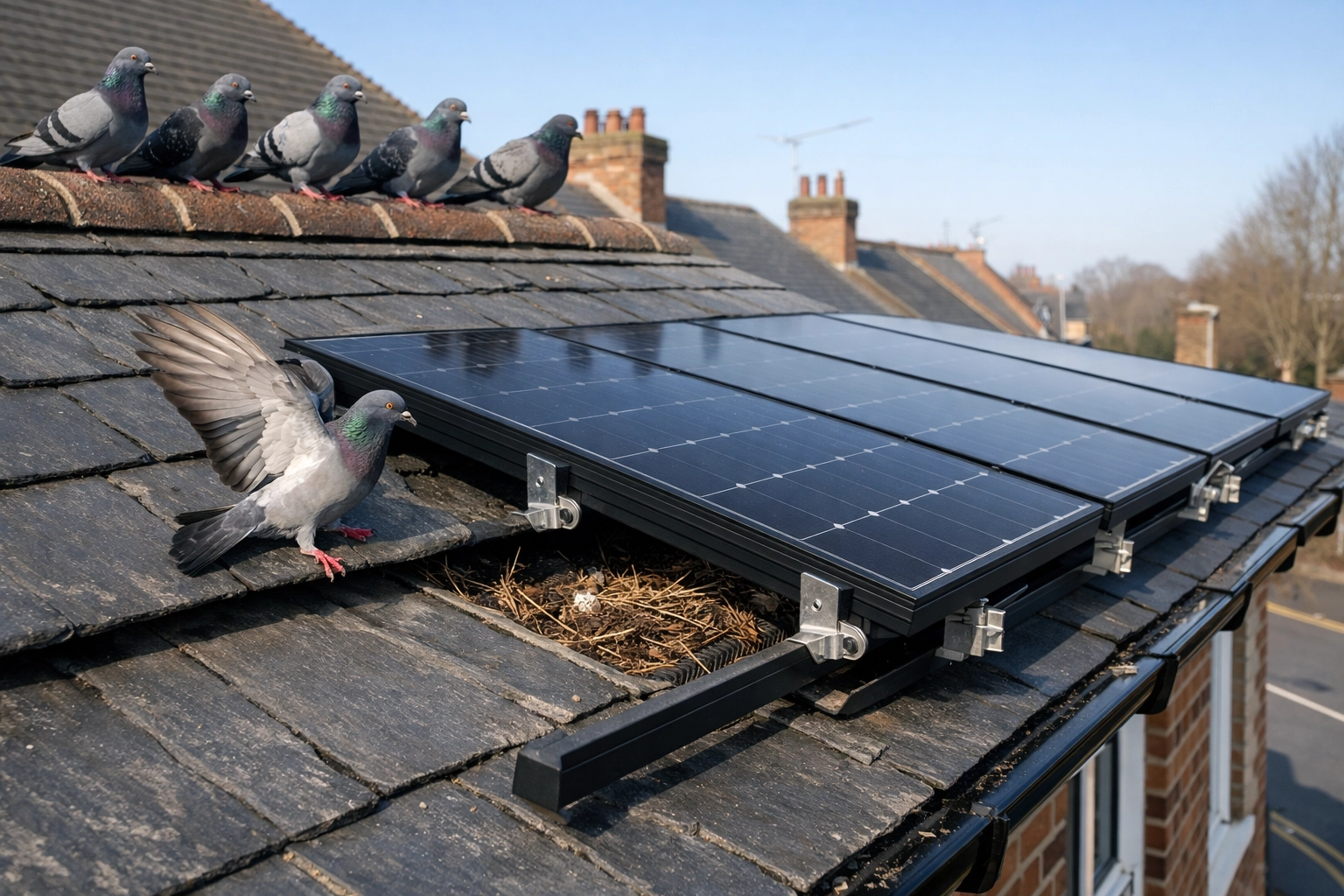
Pigeons love solar panels. They provide a warm, sheltered spot to nest, away from predators.
The Mistake: Neglecting pest protection. A family of pigeons living under your panels isn't just a noise nuisance; their droppings are highly acidic and can eat away at the panel frames and wiring. Furthermore, squirrels have a nasty habit of chewing through DC cabling, which can shut down your entire string and create a significant fire hazard.
The Fix: If you notice birds frequenting your roof, invest in "bird proofing" or "critter guards." These are mesh skirts that go around the perimeter of the array, preventing anything from getting underneath. It’s a small upfront cost that saves thousands in potential repairs. We often discuss these types of protections during our solar installation process.
6. The "Set and Forget" Mentality
Many homeowners believe that because there are no moving parts, nothing can go wrong.
The Mistake: Failing to book a professional health check. While the panels themselves are hardy, your system includes an inverter (the "brains" of the operation), complex wiring, and safety isolators. Over 5 or 10 years, connections can loosen due to thermal expansion, or your inverter might need a firmware update to maintain peak efficiency.
The Fix: We recommend a professional maintenance check every 1–2 years. A qualified technician will use thermal imaging to spot hidden hot spots, check all electrical terminations, and ensure your Tesla Powerwall or other battery systems are communicating correctly with the grid. It’s about catching a £100 fix before it becomes a £2,000 replacement.
7. Flying Blind (Not Monitoring Your App)
If I asked you right now how many kWh your system produced yesterday, would you know?
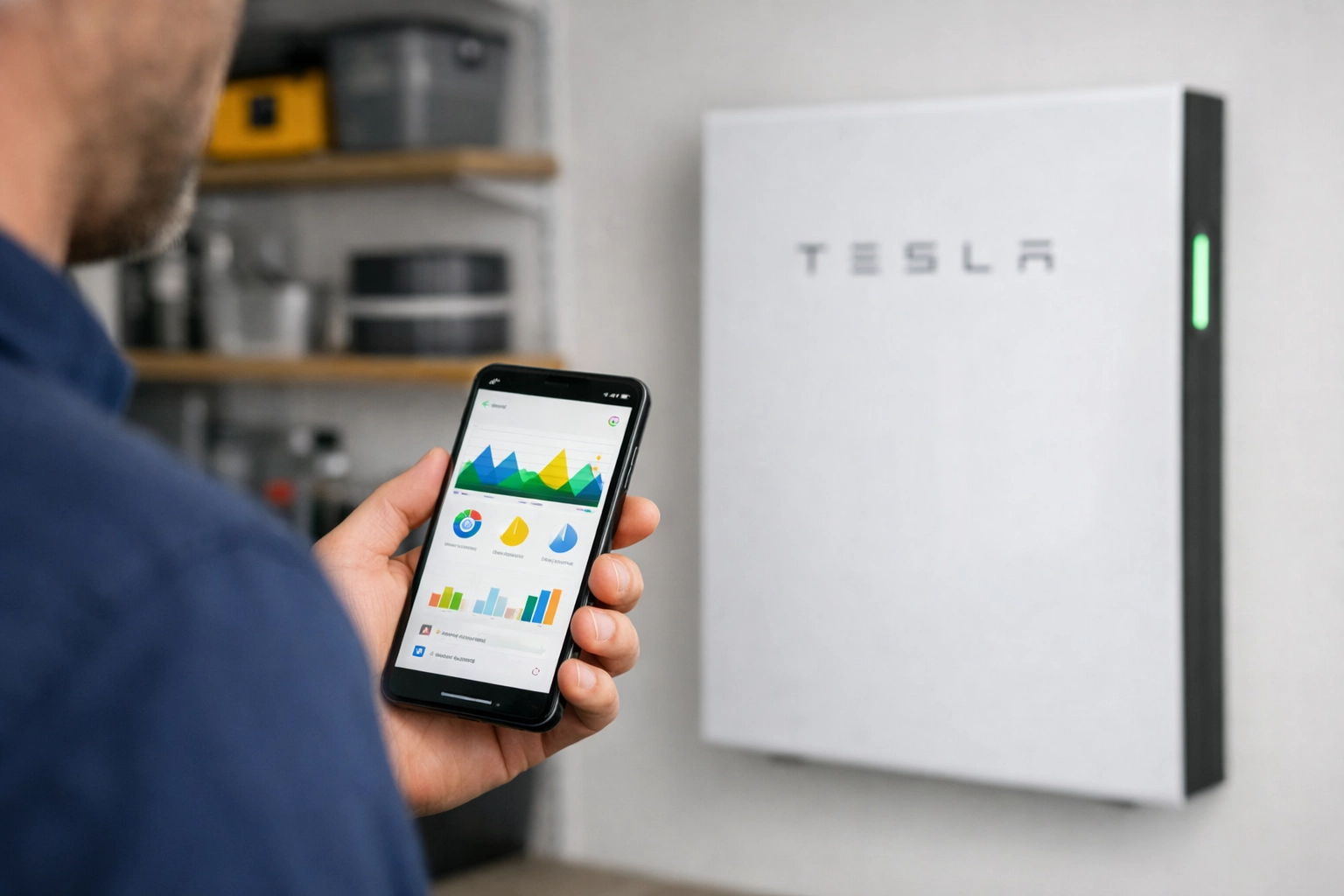
The Mistake: Ignoring the monitoring software. Most modern systems, especially SolarEdge and Tesla, come with incredible apps. If you aren't checking them at least once a week, you might miss a "silent" failure. Perhaps one string of panels has gone down, or a specific optimiser is underperforming. If you don't check, you're literally letting money fly off your roof.
The Fix: Make it a habit. Check your app once a week. If you notice a sudden dip in production that isn't explained by a very cloudy day, it’s time to call in the experts. Regular monitoring is the easiest way to ensure your solar panel investment stays on track.
The Road to 25+ Years: A Simple Maintenance Schedule
To help you keep things simple, here is a basic "Gold Standard" aftercare routine we recommend to all our clients at DES Renewable Energy:
| Frequency | Task | Why it matters |
|---|---|---|
| Weekly | Check your monitoring app | Catch minor faults early. |
| Seasonally | Visual inspection from the ground | Look for debris, bird nests, or shifting panels. |
| Bi-Annually | Gentle cleaning (Early morning) | Removes dust and grime to boost output by up to 15%. |
| Every 2 Years | Professional Service/Inspection | Ensures electrical safety and equipment longevity. |
Why Aftercare is the Secret to ROI
People often ask me, "Jason, is it really worth the effort?"
Think of it this way: A standard 4kWp system in the UK might save you around £800–£1,000 a year on your energy bills at current rates. If improper maintenance causes a 10% drop in efficiency, you’re losing £100 every single year. Over 25 years, that’s £2,500 lost: far more than the cost of a few professional services.
At DES Renewable Energy, we pride ourselves on being specialists, not "Solar Cowboys." We don't just fit panels and vanish; we want to make sure your system is still outperforming the neighbours' in the year 2050.
If you’re worried your system isn't performing as it should, or if you’ve inherited a system and aren't sure where to start, get in touch with us. Whether it's a technical support query or you're looking for a new solar quote to upgrade your existing setup, our team is here to help.
Don't let your investment gather dust. A little care today goes a long way for the next quarter-century.
Ready to ensure your home is future-proofed? Contact us today to discuss our maintenance packages or to start your journey toward energy independence.