


When you invest in a solar PV system, you aren't just buying hardware; you’re securing an energy future for the next quarter-century. Most Tier-1 panels we install at DES Renewable Energy are warrantied to still produce 85–90% of their original power after 25 years. However, that longevity isn't guaranteed if you treat your system with a "fit and forget" mindset.
In the UK, we often assume our frequent rainfall handles the cleaning for us. While rain helps, it doesn't account for the buildup of bird droppings, traffic film, or salt spray if you’re near the coast. Worse still, many homeowners inadvertently damage their systems by trying to "help" them.
If you want to ensure your investment pays for itself as quickly as possible, you need to avoid these seven common aftercare blunders.
1. Cleaning Your Panels in the Blazing Midday Sun
It might seem logical to clean your panels on a bright, sunny day when you can see the dirt clearly. In reality, this is one of the most dangerous things you can do to your solar cells.
During a typical UK summer, solar panels can reach surface temperatures of over 65°C. When you spray cold water from a garden hose onto glass that is baking hot, you trigger thermal shock. The rapid contraction of the glass can cause it to shatter or, more commonly, create thousands of microscopic "microcracks" in the silicon cells beneath. You won't see them immediately, but your energy production will take a permanent hit.
The Fix: Always schedule cleaning for the early morning or late evening when the panels are cool to the touch.
2. Reaching for the Dish Soap and Vinegar
We see it all the time: homeowners using household glass cleaners, abrasive powders, or even vinegar to get that "streak-free shine."
Modern Tier-1 solar panels, like those from our preferred partners, come with a highly specialised anti-reflective (AR) coating. This coating is designed to help the glass absorb more light rather than reflecting it away. Harsh chemicals and acidic solutions like vinegar can strip this coating or leave a thin, sticky residue that actually attracts more dust and pollen than before.
The Fix: Use only deionised water and, if absolutely necessary, a tiny amount of specialised, pH-neutral solar cleaning soap. In most cases, plain water is more than enough.
3. Using Abrasive Brushes or Pressure Washers
If you’ve got a stubborn bit of bird grime, your first instinct might be to grab a kitchen scourer or turn the pressure washer up to the max. Please, don't.
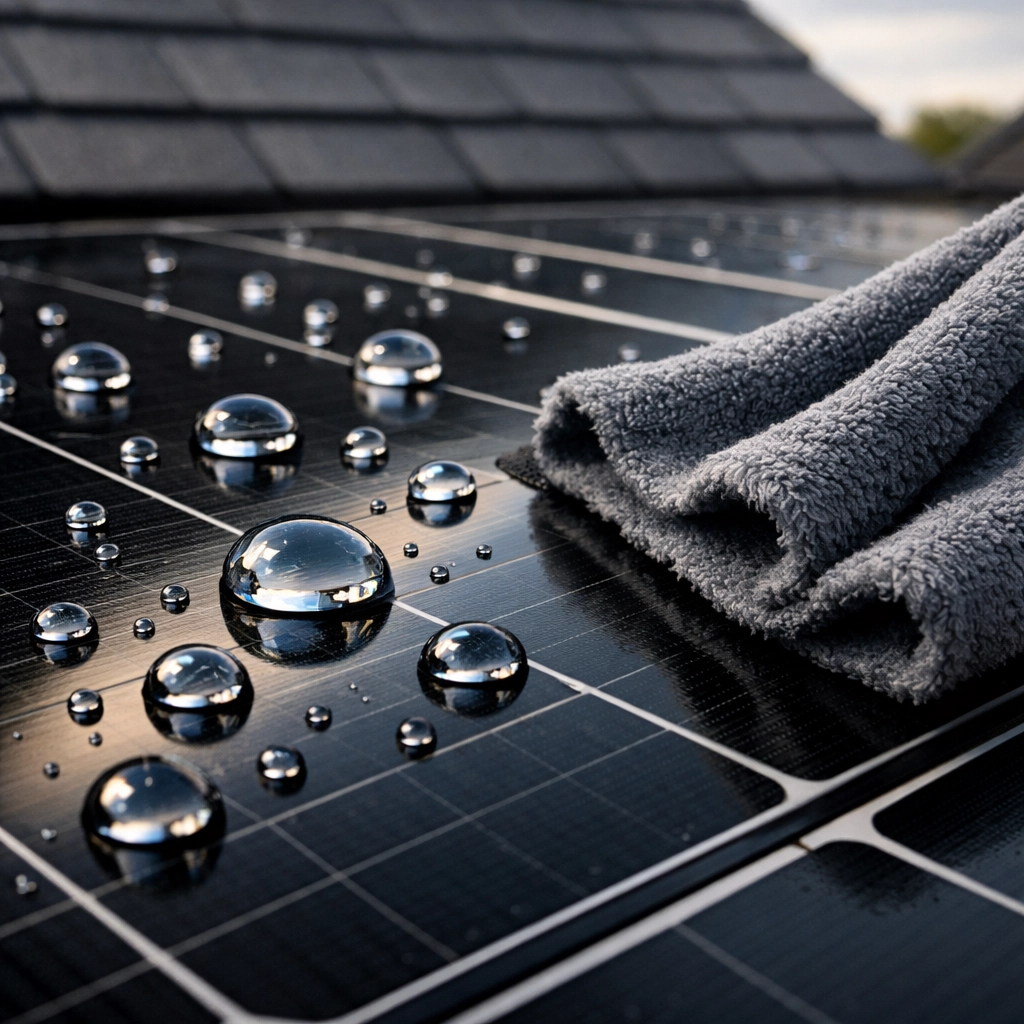
Pressure washers can force water past the seals of the panel frame, leading to internal corrosion or "snail trails": oxidised tracks that ruin the cell's conductivity. Similarly, abrasive brushes create fine scratches on the glass. These scratches catch the light and scatter it, meaning less energy reaches the silicon cells. Over 25 years, these "minor" scratches can lead to a significant loss in total £ savings.
The Fix: Use a soft-bristle telescopic brush specifically designed for solar panels, or a soft microfiber cloth. If the grime won't budge, soak it with water and wait: don't scrub.
4. The "Rooftop Ninja" Mistake: Walking on Panels
This is perhaps the most "invisible" mistake a homeowner can make. Solar panels are designed to withstand heavy snow loads and high winds, but they are not designed to support the concentrated weight of a human being.
Walking on your panels causes the silicon wafers inside to flex. This creates microcracks that are invisible to the naked eye but show up clearly under electroluminescence (EL) testing. These cracks create "hot spots" where electricity can’t flow properly, causing the panel to overheat and, in extreme cases, creating a fire risk.
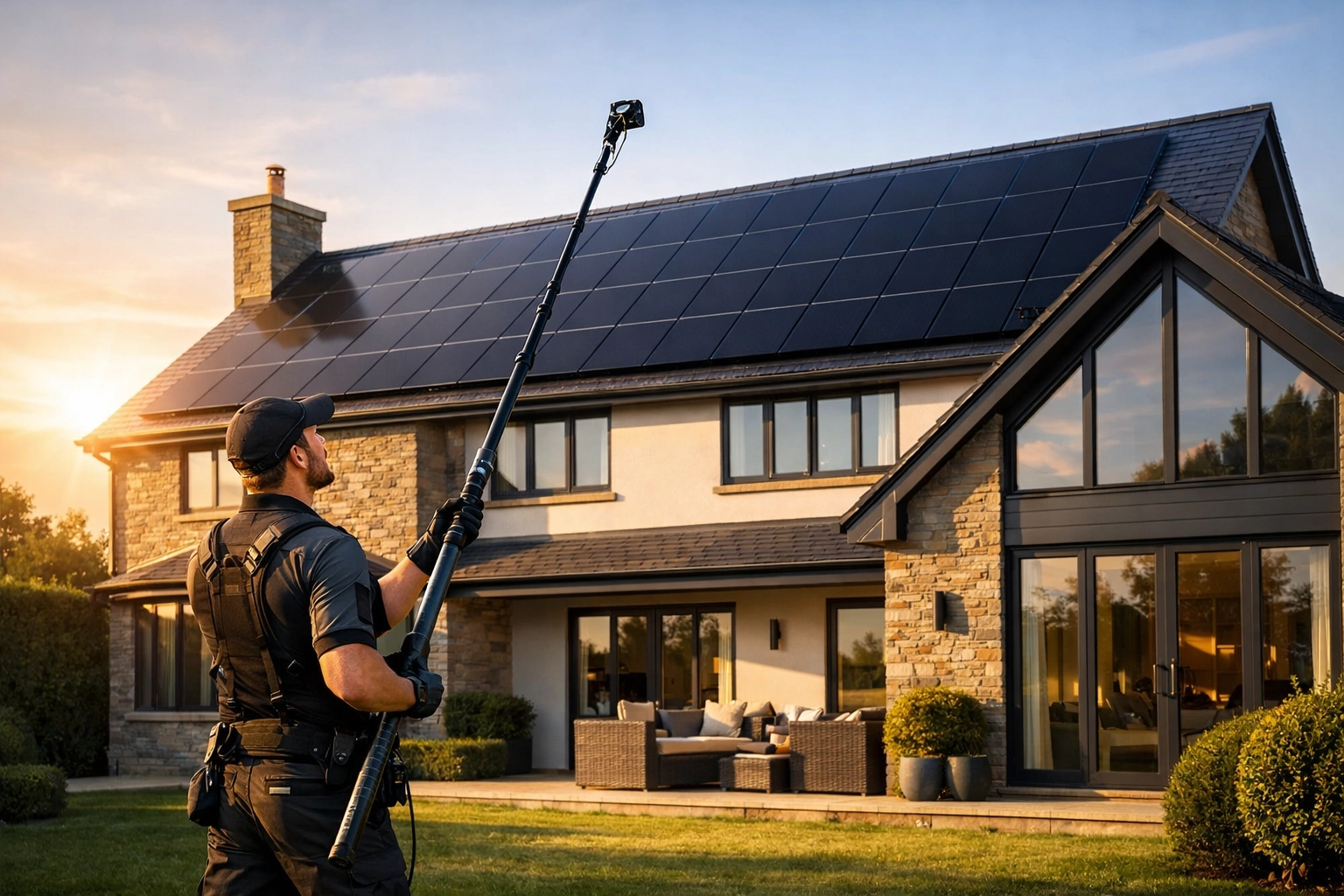
The Fix: Never step on your panels. If you can’t reach a spot from a ladder or with an extension pole, it is time to call in a professional for solar installation maintenance.
5. Ignoring the "Hard Water" Problem
In many parts of the UK, particularly the South East and London, tap water is "hard": meaning it’s full of minerals like calcium and magnesium.
When you spray your panels with a hose and let them air dry, the water evaporates, but the minerals stay behind. This creates a white, chalky scale (limescale) that is incredibly difficult to remove and acts like a permanent shade over your cells. If you do this repeatedly, you are effectively "shading" your own system.
The Fix: If you live in a hard water area, use a squeegee to remove excess water before it dries, or use a deionising filter on your hose. This ensures a spot-free finish that keeps the light flowing in.
6. Neglecting Your Monitoring App
Many homeowners look at their generation meter for the first week, then never check it again. This is a mistake.
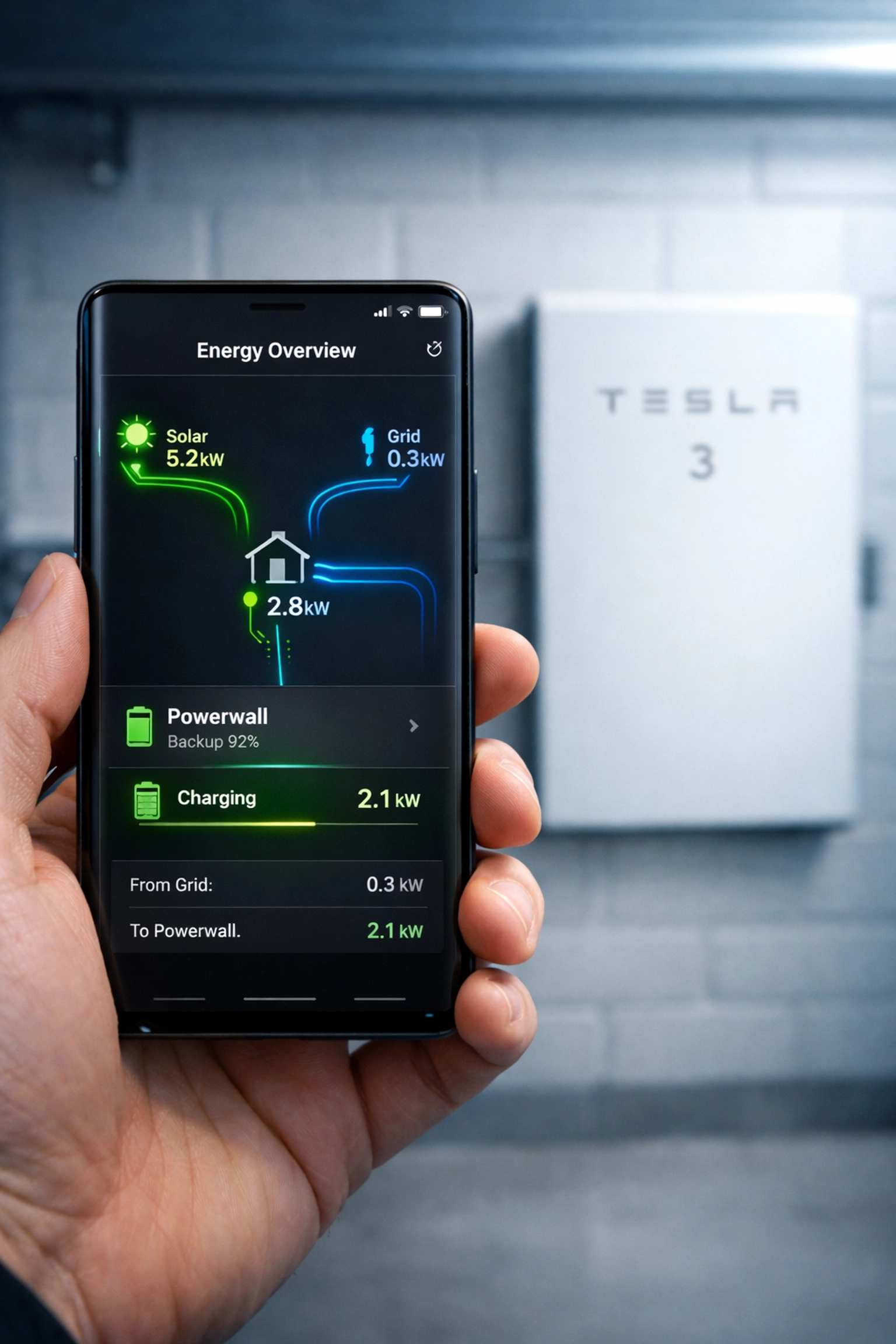
Modern systems, especially those using SolarEdge optimisers or Tesla Powerwall integration, provide incredibly granular data. If one of your strings has a fault, or if a specific panel is underperforming due to a localized issue (like a bird’s nest or a loose connection), the app will tell you.
Ignoring your monitoring means you could go months without realizing your system is underperforming, potentially losing hundreds of pounds in energy savings and "Smart Export Guarantee" (SEG) payments.
The Fix: Check your monitoring app once a week. Get to know your "normal" generation patterns. If you notice a sudden drop that isn't explained by the British weather, check our guide on common problems with solar panels.
7. The "Fit and Forget" Mindset (Skipping Professional Health Checks)
While solar PV is low-maintenance, it is not "no-maintenance." Every 3 to 5 years, your system should have a professional health check.
DC electricity is different from the AC electricity in your wall sockets; it doesn't "trip" in the same way, and loose connections can lead to DC arcing, which is a leading cause of solar-related fires. A professional installer will check:
- Inverter health and firmware updates.
- DC string voltages.
- The integrity of roof fixings (especially after heavy UK storms).
- Battery storage health (e.g., Tesla Powerwall or GivEnergy systems).
The Fix: Budget for a professional service every few years. It’s a small price to pay to protect a system worth several thousand pounds.
How to Maximise Performance for 25+ Years
If you avoid the mistakes above, you’re already ahead of 90% of solar owners. But to truly hit that 25-year-plus milestone, keep these three expert tips in mind:
| Action | Frequency | Why it matters |
|---|---|---|
| Visual Inspection | Every 3 Months | Check for debris, bird nests, or physical damage after storms. |
| Professional Clean | Once a Year | Removes "traffic film" and industrial pollutants that rain won't touch. |
| Inverter Check | Weekly (App) | Ensures the "brain" of your system is converting DC to AC efficiently. |
The Role of Tier-1 Equipment
Aftercare is much easier when you start with quality components. Systems like the Tesla Powerwall 3 or SolarEdge inverters are designed with sophisticated internal diagnostics. They don't just sit there; they actively monitor their own health and can alert you (and sometimes us) if something is wrong.
When we talk about "future-proofing," we mean installing equipment that is supported by global manufacturers who will still be around in 2046. Using a renewable energy partner that understands the technical nuances of these systems is the difference between a 15-year system and a 30-year system.

Summary: Is Your System Reaching Its Potential?
Solar panels are remarkably resilient, but they aren't invincible. By avoiding "DIY disasters" like midday cleaning or walking on the glass, and by keeping an eye on your monitoring software, you ensure your ROI stays on track.
If you’re worried your system isn't performing as it should, or if it's been more than five years since your last professional inspection, don't leave it to chance. At DES Renewable Energy Ltd, we specialise in high-performance solar and battery storage solutions that stand the test of time.
Not sure if your current setup is optimal?
Explore our expert help and advice section or contact our team today for a comprehensive system health check. Let's make sure your journey to net-zero is as efficient as possible.